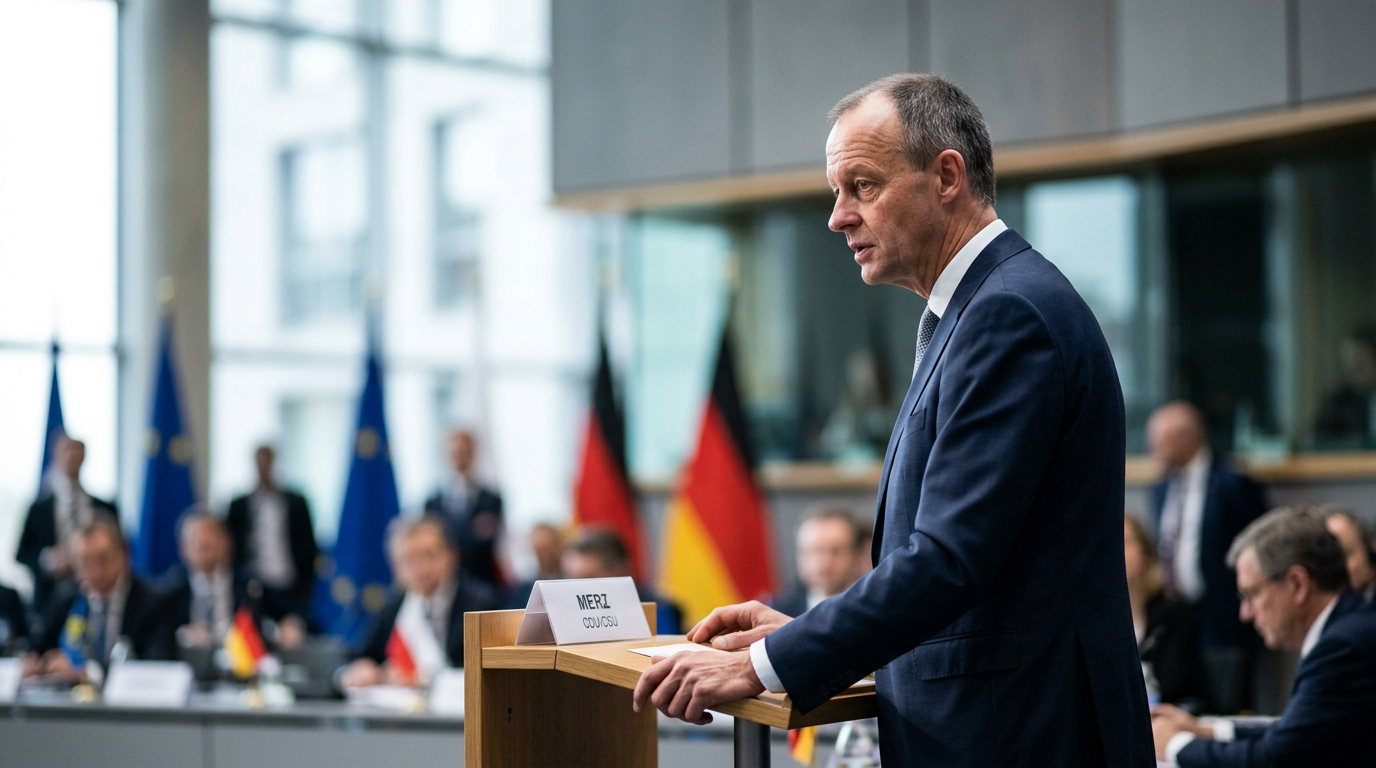
French Cement Giant Lafarge and Ex-CEO Convicted of Financing Syrian Jihadi Groups


PARIS, France – In a landmark ruling underscoring the severe consequences of corporate actions in conflict zones, a French court on Monday, April 13, 2026, found cement giant Lafarge and its former CEO, Bruno Lafont, guilty of financing terrorist groups in Syria. The verdict closes a protracted legal battle that exposed the company's covert dealings with entities including the Islamic State (ISIS) and al-Nusra Front, sending a powerful message about corporate accountability in maintaining operations amidst geopolitical turmoil. Several other former executives were also convicted in connection with the illicit payments, which allowed Lafarge to continue operating its Jalabiya cement plant in northern Syria between 2013 and 2014, even as the region descended into brutal civil war.
The judgment by the Paris Criminal Court marks a critical moment for international jurisprudence, establishing a precedent for prosecuting corporations and their leadership for complicity in activities that fuel terrorism. Prosecutors had accused Lafarge of "funding terrorism" and breaching international sanctions, requesting substantial fines for the company and prison sentences for the former executives. The conviction culminates years of investigations, shedding light on a dark chapter where commercial interests allegedly superseded ethical and legal obligations, directly benefiting some of the world's most brutal extremist organizations.
The Verdict: A Landmark Conviction
The French court's decision on April 13, 2026, held Lafarge criminally responsible for its actions, finding it guilty of financing terrorist groups and violating European sanctions. Former CEO Bruno Lafont was explicitly found guilty of financing terrorism, alongside seven other former associates who held key operational and security roles within the Syrian subsidiary. While sentencing details were expected later the same day, French prosecutors had sought a maximum fine of €1.125 million for the company, asset confiscation, and prison terms of up to six years for Lafont and five years for other executives. This conviction follows a trial that began in November 2025 and concluded in December of the same year, meticulously examining the complex web of transactions and decisions made by the company's leadership.
The court's ruling emphasized that Lafarge made payments to armed groups, including ISIS and al-Nusra, to ensure the continued operation of its cement plant during the Syrian civil war. These payments were deemed to have been driven by profit motives, effectively supporting extremist organizations. The case in France specifically charged the company with financing a terrorist enterprise and violating a European embargo prohibiting financial or commercial relations with these groups. This legal outcome is particularly significant as it is the first time a multinational corporation has faced such charges in France for financing terrorism.
A Web of Payments in a War Zone
Lafarge's entanglement in Syria began with its approximately $680 million investment in the Jalabiya cement plant, which became operational in 2010. As the Syrian civil war intensified following 2011, and despite evacuating foreign staff in 2012, Lafarge chose to maintain its operations in the increasingly volatile region. To do so, the company's Syrian subsidiary, Lafarge Cement Syria (LCS), engaged in clandestine agreements with various armed factions, including ISIS and al-Nusra Front, to secure its business interests.
Between 2013 and 2014, Lafarge and LCS funneled millions to these groups. While the exact total varies across reports, estimates suggest payments ranging from approximately $5.92 million according to the U.S. Department of Justice, to at least 13 million euros based on French inquiries. These funds were disbursed through intermediaries and took various forms, including fixed monthly "donations" and payments for raw materials. The purpose of these payments was explicit: to facilitate the transport of goods, secure access to raw materials, enable the movement of employees across checkpoints, and ultimately, to keep the cement plant operational and maintain an economic advantage in the Syrian market. Internal documents and communications revealed that Lafarge executives were aware of the nature of ISIS's activities and the ongoing conflict, yet still approved these arrangements. The Jalabiya plant was eventually seized by ISIS in September 2014 and ceased operations.
Global Legal Reckoning: US Precedent and French Justice
The French verdict follows a significant parallel legal action in the United States. In October 2022, Lafarge and its subsidiary pleaded guilty in the US to conspiring to provide material support to designated foreign terrorist organizations. This unprecedented plea marked the first time a corporation faced such charges in the US. As part of the plea agreement, Lafarge was ordered to pay a colossal $777.8 million in criminal fines and forfeitures. US prosecutors highlighted that Lafarge executives "accepted responsibility" for paying $5.92 million to ISIS and al-Nusra Front leaders, urging them to aid the company in keeping its facilities running.
The US settlement provided a substantial financial penalty, though discussions continue regarding how these funds will benefit the victims of the terrorist organizations. The French legal proceedings, however, adopted a full criminal process, examining both corporate and individual responsibility. The French Supreme Court had previously rejected Lafarge's attempts to dismiss charges, including those of complicity in crimes against humanity, emphasizing that there was sufficient evidence to show Lafarge had "precise knowledge" of ISIS's activities. While the charge of endangering the lives of Syrian employees was ultimately dropped, the prosecution for complicity in crimes against humanity remains an ongoing aspect of the broader legal fallout for the company.
Corporate Accountability on Trial
The Lafarge case has evolved into a pivotal moment for the discourse on corporate criminal responsibility, particularly concerning operations in volatile conflict regions. It challenges the traditional view that only individuals can be held accountable for severe international crimes. Human rights organizations, including Sherpa and the European Center for Constitutional and Human Rights (ECCHR), played a crucial role in bringing the initial complaints in 2016, pushing for justice for the company's actions.
The judicial inquiry revealed that Lafarge's decisions exposed its Syrian employees to significant risks, including kidnapping and death. Testimonies from former Syrian employees during the trial underscored the human cost of Lafarge's pursuit of profit. The case highlights the complex ethical dilemmas faced by companies operating in war zones and the imperative for robust compliance programs and due diligence. It has ignited broader discussions about the "corporate veil" and the extent to which a parent company can be held liable for the actions of its subsidiaries abroad. The Lafarge verdict sets a significant precedent, asserting that companies cannot turn a blind eye to the implications of their financial transactions, especially when those transactions directly or indirectly support groups committing atrocities.
An Enduring Legacy of Responsibility
The conviction of Lafarge and its former CEO for financing Syrian jihadi groups marks a watershed moment in the global fight against corporate impunity. It underscores the principle that commercial enterprises, and their leaders, operating in conflict-ridden areas bear a profound responsibility to uphold international law and human rights, irrespective of profit motives. The case has firmly placed corporate ethics and accountability at the forefront of international legal and business discussions.
The dual convictions in France and the United States send a clear message to multinational corporations about the severe legal and financial repercussions of illicit dealings with terrorist organizations. While questions of full victim compensation and the ongoing investigation into complicity in crimes against humanity continue, the Lafarge case has undoubtedly reshaped the landscape of corporate governance, emphasizing that companies operating globally must navigate not just economic challenges, but also the intricate moral and legal complexities of the regions in which they choose to do business. This verdict stands as a stark reminder that the pursuit of profit can never justify contributing to the machinery of terror.
Related Articles

Ratko Mladić, "Butcher of Bosnia" and Convicted War Criminal, Dies at 84
THE HAGUE, Netherlands – Ratko Mladić, the former Bosnian Serb military commander known as the "Butcher of Bosnia" and convicted of genocide, war crimes, and crimes against humanity, has died at the age of 84. Serbian...


Long-Awaited 9/11 Mastermind Trial Set for 2028, Decades After Attacks
GUANTANAMO BAY, Cuba – Nearly a quarter-century after the devastating terror attacks of September 11, 2001, a military judge has finally set a trial date for Khalid Sheikh Mohammed, the alleged mastermind behind the...