French National Sentenced to 10 Years for Espionage in Azerbaijan Amid Deepening Diplomatic Rift
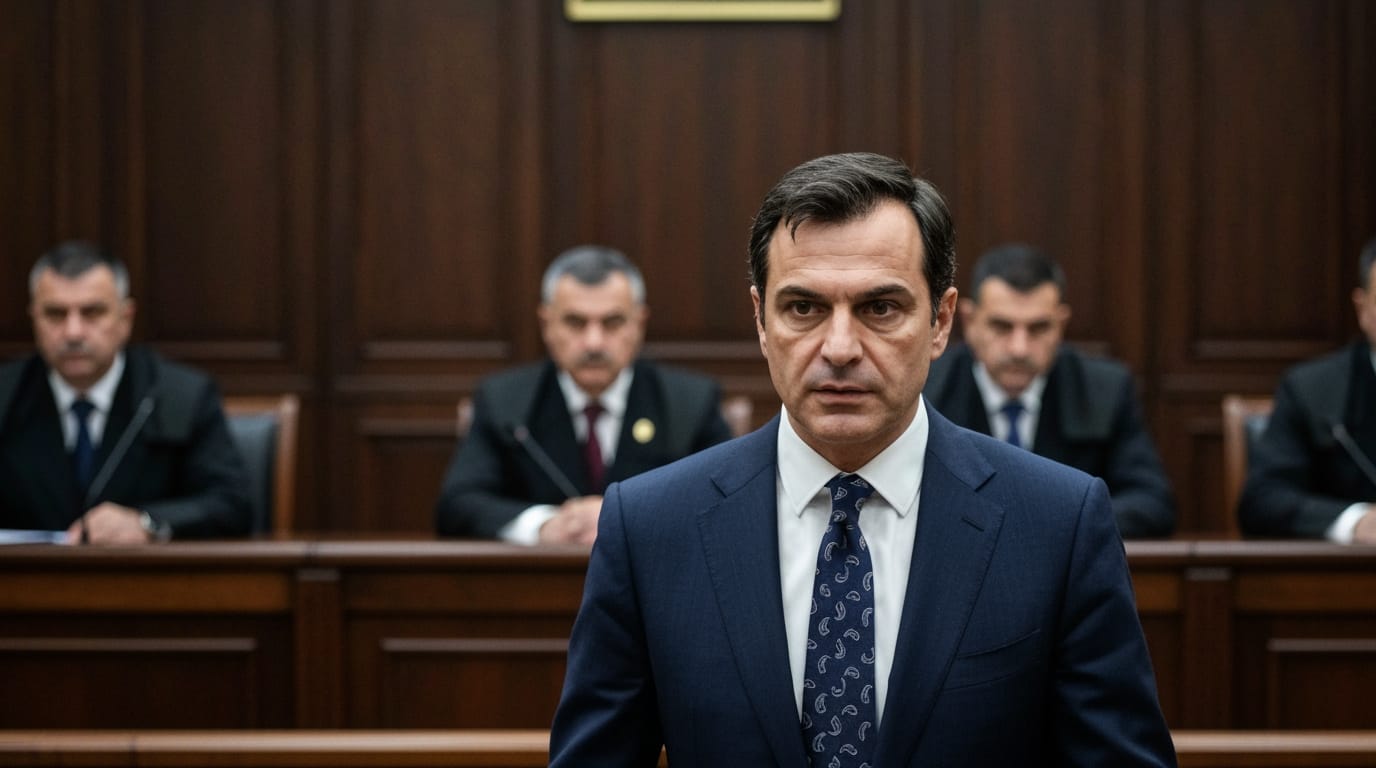
Baku, Azerbaijan – A court in Azerbaijan has sentenced French national Martin Ryan to 10 years in prison on charges of espionage, a verdict that significantly escalates an already severe diplomatic crisis between Baku and Paris. The judgment, handed down on March 16, 2026, by the Baku Court on Grave Crimes, concludes a high-profile trial that has seen accusations of clandestine intelligence gathering and mutual expulsions of diplomats, underscoring profound geopolitical tensions in the South Caucasus.
The sentencing of Ryan, identified as the CEO of Merkorama LLC, marks a critical juncture in the strained relationship between the two countries. Azerbaijani authorities assert that Ryan was recruited by France's Directorate General for External Security (DGSE) to collect sensitive intelligence, allegations vehemently denied by the Frenchman. The case has unfolded against a backdrop of escalating rhetoric and reciprocal actions, transforming a judicial process into a flashpoint for international disagreement.
The Verdict and Allegations of Clandestine Operations
Martin Ryan was found guilty under Article 276 (espionage) of the Criminal Code of the Republic of Azerbaijan, receiving a 10-year sentence in a strict-regime penal institution. Alongside him, Azerbaijani citizen Azad Mammadli was sentenced to 12 years for treason under Article 274 of the Criminal Code, with both individuals slated to serve their time before Ryan's eventual deportation from Azerbaijan.
The charges against Ryan are extensive, painting a picture of a wide-ranging intelligence operation. Prosecutors alleged that he was tasked with gathering information on a multitude of sensitive subjects crucial to Azerbaijan's national security. This included details concerning the production and import of weapons and ammunition, the staffing and logistics of the Azerbaijani Army during the 2020 44-day Patriotic War, and identifying potential recruits for French intelligence within the Azerbaijani Armed Forces, both active and reserve personnel. Furthermore, Ryan was accused of seeking data on foreign citizens and legal entities operating in Azerbaijan, individuals who had studied abroad in French-language programs, and methods for organizing covert money transfers through Azerbaijan to other countries on behalf of the French special service. The indictment also specified his alleged attempts to uncover Azerbaijan's relations and military cooperation plans with a host of nations, including the United Kingdom, Algeria, Türkiye, Pakistan, Iran, China, Somalia, and Central Asian states.
During his trial, Ryan testified that his primary objective as a businessman was to establish contact with the French embassy in Azerbaijan, disavowing any intention of being recruited as an agent. His father, Richard Ryan, previously stated that his son believed his detention was a direct consequence of the geopolitical tensions between France and Azerbaijan, remarking, "They wanted to use me as a pawn." Azad Mammadli, the co-accused, also claimed his innocence, asserting he was not involved in anti-Azerbaijani activities and had fallen victim to Ryan's alleged recruitment efforts, further claiming Ryan had recruited nine Azerbaijani citizens for French intelligence.
A Deepening Diplomatic Freeze
The espionage conviction of Martin Ryan serves as a stark illustration of the rapidly deteriorating diplomatic relations between Paris and Baku. The roots of this animosity can be traced to heightened tensions over the Nagorno-Karabakh conflict and France's perceived support for Armenia, which Azerbaijan views as its "arch-enemy."
Ryan's arrest on December 4, 2023, by the State Security Service of Azerbaijan, was only publicly acknowledged weeks later, triggering a swift and angry response from France. In December 2023, Azerbaijan declared two French diplomats "persona non grata" and expelled them, citing activities incompatible with their diplomatic status. France retaliated by expelling two Azerbaijani diplomats in a reciprocal measure.
The diplomatic fallout intensified as Azerbaijani President Ilham Aliyev accused France of actively inciting conflict in the South Caucasus by supplying arms to Armenia. France, for its part, has been critical of Azerbaijan's offensive in Nagorno-Karabakh, which brought the region fully under Azerbaijani control in late 2023. In September 2024, France's Foreign Ministry issued a travel advisory urging its citizens to avoid non-essential travel to Azerbaijan, citing significant risks of "arbitrary arrest, arbitrary detention, and unfair trial." This advisory explicitly mentioned that "respect for fundamental rights is not guaranteed" for French nationals arrested or detained in Azerbaijan, a move Azerbaijan’s foreign ministry spokesperson, Aykhan Hajizada, condemned as an "unfounded bias," a "racist" policy, and a "smear campaign" against Baku.
This particular case is not an isolated incident in the recent history of France-Azerbaijan relations. Another case involving Etibar Suleymanli, an Azerbaijani citizen accused of treason and links to French intelligence, also fueled tensions, with Suleymanli denying the charges and claiming political motivation. Such cases underscore a broader pattern of mistrust and allegations of intelligence activities shaping the bilateral dynamic.
Implications and Future Outlook
The 10-year prison sentence handed to Martin Ryan carries significant implications for both France and Azerbaijan. For France, it represents a direct challenge to its diplomatic presence and the safety of its citizens operating in Azerbaijan. The severity of the sentence is likely to provoke further condemnation from Paris and potentially lead to additional retaliatory measures. This situation also raises questions about the scope and nature of French intelligence operations in the region and the risks associated with such activities.
For Azerbaijan, the conviction is presented as a firm stance against foreign espionage and an assertion of national sovereignty. It sends a clear message about Baku's resolve to counter what it perceives as inimical foreign influence, particularly from a nation it accuses of undermining regional stability through its support for Armenia. The case also highlights Azerbaijan's judicial system's handling of politically sensitive trials involving foreign nationals, which critics might scrutinize for fairness and transparency.
The Ryan case will undoubtedly contribute to the ongoing deterioration of France-Azerbaijan relations, potentially impacting economic ties, cultural exchanges, and cooperation on international platforms. The broader regional stability in the South Caucasus, already fragile after recent conflicts, could also be affected as major international players like France and Azerbaijan find themselves at loggerheads over allegations of espionage and geopolitical interference.
In conclusion, the sentencing of Martin Ryan to a decade in an Azerbaijani prison for espionage is more than a judicial outcome; it is a profound diplomatic incident. It serves as a stark indicator of the deep-seated mistrust and escalating tensions between France and Azerbaijan, casting a long shadow over their future bilateral relations and adding another layer of complexity to the already volatile geopolitical landscape of the South Caucasus. The case stands as a testament to the high stakes involved when national security concerns intersect with international diplomacy, illustrating how individuals can become central figures in broader geopolitical struggles.


