US and China Navigate Complex Trade Landscape Amidst Mutual Accusations
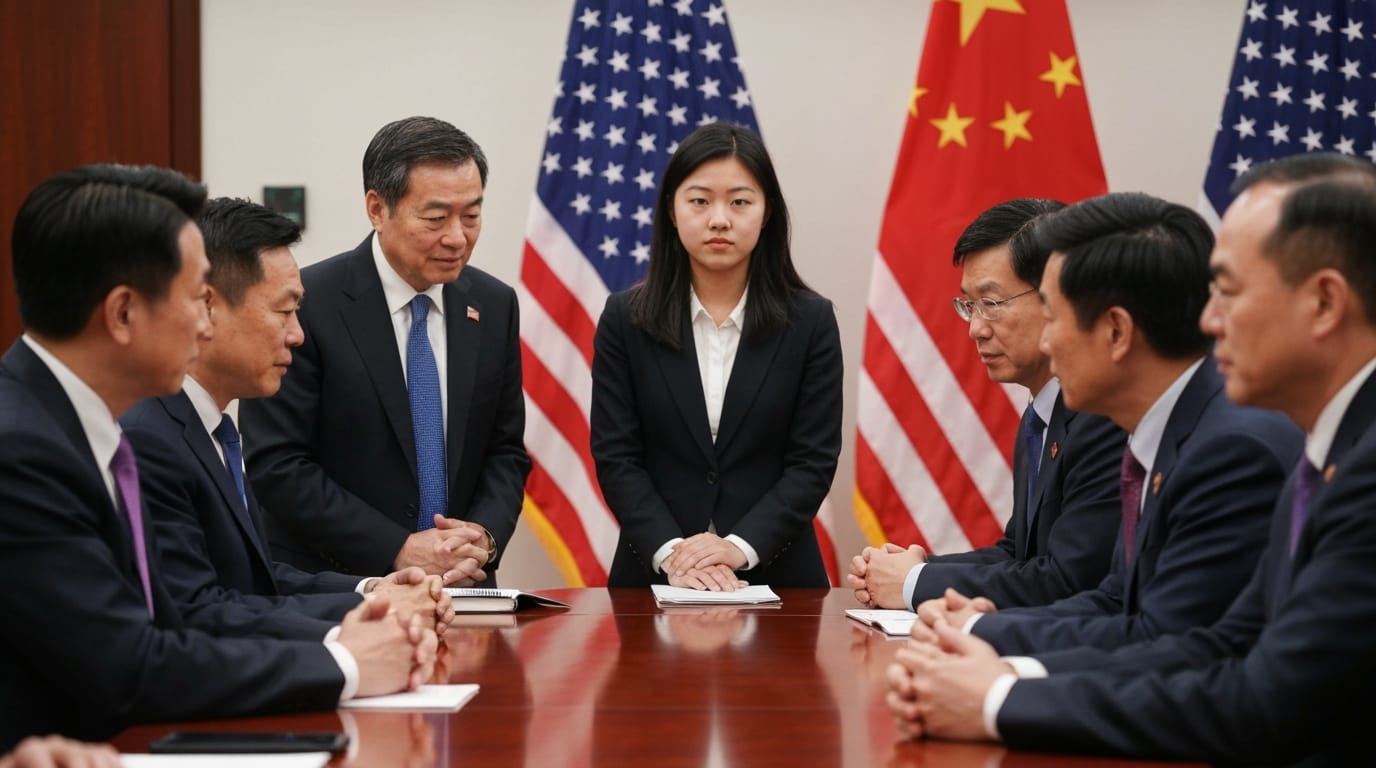
Paris/Beijing – In a delicate dance of diplomacy and economic brinkmanship, the United States and China are engaged in a series of high-stakes trade discussions, characterized by simultaneous efforts to stabilize relations and renewed accusations of unfair practices. As top economic officials conclude a critical round of talks in Paris, laying groundwork for a potential summit between Presidents Donald Trump and Xi Jinping, Washington has simultaneously launched fresh trade investigations, drawing sharp condemnation from Beijing. The duality of these interactions underscores a global economic environment where deep interdependence coexists with profound distrust, shaping the future of international trade.
Dialogue Amidst Discord: The Paris Talks and Pre-Summit Preparations
The sixth round of recent US-China trade negotiations unfolded in Paris this past weekend, featuring senior economic leaders from both nations. Chinese Vice-Premier He Lifeng led Beijing's delegation, engaging with US Treasury Secretary Scott Bessent and US Trade Representative Jamieson Greer. These discussions, described by some sources as "remarkably stable," served as crucial preparatory steps for an anticipated meeting between President Trump and President Xi later this month in China. The last direct engagement between the two leaders occurred in Busan, South Korea, in late 2025, where they agreed to a one-year truce in their ongoing trade disputes.
Key areas of focus during the Paris talks included agriculture, critical minerals, and the broader framework of managed trade. The participation of Treasury Secretary Bessent alongside Trade Representative Greer signals an evolving approach to these complex economic dialogues, integrating currency policy, financial market stability, and macroeconomic coordination more directly into traditional trade mechanics. While no formal statements were immediately released, sources familiar with the discussions suggested that China might agree to purchase additional US agricultural products, indicating a mutual interest in stabilizing economic relations. The European Union's position as a significant trading partner for both economic giants also added a layer of complexity and potential incentive for successful outcomes from the Paris venue.
New Investigations Fuel Chinese Outcry
Even as negotiators convened in the French capital, the United States intensified its pressure on China through new trade probes. Last week, Washington announced two significant Section 301 investigations. One targets "structural excess capacity and production" in manufacturing sectors across 16 trading partners, prominently including China. A separate, broader investigation focuses on alleged "failures to take action on forced labor" across 60 economies, with China also a primary target. These new inquiries follow a February 2026 US Supreme Court decision that invalidated sweeping tariffs previously imposed by the Trump administration.
Beijing swiftly denounced the US actions. China's Commerce Ministry urged the US to "immediately correct its erroneous ways," calling the forced labor investigations "extremely unilateral, arbitrary and discriminatory" and accusing Washington of "attempting to construct trade barriers." The Chinese Foreign Ministry characterized the excess industrial capacity probes as "political manipulation." China maintains it has "lodged representations" with the US over these latest developments. A spokesperson for China's Ministry of Commerce refuted US accusations regarding forced labor, asserting that China, a founding member of the International Labour Organization, has a comprehensive system of labor laws. The spokesperson also pointed out that the United States has not ratified the Forced Labour Convention, 1930, while continuing to manipulate the issue.
The Paradox of Interdependence: Trust and Tension
The ongoing trade friction highlights the complex and often contradictory nature of the US-China economic relationship. Despite the mutual accusations and competitive rhetoric, the sheer scale of economic interdependence between the world's two largest economies creates a compelling incentive for continued dialogue and negotiated solutions. Financial market integration, for instance, acts as a stabilizing force, fostering shared interests in maintaining market stability and preventing financial disruption. Similarly, the intricate web of global supply chains, while creating vulnerabilities, also presents opportunities for cooperation.
However, US officials openly express deep distrust of China, even as they pursue stable ties. Concerns persist regarding alleged Chinese efforts to acquire or bypass US technology restrictions. US Commerce Secretary Gina Raimondo, during a 2023 visit, notably conveyed that some American companies view China as "uninvestable" due to an uneven playing field and an unpredictable regulatory environment. These sentiments underscore the underlying geopolitical competition that influences trade dynamics, impacting sectors from advanced computer chips to quantum information technologies.
A survey conducted in late 2025 by the American Chamber of Commerce in South China revealed that 39% of respondents held a positive outlook on the future of US-China relations, an increase from the previous year. The survey suggested a potential "tactical truce" in trade, slowing but not halting economic decoupling, with a growing focus on non-sensitive sectors. Yet, experts caution that this perceived stability might be a temporary pause rather than a fundamental improvement in long-term ties.
Adapting to a New Economic Reality: Shifting Strategies
Both the US and China are actively recalibrating their long-term economic strategies in response to persistent trade tensions and geopolitical shifts. China's recently approved 15th Five-Year Plan (2026-2030) emphasizes technological self-reliance, industrial modernization, and expanded market access, particularly in the services sector. Commerce Minister Wang Wentao has underscored China's commitment to wider opening-up and mutually beneficial cooperation, moving away from "zero-sum approaches." China has also proactively diversified its export markets, reducing its reliance on the US, particularly after a new trade war initiated by Trump in April 2025 led to a significant decline in US exports to China.
For the United States, the Supreme Court's February ruling, which invalidated previously imposed tariffs, has prompted the administration to seek alternative mechanisms to exert trade leverage, as evidenced by the new Section 301 investigations. The US approach has shifted from seeking complete "decoupling" to a strategy of "de-risking," aiming to reduce vulnerabilities in critical supply chains while preserving broader trade relationships. However, the impact of tariffs, such as those imposed during Trump's previous administration, has been keenly felt by US consumers and businesses, who bore a significant portion of the economic burden.
The upcoming summit between President Trump and President Xi, expected between March 31 and April 2, represents a pivotal moment in this evolving relationship. While the Paris talks have established a foundation, the leaders will confront entrenched issues and divergent strategic priorities. The outcome of their discussions will not only shape the immediate trajectory of US-China trade but also reverberate through global supply chains, international markets, and the broader geopolitical landscape.
In this complex environment, where economic stability is pursued amidst accusations and strategic competition, the world watches closely to see if dialogue can consistently prevail over discord, and if a path towards more predictable and cooperative trade relations can be forged.


