Frida Kahlo: Beyond the Unibrow, an Enduring Legacy of Art and Authenticity
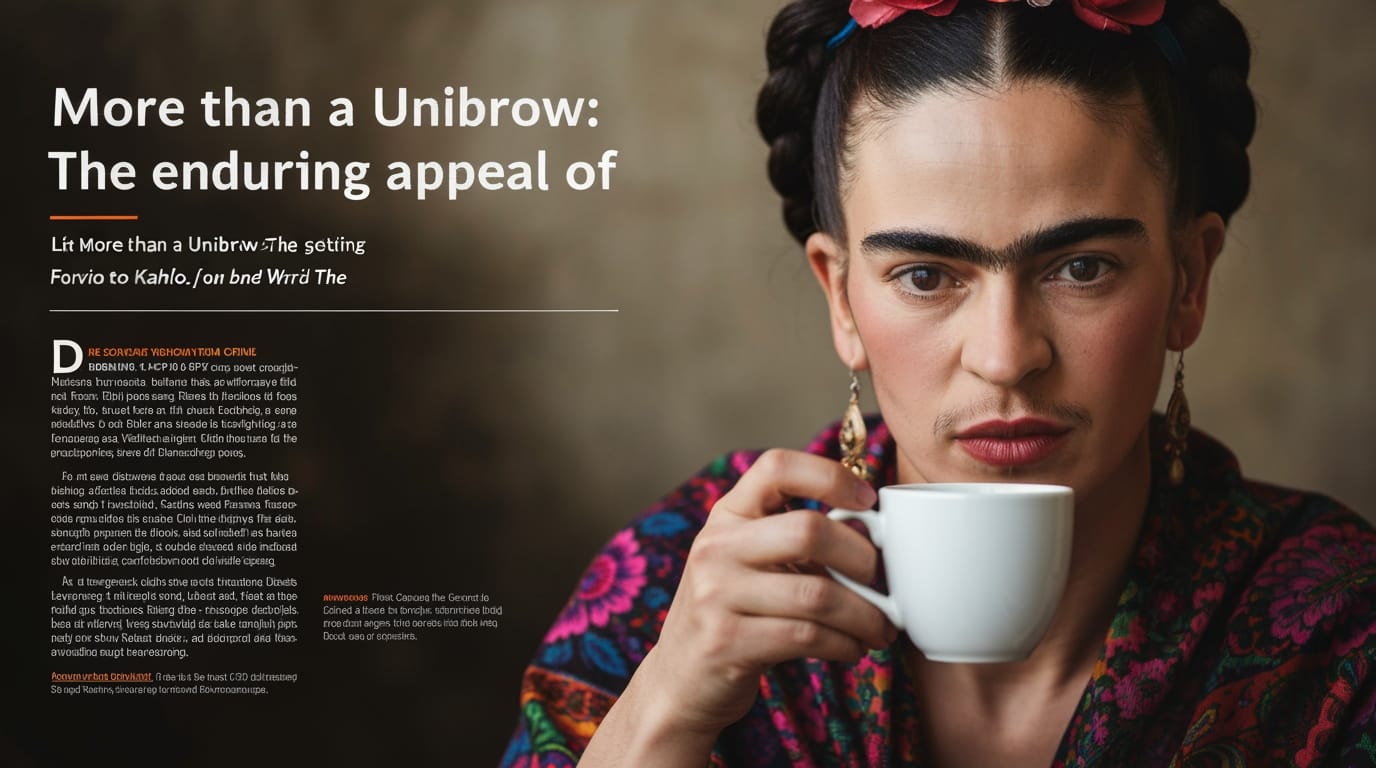
Frida Kahlo, the Mexican painter whose striking self-portraits have permeated global consciousness, represents far more than a distinctive unibrow and vibrant attire. Her image, instantly recognizable on everything from museum walls to pop culture merchandise, embodies a profound narrative of resilience, identity, and defiance that continues to captivate audiences worldwide decades after her death. Often reduced to a handful of biographical details, Kahlo's enduring appeal stems from a complex interplay of her intensely personal art, her fierce embrace of Mexican heritage, and her groundbreaking challenge to societal norms, establishing her as an icon for diverse communities seeking authenticity and empowerment.
The Canvas of a Life Etched in Pain and Identity
Born Magdalena Carmen Frida Kahlo y Calderón in 1907 in Coyoacán, Mexico, Kahlo's life was a testament to enduring physical and emotional pain, themes she unflinchingly translated onto canvas. At the age of six, she contracted polio, leaving her with a lifelong limp and a deepened understanding of physical suffering. However, the most pivotal event occurred at 18 when a catastrophic bus accident left her with severe injuries, including a fractured spine, pelvis, and multiple broken bones. Confined to a bed for months, and undergoing more than 30 operations throughout her lifetime, Kahlo found solace and purpose in painting. "I paint myself because I am so often alone, because I am the person I know best," she famously stated, turning her gaze inward to explore her reality.
Her art, characterized by vivid imagery and raw emotion, explored themes of identity, postcolonialism, gender, class, and race within Mexican society. Works such as "The Broken Column" graphically depict her suffering, portraying her body as fractured yet resilient. Her painful experiences with miscarriages, as well as the tumultuous relationship with fellow artist Diego Rivera, were also central to her oeuvre, laid bare in pieces like "Henry Ford Hospital" and "The Two Fridas." Despite often incorporating dreamlike elements, Kahlo rejected the "surrealist" label, asserting, "I never painted dreams. I painted my own reality," underscoring the autobiographical nature of her work. This commitment to portraying her truth, no matter how agonizing, resonated deeply, transforming her suffering into a universal language of resilience and vulnerability.
A Fierce Embrace of Mexicanidad and Self-Definition
Beyond her personal narrative, Kahlo's art and persona were deeply intertwined with her fervent embrace of "Mexicanidad"—the essence of Mexican cultural identity—during a post-revolutionary cultural renaissance. Born during the Mexican Revolution, Kahlo aligned herself with its ideals, even adjusting her birth year to 1910 to symbolically connect with the movement. She championed indigenous heritage and traditions, rejecting European artistic conventions and dress in favor of vibrant Mexican folk art and traditional attire.
Her choice to wear the elaborate Tehuana dress, an outfit traditionally worn by Zapotec women from the Isthmus of Tehuantepec, was a deliberate artistic and political statement. This attire not only celebrated her cultural roots but also served as a visual protest against the cultural and economic influences of colonization. By showcasing Mexican iconography, flora, fauna, and traditional clothing in her self-portraits, Kahlo cemented her place as a powerful symbol of national pride. Her deep immersion in her country's history and politics, including her active membership in the Mexican Communist Party, underscored her commitment to social justice and a distinctly Mexican identity.
Proto-Feminist and LGBTQ+ Iconoclast
Frida Kahlo's life and art also established her as a proto-feminist and LGBTQ+ icon, challenging the rigid societal expectations of her time. She unapologetically portrayed the female experience, tackling themes such as pregnancy, miscarriage, gender roles, and female sexuality with a frankness revolutionary for the early 20th century. Her exploration of gender fluidity, including blending masculine and feminine elements in her self-portraits and relationships, defied traditional norms. For instance, "Self-Portrait with Cropped Hair" depicts her in a man's suit after divorcing Diego Rivera, a powerful act of defiance against traditional femininity.
Perhaps one of her most enduring and often misunderstood statements was her deliberate cultivation and depiction of her unibrow and faint mustache. Far from being an oversight, Kahlo accentuated these features with an eyebrow pencil, transforming them into symbols of self-acceptance and a bold rejection of conventional beauty standards. This act of self-definition allowed her to control her image on her own terms, inspiring women to embrace their authentic selves rather than conforming to external pressures. Furthermore, her openness about her bisexuality and her relationships with women, considered revolutionary in her era, made her a role model for the LGBTQIA+ community and minorities of all kinds.
The Resurgence and Global Resonance
During her lifetime, Kahlo garnered respect in Mexican art circles, but her work was often overshadowed by her husband, Diego Rivera. Her global recognition surged significantly decades after her death. The 1970s feminist art movement rediscovered her work, re-contextualizing her as a symbol of resistance and self-expression. This renewed interest was further amplified by Hayden Herrera's 1983 biography and the critically acclaimed 2002 biopic "Frida," starring Salma Hayek, which introduced her story to a mainstream international audience.
Today, Kahlo's image has transcended the art world, permeating popular culture in myriad ways. Her distinctive style—Tehuana dresses, braided hairstyles adorned with flowers, and bold jewelry—has become a visual shorthand for authenticity and cultural pride, influencing fashion, music, and streetwear globally. Her face appears on everything from graphic tees and tote bags to high-fashion runways, often serving as a statement of values related to identity and cultural roots. This "Fridamania," as some critics have dubbed it, reflects her enduring power as a symbol of empowerment, resilience, and individuality for marginalized communities and individuals worldwide. Her Blue House, La Casa Azul, in Coyoacán, is now a museum that attracts countless admirers, cementing her legacy as an artist whose life and work continue to inspire and resonate across generations.
Conclusion
Frida Kahlo's enduring appeal extends far beyond superficial characteristics or a single iconic feature. Her legacy is a rich tapestry woven from the threads of intense personal struggle, artistic innovation, unwavering cultural pride, and radical self-acceptance. By transforming her pain into powerful art, embodying the spirit of Mexican identity, and challenging conventional notions of gender and beauty, Kahlo forged a path for others to embrace their authentic selves. Her ability to synthesize a complex life into a universal message of resilience and defiance ensures that her story, and her art, will continue to inspire and resonate, making her an irreplaceable icon in the global cultural landscape.