From Cars to Combat: Can German Auto Workers Shift Gears to Defense Jobs?
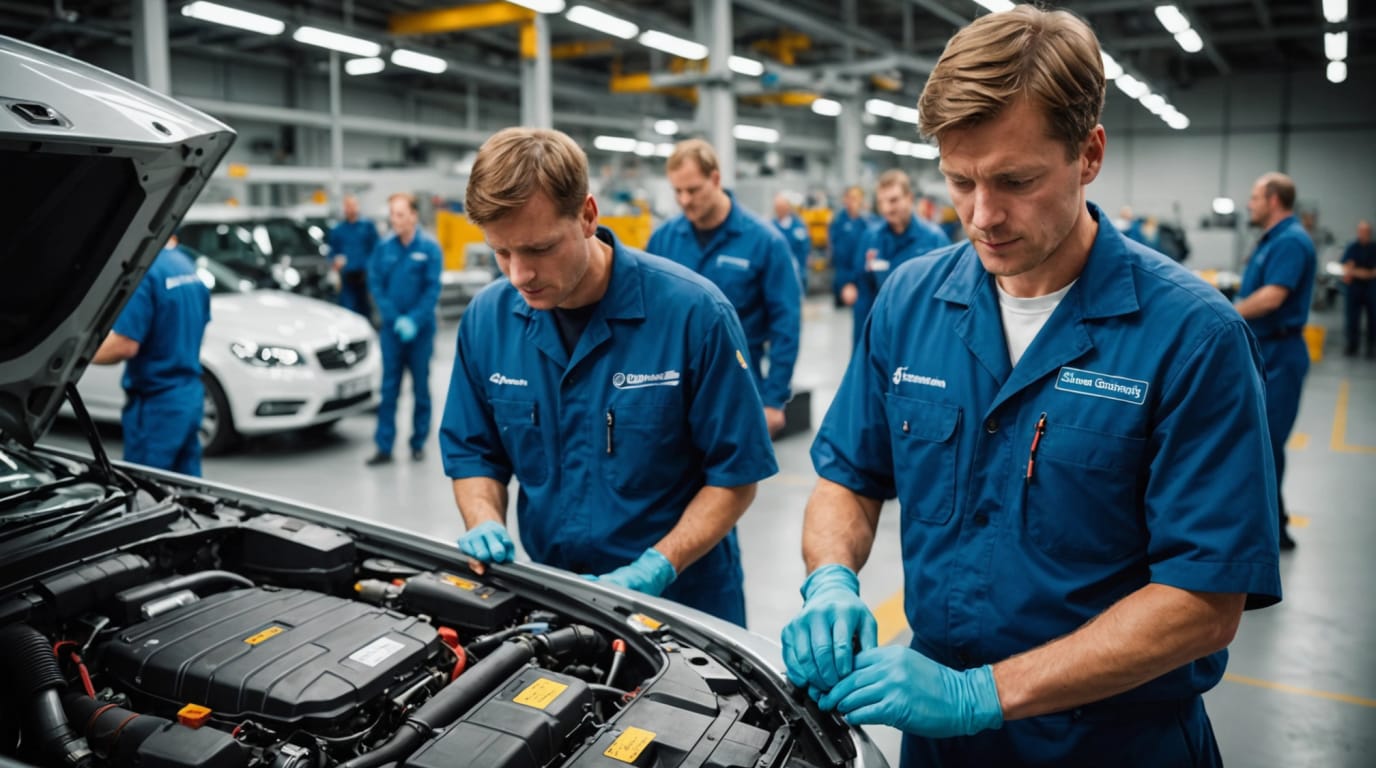
Germany's famed automotive industry, a pillar of the nation's economic strength for decades, faces a significant turning point. As the world increasingly embraces electric vehicles and competition from abroad intensifies, the industry is experiencing a contraction, leaving thousands of highly skilled workers potentially displaced. Simultaneously, a surge in global geopolitical tensions, particularly Russia's war in Ukraine, has spurred a dramatic increase in defense spending, creating a boom for arms manufacturers. This confluence of factors has led to a compelling question: Can Germany's auto industry workers successfully pivot to defense jobs, and what would such a transition entail?
A Sector in Transition
The German automotive industry, home to iconic brands like Volkswagen, Mercedes-Benz, and BMW, has long been a source of national pride and economic stability. However, the shift towards electric vehicles (EVs) poses a significant challenge. While Germany initially pursued collaborations and overseas manufacturing to maintain cost-effectiveness, it has lagged in securing control over crucial EV components like batteries, leaving it vulnerable to competition from China and other Asian players.
Adding to the pressure, protectionist trade policies and broader macroeconomic uncertainties have further strained the manufacturing sector, leading to job cuts and even a technical recession in Germany. Consulting firm PwC forecasts that the German auto industry could shed 12% of its 770,000 jobs by 2030 due to digitalization and automation.
Defense Industry Ascendant
In stark contrast to the automotive sector's struggles, Germany's defense industry is experiencing a renaissance. Spurred by increased security concerns and a commitment to meet NATO's defense spending targets, the German government has pledged to significantly increase its military budget. This has created a surge in demand for weapons, ammunition, and other military equipment, leading to a hiring spree among defense contractors.
Rheinmetall, Germany's largest arms manufacturer, expects sales to exceed €10 billion in 2025, a substantial increase from €7.2 billion in 2023. The company plans to expand its annual artillery shell production tenfold by 2025 and has already hired around 4,000 people globally since the beginning of 2022. Applications for jobs at Rheinmetall have soared, with 108,000 applications received in Germany alone in the past year.
Skills and Synergies
The prospect of auto workers transitioning to defense jobs is not merely a matter of filling vacancies. There is a significant overlap in the skills required for both industries. Automotive manufacturing demands precision, efficiency, and a high level of technical expertise – qualities that are equally valuable in defense production.
"It makes sense to transfer this know-how," said Emmerich Schiller, Chief Operating Officer at gearbox manufacturer Renk, who previously held management positions at Mercedes-Benz. Former autoworkers are trained to make high-quality products quickly under pressure, skills that are highly transferable to the defense sector during a time of unprecedented expansion.
Several companies are already facilitating this transition. Auto parts giant Continental and arms behemoth Rheinmetall signed a memorandum of understanding in June 2024 to retrain auto workers affected by layoffs. Rheinmetall is actively recruiting trained workers by holding events at automotive plants and offering employment at defense factories near downsizing locations. Sensor specialist Hensoldt is also reportedly in talks to hire 200 workers from auto parts suppliers Continental and Bosch.
Challenges and Opportunities
While the potential for a smooth transition exists, several challenges must be addressed. Retraining programs are crucial to equip auto workers with the specific skills and knowledge required for defense manufacturing. The German government and industry are aware of this need, with the Federal Association of the German Security and Defense Industry (BDSV) urging government support for retraining and relocation costs.
Another potential bottleneck lies in security screenings for prospective weapons builders, which can be lengthy. The BDSV has called for an acceleration of this process to ensure a timely influx of workers into the defense sector.
Despite these challenges, the transition presents significant opportunities for both workers and the German economy. Defense jobs often offer higher salaries than other fields, with an average pay of around €68,000 before taxes, according to the job platform Stepstone. Moreover, a revitalized defense industry can contribute to Germany's economic growth and national security.
Factory Repurposing and Investment
The shift from automotive to defense is not limited to workforce transitions. Several companies are considering repurposing existing automotive factories for defense production. Rheinmetall, for example, is converting two factories in Berlin and Neuss, previously used for car parts, to produce military goods. The company is also considering acquiring Volkswagen's Osnabrück plant to manufacture combat vehicles.
The European Union's "ReArm Europe" plan, which could allocate over €800 billion to strengthen Europe's defense capabilities, may further incentivize this transition. Companies involved in repurposing factories could benefit from this funding, boosting investment and creating new opportunities.
A New Era for German Industry
The potential shift of German auto workers to defense jobs represents a significant transformation in the country's industrial landscape. While the automotive industry faces challenges, the burgeoning defense sector offers a lifeline for skilled workers and a chance to contribute to national security.
With strategic investments in retraining programs, streamlined security clearance processes, and the repurposing of existing manufacturing facilities, Germany can successfully navigate this transition and emerge with a stronger, more diversified economy. The shift also signifies a broader policy shift toward expansive fiscal policy, with defense and infrastructure emerging as top priorities. While increased military spending is not a miracle cure for the German economy, it can provide a welcome boost to domestic employment and consumption. The long-term impact, however, will depend on Germany's ability to adapt to the changing global landscape and embrace new opportunities in both the automotive and defense sectors.