Frontline Fatigue: Ukrainian Troops Endure Endless War, Peace Remains Distant Hope

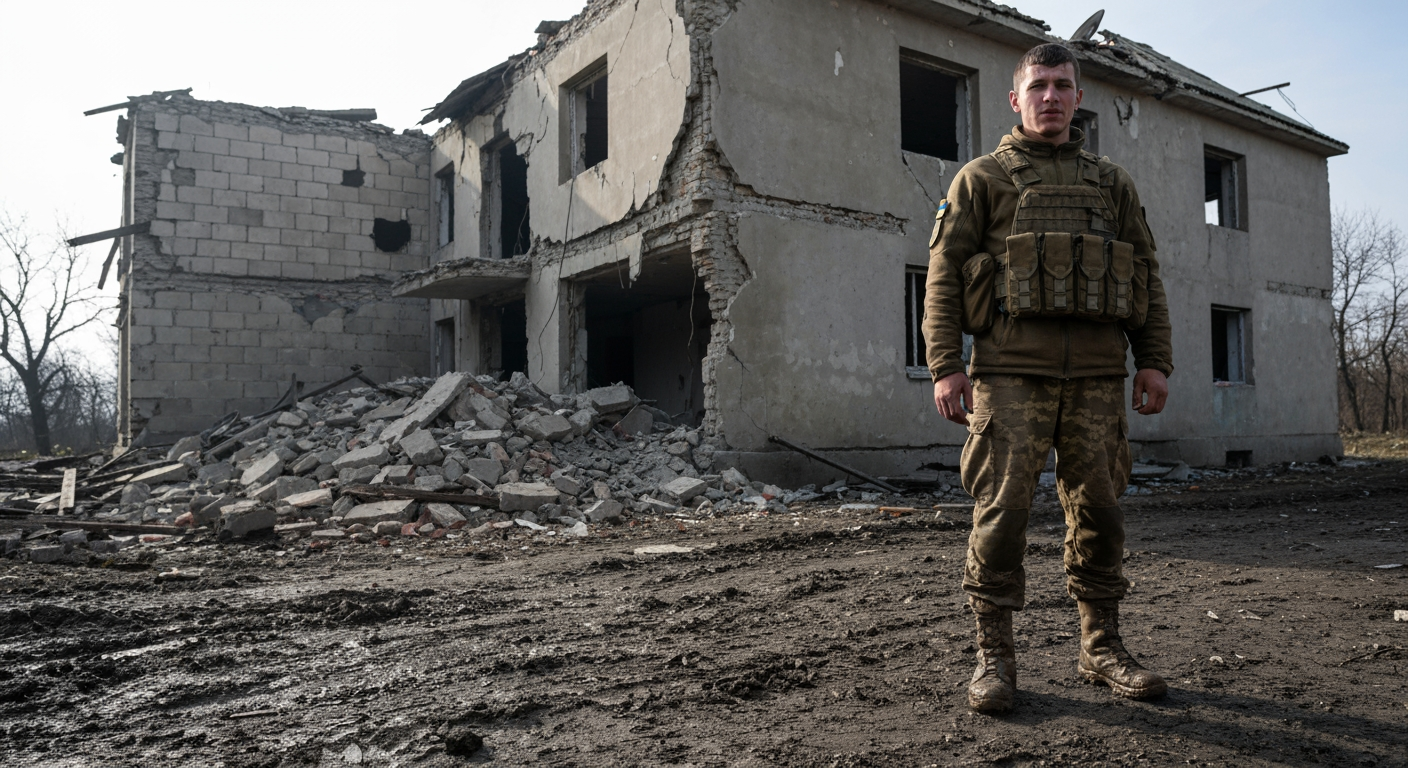
NEAR THE DNIPROPETROVSK-DONETSK BORDERS, UKRAINE – As the conflict in Ukraine approaches its fourth year, a pervasive sense of exhaustion grips the nation's frontline soldiers, who, despite their unwavering resolve to defend their homeland, express profound skepticism regarding the prospects of a lasting peace. The relentless grind of combat, characterized by constant Russian assaults and the harsh realities of trench warfare, has forged a grim determination among troops who largely view any proposed peace deals with distrust, convinced that Russia remains committed to its long-term objectives regardless of diplomatic overtures.
The war, which began in earnest in February 2022, has settled into a brutal war of attrition along an estimated 800-mile front line, demanding immense physical and psychological toll from Ukrainian defenders. Moving between damp basements and muddy dugouts, soldiers like "Kelt," a 40-year-old artillery gunner, underscore their motivation stems from fighting for a higher cause: the defense of their country. Yet, this deep commitment is tempered by a stark realism about the enemy's intentions.
The Relentless Grind of Prolonged Warfare
The conditions on the front lines are a testament to the protracted nature of the conflict. Soldiers are subjected to continuous Russian attacks, often enduring long deployments in challenging environments. Infantrymen Bohdan and Ivan, from Ukraine's 31st Brigade, exemplify this struggle, having spent 62 days deployed east of Pokrovske. They describe hiding in village shops and tiny basements to avoid detection, with the constant threat of drone attacks looming overhead. Their survival depended on aerial resupply, and their living quarters, as small as 3 square meters, served as their sanctuary and, at times, their only restroom. Such experiences underscore the profound mental and physical strain. A Ukrainian military psychologist noted that between 3% and 5% of those returning from frontline deployments require further examination or treatment, highlighting the unseen wounds of war that accompany the visible casualties. The sheer duration of the conflict, far exceeding initial expectations, has led to growing strains, including a record 21,602 absences without leave from the Ukrainian army in October, signaling a wider issue of manpower shortages and the need for troop rotations.
Waning Hope for Resolution Amidst Distrust
From the perspective of those entrenched in the fight, the belief that peace is within reach has significantly waned. Many soldiers articulate a deep distrust of Moscow's willingness to adhere to any peace agreement. "Kelt," speaking from a mud-walled trench, voiced concerns that any truce would merely be a short-term measure for Russia to restore its forces over three to five years, only to return with renewed aggression. This sentiment is echoed by Serhii Filimonov, commander of the Da Vinci Wolves battalion, who fears that any deal could inadvertently provide Russia with the necessary respite and resources to launch future offensives.
This skepticism is not unfounded. Russia's demands in recent peace proposals, including the requirement for Ukraine to withdraw troops from Donetsk, Luhansk, Zaporizhzhia, and Kherson – territories illegally annexed by Moscow in 2022 – are widely seen as unacceptable demands for surrender. Ukrainian President Volodymyr Zelenskyy has unequivocally stated that Ukraine will not cede territory or compromise its dignity, emphasizing that thousands of Ukrainians have died defending these regions. The notion of reducing the size of Ukraine's military as part of a peace deal is also met with derision on the front lines, with soldiers viewing it as an invitation for future attacks.
Strategic Outlook: Fighting for Years to Come
Despite the overwhelming exhaustion, Ukraine's leadership and military commanders maintain a firm stance against territorial concessions, signaling a prolonged struggle. Oleksandr Pivnenko, Commander of Ukraine's National Guard, has asserted that Ukraine is capable of continuing the war for several more years, if necessary. While acknowledging the widespread desire for the conflict to end, Pivnenko stresses that the cost cannot be the loss of territory, a position he believes Ukrainian society would not accept given the sacrifices made. Victory, from a military perspective, remains the liberation of all occupied territories, a goal that, while perhaps not immediately achievable, remains strategically paramount for Ukraine's future.
The ongoing diplomatic efforts, including recent talks in Geneva and previous meetings in Istanbul, have failed to bridge the fundamental disagreements between Moscow and Kyiv, particularly concerning territorial integrity. Russia's insistence on its annexed territories and Ukraine's resolute refusal to cede any land create an impasse that peace negotiators have yet to overcome. The most that has been achieved, according to some analyses, is a potential for a ceasefire that could merely freeze the conflict, allowing both sides to consolidate positions and prepare for future engagements, rather than a definitive resolution.
The Enduring Human Cost and Unwavering Resolve
For soldiers like Bohdan, a former heating insulation installer who volunteered in 2022, and Ivan, a handyman who joined in July, the question is not if they are ready to return to the front, but "What choice do we have?" Their defiance, though marked by immense personal suffering and longing for normalcy, reflects a deeper national resolve. Bohdan encapsulates this sentiment with a Ukrainian saying: "If you let a cat under the table, it will appear on the table. It's the same with Putin." This perspective underscores a belief that any significant concession will only embolden further aggression.
The human cost extends beyond the battlefield, with Ukraine spending almost all its tax revenue on its military since 2022, relying on Western grants and loans to fund essential services like healthcare, education, and pensions. This financial dependency highlights the broad implications of the war's continuation, not just for the soldiers, but for the entire nation.
Conclusion
The prolonged conflict in Ukraine has created a cohort of battle-hardened but deeply exhausted soldiers who harbor little illusion of an imminent and lasting peace. Their experiences on the front lines, characterized by constant danger and immense personal sacrifice, have cemented a view that Russia's ambitions are unyielding, rendering current peace proposals insufficient without robust security guarantees. While the desire for an end to hostilities is profound, the unwavering commitment to territorial integrity from Kyiv and its troops suggests that the war, despite its staggering human cost and pervasive fatigue, is likely to continue for the foreseeable future, as both sides remain far from a mutually acceptable resolution.
Related Articles

Mounting Frustration Grips Russia as Economic Hardship and War's Toll Deepen
Moscow, Russia – A palpable shift in public sentiment is emerging across Russia, with growing frustration among citizens fueled by a confluence of economic pressures, increasing internet restrictions, and the undeniable...

Germany's Strategic Calculus: Ukraine Aid is an Investment in European Security, Not Charity
Berlin – The ongoing provision of substantial aid to Ukraine by Germany and its allies is increasingly being framed not as an act of altruism, but as a crucial investment in European security and stability. This...