Kosovo: A Nation Forged in Freedom, Battling Enduring Hardship
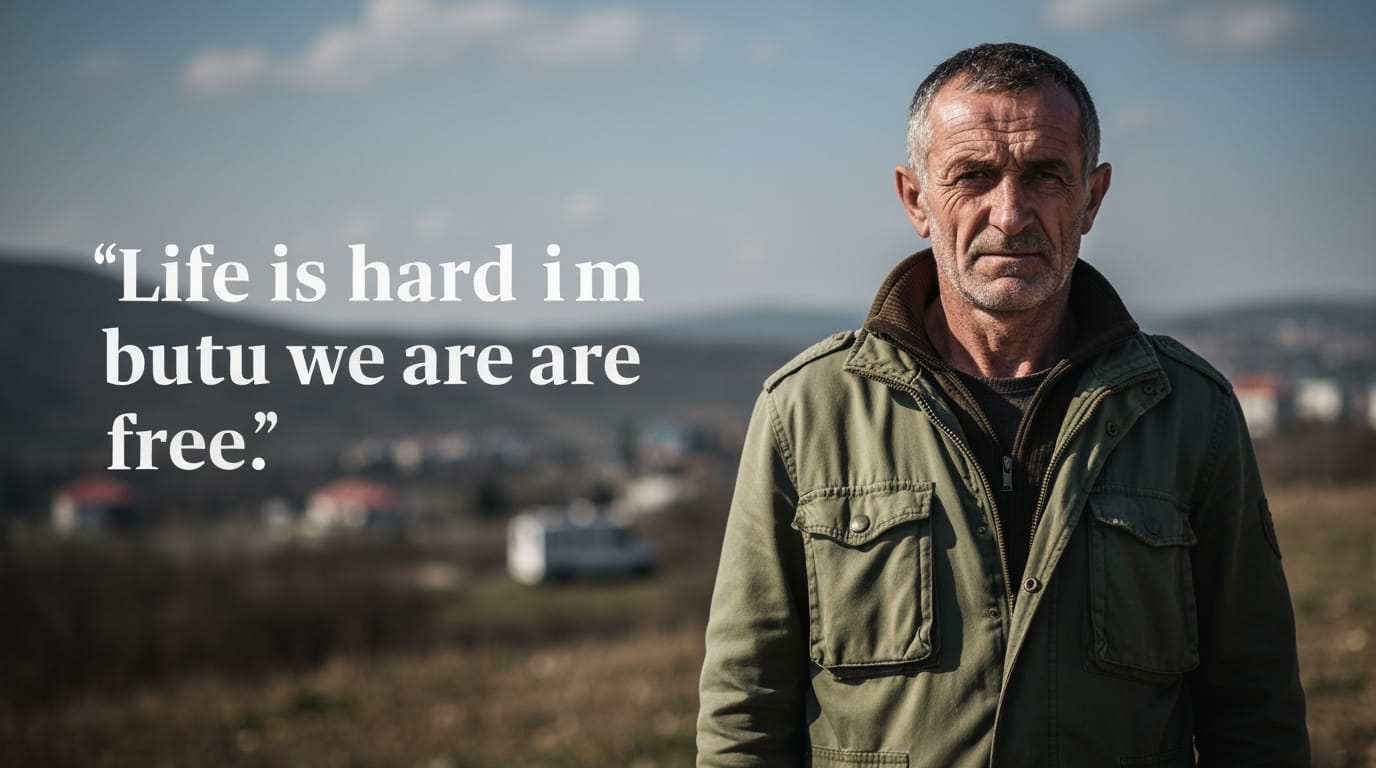
PRISTINA, Kosovo – Decades after the cessation of conflict and more than 15 years since declaring independence, Kosovo presents a complex tableau of hard-won freedom tempered by persistent socio-economic challenges. The sentiment often expressed by those who fought for its liberation resonates deeply: life in Kosovo is undeniably difficult, yet the cherished state of independence remains paramount. This duality shapes the daily realities and future aspirations of Europe's youngest nation, a republic still finding its footing amidst a challenging regional and global landscape.
The Legacy of Conflict and the Birth of a Nation
Kosovo's path to statehood is etched in the memory of the late 20th century Balkan conflicts. The Kosovo Liberation Army (KLA) emerged as a key force, engaging in armed struggle against Serbian oppression after years of non-violent resistance proved insufficient to counter the dismantling of Kosovo's autonomy and the imposition of an apartheid system in the early 1990s. The KLA's objective was the defense of Kosovo, seeking secession from Serbia, which culminated in the 1998-1999 war and NATO's intervention that ultimately led to the withdrawal of Yugoslav forces. Following the conflict, the United Nations administered Kosovo, paving the way for its declaration of independence in February 2008.
For many, the creation of an independent Kosovo marked "year zero," a long-awaited beginning of newfound freedoms and liberties. This self-determination was not merely a political aspiration but a profound cultural and societal shift, allowing the majority Albanian population to forge its own destiny free from external control. Despite the initial euphoria, the aftermath brought the harsh realities of post-war reconstruction, with fragmented families, destroyed infrastructure, and poor living conditions presenting immediate obstacles.
The Enduring Weight of Hardship: Economic and Social Strain
The dream of economic revitalization that accompanied independence has yet to be fully realized. Kosovo remains one of Europe's poorest countries, grappling with massive social and economic problems. Unemployment rates, while showing some recent decline, have historically been exceptionally high, averaging 33.98 percent between 2001 and 2024. As of 2024, the unemployment rate stood at 10.80 percent, a decrease from previous years, but youth unemployment (15-24 years) reached 19.5 percent in 2024, an increase from 17.3 percent in 2023. The inactive population—working-age individuals neither employed nor actively seeking work—is notably high at 56.8 percent in 2024, a figure that surpasses the active workforce, signaling significant untapped potential.
The economy is heavily reliant on remittances from the diaspora, a critical lifeline that replenishes the country's currency supply and supports vital imports. Without these remittances, Kosovo would struggle to meet its economic needs, indicating a lack of a competitive export sector. Infrastructure remains weak, energy supply is inadequate, and access to financial services is limited. The informal sector is estimated to generate a significant portion, approximately 30 percent, of Kosovo's gross domestic product, undermining labor laws and fair competition.
Corruption remains a pervasive challenge and a significant concern for citizens, civil society, and the international community alike. In 2022, Kosovo scored 41 out of 100 on Transparency International's Corruption Perceptions Index, placing it 84th globally. Public procurement, in particular, is noted for high-profile corruption cases involving former officials. Citizens perceive corruption as a major problem, with an estimated 80 percent viewing it as a significant threat. Challenges include political interference in the justice system, a slow administration of justice, and a lack of effective prosecution in high-level cases, leading to a perception that corruption often goes unpunished.
The Price of Freedom: A Veteran's Reality and Youth Exodus
For KLA veterans, the transition from wartime heroics to peacetime struggles has been particularly poignant. While entitled to benefits such as pensions, healthcare, and housing priority, many find the financial support insufficient. One veteran, Arben Doçi, shared his disappointment with receiving a 170-euro pension, which he stated was inadequate to provide for his family, necessitating his search for work abroad in countries like Croatia. This personal story encapsulates a broader issue: the perceived neglect of those who fought for independence. The legal framework surrounding veteran benefits has itself been mired in controversy, with concerns raised about the integrity of veteran lists and allegations of fraud costing the state budget tens of millions of euros annually.
The economic hardships and lack of opportunities contribute significantly to a phenomenon known as brain drain, with a substantial portion of Kosovo's youth seeking better prospects abroad. Nearly 30% of the population aged 18 to 30 has migrated to other countries in recent years, primarily for better job prospects, advanced education, and an improved quality of life. Germany is a primary destination, attracting a large number of Kosovars due to its robust job market and higher living standards. In a striking example, a study of North Mitrovica Gymnasium students from the 2020 generation found that over 60% had left Kosovo, with 17 out of 21 students in one class migrating. This exodus of young, often qualified individuals, poses a long-term threat to the nation's development.
Cherished Sovereignty and Unfinished Aspirations
Despite these profound challenges, the value of sovereignty remains a cornerstone of Kosovar identity. For many, freedom means the ability to self-determine, to build democratic institutions, and to foster a multi-ethnic society, a stark contrast to the historical repression experienced. Senior KLA figures who have transitioned into politics, such as Hashim Thaçi and Ramush Haradinaj, emphasize that their struggle was for freedom and peace, not for territorial gain. Thaçi, during his war crimes trial, declared his innocence and stated, "Throughout my life, I stood with the people of Kosovo, defending freedom, life and dignity."
Kosovo has made notable progress in building its institutions and establishing democratic governance since independence. It has a clear European orientation and aspires to Euro-Atlantic integration. However, full international recognition remains an ongoing struggle, with several UN and EU member states yet to acknowledge its sovereignty. This lack of universal recognition, coupled with strained relations with Serbia, impedes Kosovo's potential for greater growth and integration into international organizations, thereby limiting tangible political and socio-economic benefits for its citizens.
A Future Defined by Resilience
The narrative of modern Kosovo is one of profound contrasts: a nation that heroically fought for its independence, now confronts the arduous task of translating that freedom into widespread prosperity and stability for all its citizens. While the economic and social hardships are undeniable, and the frustration among veterans and the youth is palpable, the underlying commitment to self-determination persists. The resilience demonstrated throughout its history continues to drive efforts to overcome corruption, create jobs, and secure a brighter future. As Kosovo navigates its complex present, the hard-won freedom serves as both a powerful reminder of past sacrifices and a guiding light for future aspirations, even as the daily struggle for a better life continues for many.


