Gamescom 2026: Industry Thrives Amid Record Success, Grapples with AI's Transformative Power
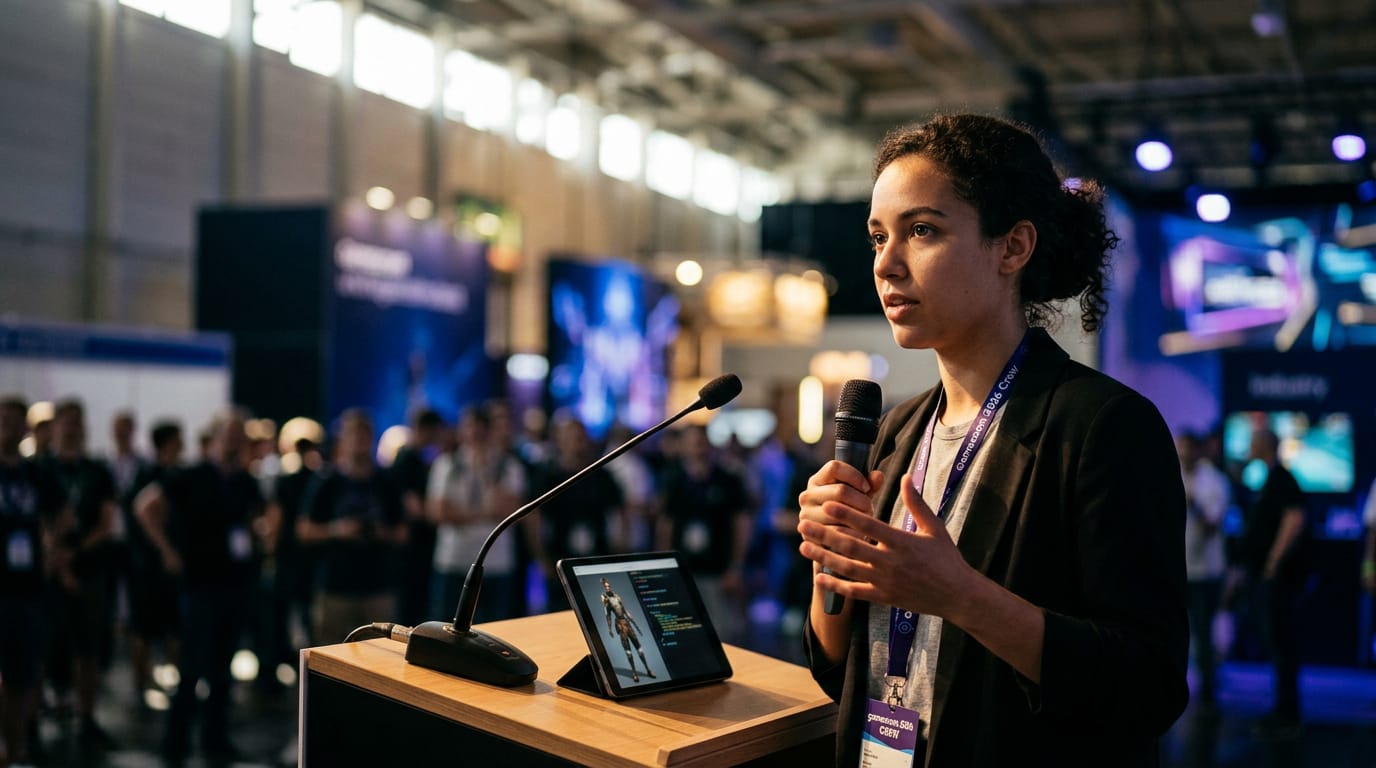
COLOGNE, GERMANY – Gamescom 2026, the world's largest video game trade fair, concluded its latest edition with resounding success, demonstrating the enduring vitality and economic strength of the global gaming industry. Held from August 26 to 30 in Cologne, Germany, the event broke attendance records and saw unprecedented political engagement, solidifying its status as a pivotal cultural and economic force. However, beneath the celebratory atmosphere of new game announcements and surging market forecasts, a pervasive theme emerged: the complex and often challenging integration of artificial intelligence (AI) into every facet of game development and the broader industry. The discussions surrounding AI underscored both its immense potential for innovation and the significant ethical, economic, and logistical hurdles it presents for developers, publishers, and policymakers alike.
A Grand Showcase of Industry Vitality
Gamescom 2026 marked a historic milestone, with all exhibition halls at the Koelnmesse fully booked for the first time, signaling overwhelming demand from exhibitors. Over 1,600 companies participated, with approximately 70% hailing from outside Germany, showcasing the event's global reach. Organizers anticipate attendance figures exceeding 300,000 public and trade visitors, reflecting strong consumer interest and industry confidence. The indie game sector also experienced robust growth, expanding by 16% to host 420 studios, highlighting the thriving independent development scene. Beyond the main event in Cologne, Gamescom Latam, held earlier in São Paulo from April 29 to May 3, also reported record-breaking numbers. The Latin American counterpart attracted over 154,000 visitors, a 17.5% increase year-over-year, and facilitated an estimated US$180 million in new business through more than 13,000 business meetings. The sheer volume of new content unveiled during Gamescom Opening Night Live 2026, featuring highly anticipated titles such as "Sea of Remnants," "Warlock: Dungeons & Dragons," "Rayman Legends Retold," "Gears of War: E-Day," and "The Witcher 3: Wild Hunt Remastered," further underscored the industry's creative output and consumer appeal.
A notable aspect of this year's Gamescom was the heightened political attention, culminating in German Federal President Frank-Walter Steinmeier's attendance and keynote address at the Gamescom Congress. His presence, alongside other key political figures, symbolically highlighted the growing recognition of gaming's cultural, societal, and economic importance within Germany and beyond. The Gamescom Congress itself focused on the impact of gaming across society, including its role in democracy, education, culture, business, and science, and featured initiatives like "Gaming for Democracy," supported by Games Done Quick. This convergence of entertainment and public discourse cemented Gamescom's position as more than just a trade show, evolving into a significant platform for broader societal discussions.
Gaming's Economic Powerhouse
The robust activity at Gamescom 2026 aligns with optimistic projections for the global video game market. According to Newzoo's forecasts, the industry is expected to generate $213.9 billion in 2026, representing a 6.1% year-on-year growth. This sustained expansion, while not as explosive as the pandemic years, indicates a steady and healthy market. Mobile gaming continues to dominate, projected to account for 57% of the market with $121.1 billion in revenue, driven by increased player spending and the rise of direct-to-consumer (D2C) platforms. Console gaming is forecast to reach $46.9 billion, comprising 22% of the market, with significant growth attributed to major releases like "Grand Theft Auto 6" slated for November. PC gaming, though holding the smallest market share at 21% ($45.9 billion), is also expected to grow by 5.3% year-on-year, propelled by premium and mid-priced titles, particularly across Asia-Pacific, Latin America, and MEA regions.
The figures paint a picture of an industry that continues to attract substantial investment and innovation, diversifying its revenue streams and expanding its global player base. The sustained demand for physical booths at Gamescom by major publishers and developers further illustrates their commitment to direct player engagement and gathering feedback on upcoming titles, underscoring the value placed on community interaction even in a digital-first era.
The AI Revolution: Promise and Peril in Game Development
While the overall outlook remains strong, Gamescom 2026 also served as a crucial forum for confronting the burgeoning role of artificial intelligence. AI-assisted development was identified as the single most significant factor poised to reshape the gaming industry over the next three years, according to 47% of respondents in the Gamescom 2026 dev Speaker Survey. The promise of AI lies in its potential to revolutionize development workflows, automate repetitive tasks, and enable the creation of more immersive and complex game worlds. Developers are already integrating AI tools to generate assets, streamline processes, and enhance gameplay experiences, such as creating more lifelike non-player characters (NPCs) that can adapt and remember interactions within vast open-world environments. Google DeepMind, for example, is actively partnering with game developers to prototype new gameplay experiences that push the boundaries of AI research in games, extending capabilities for continuous learning and adaptation within complex virtual ecosystems like EVE Online.
However, the rapid integration of AI also brings considerable apprehension. The Gamescom dev survey revealed that 83% of developers anticipate AI will impact team structures or productivity. While 36% believe AI will primarily change professional roles rather than reduce headcounts, a significant 33% expect AI to lead to smaller team sizes. Opinions are divided on AI's optimal application, with 34% seeing its greatest value in "code and production," yet 30% expressing a preference for minimal AI involvement in game development. This tension highlights a critical industry-wide debate about the balance between technological advancement and human creativity, as well as the future of employment in game development.
Navigating AI's Complex Landscape
Beyond the immediate impact on team structures, the gaming industry faces a complex array of challenges in fully embracing AI. A report, "The State of AI in Gaming 2026," co-authored by KPMG and UNLV's International Gaming Institute, indicates that while there's strategic ambition for AI adoption, the overall industry maturity in this area remains relatively low, scoring 45 out of 100. Key barriers to scaling AI solutions include persistent knowledge and training gaps, resource constraints, and critical concerns surrounding cybersecurity and data privacy. Furthermore, integrating AI into existing, often legacy, systems poses a significant hurdle, particularly for land-based operators who lag behind their online counterparts in AI maturity.
Ethical considerations, intellectual property rights, and the potential for regulatory oversight also loom large. There's a notable disconnect between regulators and the industry regarding AI implementation, especially concerning player protection and safety. While jurisdictions in North America and Western Europe are increasingly mandating or encouraging automated monitoring systems, 58% of regulators believe the industry isn't doing enough, often overlooking the industry's primary drive for AI adoption: cost reduction. This gap necessitates greater dialogue and collaboration to establish clear guidelines and foster responsible AI development. The industry must also contend with broader challenges such as economic uncertainty, market saturation, and the ever-present issue of game discoverability, all of which are exacerbated by the transformative potential of AI.
Charting a Collaborative Future
Gamescom 2026 vividly illustrated an industry in a dynamic state of evolution – robust, creatively fertile, and economically powerful, yet simultaneously at a crossroads regarding artificial intelligence. The record-breaking attendance, significant political recognition, and strong market projections affirm gaming's established global footprint. However, the omnipresent discussions around AI underscore the need for careful navigation of its dual nature: a powerful tool for innovation that also carries profound implications for workforce, ethics, and regulatory frameworks.
The path forward, as many industry leaders suggested, will require sustained dialogue and collaboration among developers, publishers, policymakers, and academics. By proactively addressing concerns around job evolution, ethical AI use, data security, and intellectual property, the gaming industry can harness AI's potential to create even more groundbreaking and immersive experiences, while responsibly shaping a future that benefits both creators and players. Gamescom 2026, therefore, was not merely a celebration of current achievements but a vital platform for collectively strategizing how to build a resilient, innovative, and ethically sound future for interactive entertainment.