Geopolitical Shockwave: Venezuela Intervention Leaves Central European Populists Navigating Treacherous Waters
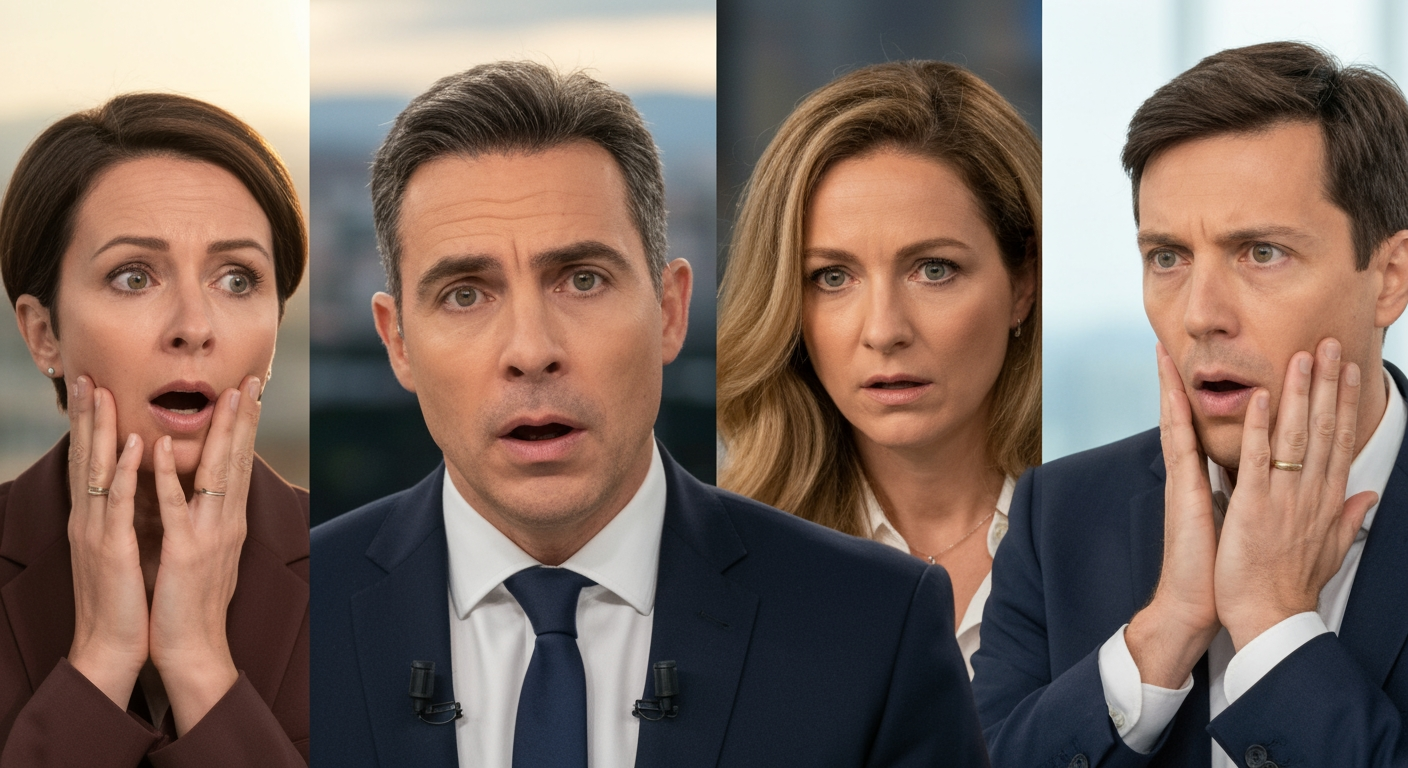
Brussels, Europe – The audacious United States military intervention in Venezuela on January 3, 2026, which saw the capture of President Nicolás Maduro, has sent a complex and unsettling ripple effect across Europe, particularly challenging the established narratives and strategic positions of populist movements in the continent’s central and eastern regions. While the broader European Union grapples with the profound implications for international law and global stability, Central European populists find themselves in a precarious dance between their nationalistic principles and geopolitical realities.
The dramatic "Operation Absolute Resolve," executed by U.S. forces, culminated in the apprehension of Maduro and his wife, Cilia Flores, from Caracas, ostensibly to face narcotrafficking charges in New York. This unilateral action, framed by the Trump administration as a critical move against a "narco-terrorist" state and for securing access to Venezuela's vast oil reserves, immediately ignited a fierce debate over sovereignty, international law, and the future of the global order.
Europe's Divided Response Underscores Deeper Cracks
The European response to the events in Venezuela has been characterized by a noticeable division, underscoring the deep fissures within the bloc regarding foreign policy and adherence to international norms. While 26 of the 27 EU member states issued a cautious statement urging respect for international law and Venezuela's democratic will, they notably refrained from outright condemning the U.S. operation. This diplomatic tightrope walk reflects a fundamental dilemma: many European leaders welcomed the removal of Maduro, whom they considered illegitimate following disputed elections, but struggled to reconcile this outcome with the blatant violation of international law.
Leaders like French President Emmanuel Macron and German Chancellor Friedrich Merz stressed Maduro's illegitimacy but also acknowledged the "complex" legal assessment of the U.S. raid. Others, like Spain's Pedro Sánchez, were more vocal, stating that while they did not recognize the Maduro regime, they would "neither recognize an intervention that violates international law". This nuanced and often contradictory stance highlights the EU's weak hand in confronting a powerful ally that seems increasingly willing to disregard multilateral frameworks.
Central European Populists Confront Contradictions
For populist movements and governments in Central Europe, the Venezuela intervention presents a unique set of challenges to their core tenets. Historically, many of these parties champion national sovereignty, decry foreign interference, and express skepticism toward international institutions and "globalist" agendas often associated with the EU. The U.S. action, while a clear breach of state sovereignty, comes from an external power that some Central European populists also view as a crucial security guarantor, particularly against Russian influence.
Hungary, under its populist government, notably abstained from the joint EU statement, signaling a distinct position. This abstention could be interpreted as an alignment with the U.S. action, or at least a refusal to join in any criticism of Washington, potentially driven by shared anti-establishment sentiments or a strategic desire to maintain close ties with the Trump administration. However, this stance creates a potential ideological tightrope walk. While populists like France's Marine Le Pen immediately seized upon the event to declare state sovereignty "inviolable, sacred… and never negotiable," the silence or tacit approval from some Central European counterparts on the same principle, when violated by an ally, risks exposing inconsistencies.
The events challenge the narrative that international law is only binding when it suits their geopolitical adversaries. If a powerful ally can disregard these laws, it complicates the populist argument for national sovereignty and the rejection of a "rules-based order" that they often criticize but still rely upon for certain aspects of security and stability.
The Erosion of the Rules-Based Order
The U.S. intervention is widely seen across Europe as a significant blow to the post-World War II, rules-based international order that the continent has long championed. Legal experts and commentators have highlighted the absence of plausible justifications under the UN Charter for the use of force, raising concerns that the precedent set could lead to a more unstable and unpredictable global landscape.
For Central European populists, who often view the EU's emphasis on international law as an overreach into national affairs, this erosion presents a double-edged sword. On one hand, it could validate their skepticism about the efficacy and fairness of global governance. On the other, it creates a vacuum that could empower larger, more assertive powers to act unilaterally, potentially diminishing the very national sovereignty they seek to protect. The prospect of a world where "might makes right," as some analysts suggest the U.S. has demonstrated, could leave smaller or less powerful nations, including those in Central Europe, vulnerable.
Strategic Rethink and Future Implications
The Venezuela crisis serves as a stark "wake-up call for Europe," urging a more united foreign policy and defense strategy. The perception that the U.S. is prioritizing its own hemisphere and increasingly disregarding traditional allies forces European nations, including those in Central Europe, to rethink their strategic dependencies. The shift towards a "Donroe doctrine" by the U.S., focusing on its own economic and business primacy, fundamentally alters the transatlantic relationship that many Central European countries have relied upon for decades.
Populist leaders in Central Europe, who often criticize deeper European integration, may find their positions complicated by this new geopolitical reality. The argument for greater national autonomy faces the counter-argument for stronger, more unified European action to protect collective interests and project influence in a world where superpowers operate with increasing unilateralism. The long-term implications could force these movements to adapt their platforms, either by embracing a more robust pan-European defense, or by further isolating themselves in a rapidly shifting international arena.
The Venezuela intervention has not simply removed a controversial leader; it has reshaped geopolitical expectations and challenged foundational principles. For Central European populists, it is a moment of profound introspection, as they must reconcile their nationalistic ideals with the uncomfortable truths of a world where international norms are increasingly fluid and the security landscape is more uncertain than ever before. The coming months will reveal how these movements adapt to this new, more volatile reality, and what it means for the future of European unity and global order.
Related Articles


Mounting Frustration Grips Russia as Economic Hardship and War's Toll Deepen
Moscow, Russia – A palpable shift in public sentiment is emerging across Russia, with growing frustration among citizens fueled by a confluence of economic pressures, increasing internet restrictions, and the undeniable...

Germany's Strategic Calculus: Ukraine Aid is an Investment in European Security, Not Charity
Berlin – The ongoing provision of substantial aid to Ukraine by Germany and its allies is increasingly being framed not as an act of altruism, but as a crucial investment in European security and stability. This...