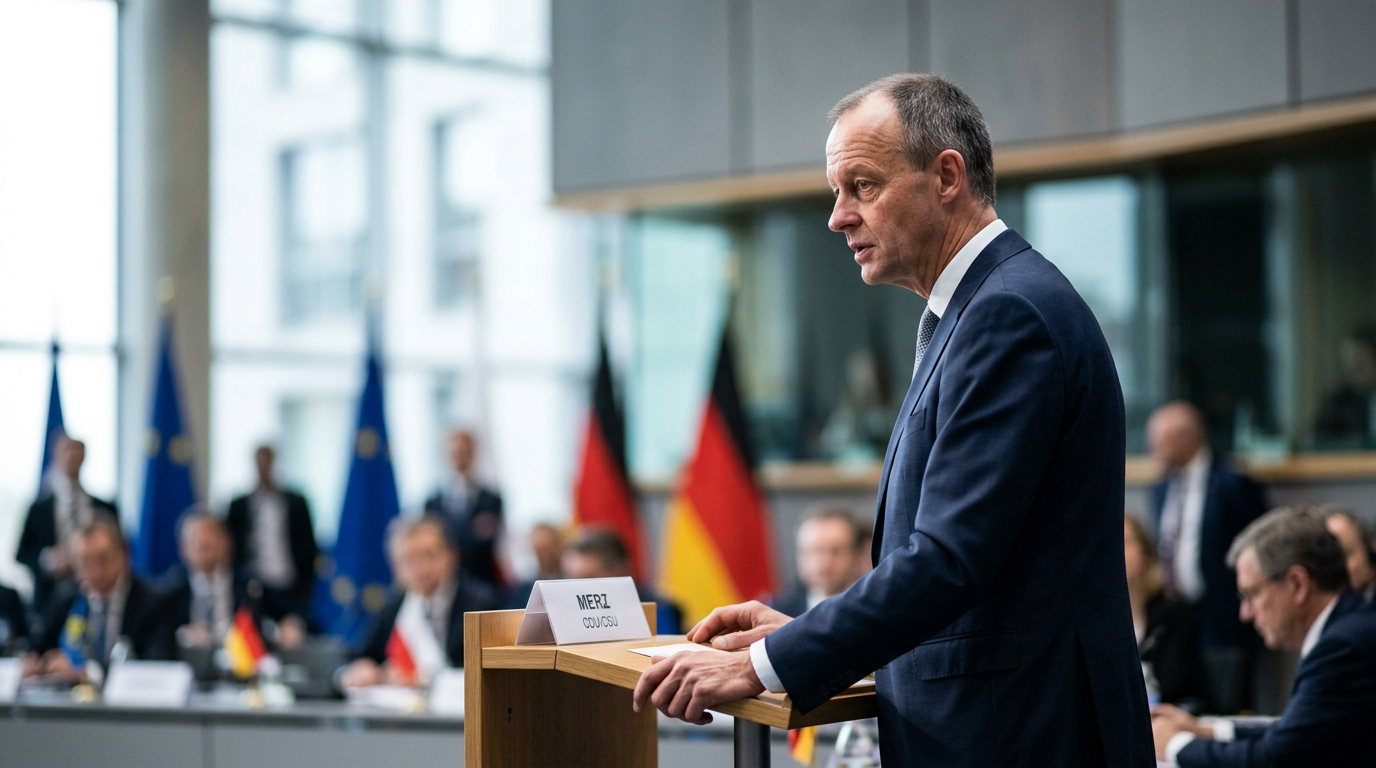
Georgia's Kavelashvili Defends Contested Vote Amid Escalating EU Tensions
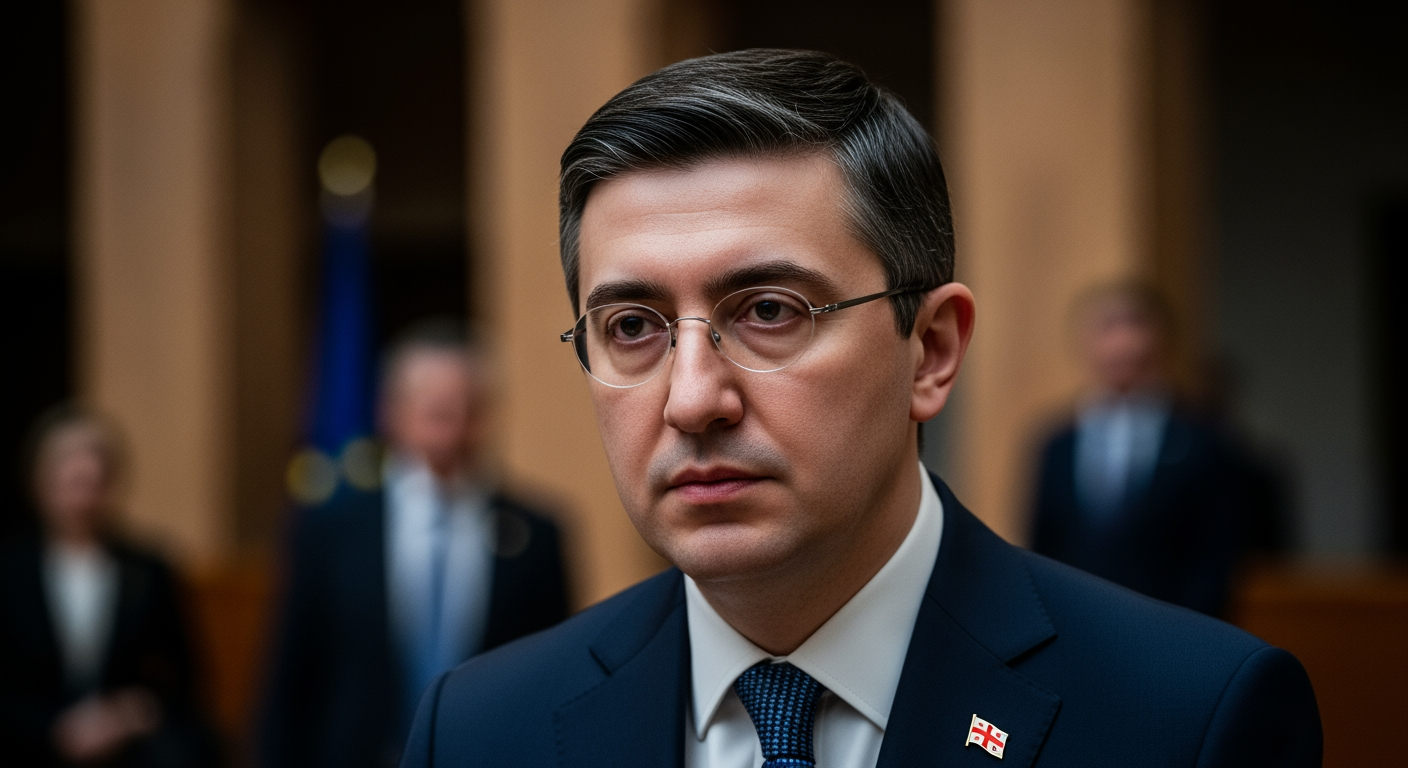
TBILISI, Georgia – Mikheil Kavelashvili, Georgia's newly sworn-in president, has vigorously defended the integrity of the nation's 2024 parliamentary and presidential elections, even as a deepening political crisis and growing strains with the European Union cast a shadow over the country's Western aspirations. Kavelashvili's ascent to the presidency, marked by an opposition boycott and widespread protests, coincides with increasing international concern over Georgia's democratic trajectory and its commitment to the rule of law, pushing Tbilisi further away from its long-stated goal of European integration.
Kavelashvili, a former professional footballer turned hardline politician, took office on December 29, 2024, following a presidential election in which he was the sole candidate. This unusual circumstance arose after opposition parties boycotted the vote, citing concerns over the legitimacy of the preceding October 26 parliamentary elections. His defense of the electoral process comes at a critical juncture for Georgia, a nation caught in a geopolitical tug-of-war between its pro-Western populace and a government increasingly perceived as drifting towards a more authoritarian, Russia-aligned stance.
The Contentious Path to the Presidency
The controversy surrounding Kavelashvili's presidency is rooted in the October 2024 parliamentary elections, which saw the ruling Georgian Dream party secure a victory that was immediately challenged by domestic opposition and international observers alike. The European Parliament, in a significant move, declared it did not recognize the election results, citing "significant irregularities" and describing the process as "fundamentally flawed." Critics pointed to allegations of fraud, an uneven playing field, and pressure on voters, which undermined public confidence.
Despite these condemnations, Kavelashvili, a prominent figure within the Georgian Dream-allied People's Power movement, asserted the elections were conducted without violations, stating they were "better than any before." This assertion stands in stark contrast to numerous reports from election observers and the European Union, which noted shortcomings in Georgia's democratic processes. The parliamentary outcome paved the way for Kavelashvili's uncontested presidential bid, as constitutional changes in 2017 shifted the presidency from a direct popular vote to an electoral college. His nomination by the Georgian Dream party, and subsequent election by 224 out of 225 electoral college members on December 14, 2024, was met with large-scale protests in Tbilisi, where thousands demonstrated against what they viewed as an illegitimate process. Outgoing President Salome Zourabichvili, a pro-Western critic of the ruling party, refused to recognize the outcome, vowing to remain in office and positioning herself as a leader of the protest movement.
Deepening Rift with the European Union
The electoral disputes are but one facet of Georgia's increasingly strained relationship with the European Union. Once considered a frontrunner for EU membership, Georgia's path has been "de facto halted" since June 2024, primarily due to a series of legislative actions by the Georgian Dream government that have been widely criticized as undermining democratic principles. The European Commission's 2025 Enlargement Communication explicitly called on Georgian authorities to "urgently reverse its democratic backsliding" and address critical reforms.
A central point of contention has been the reintroduction and adoption of a controversial "foreign agent law" in May 2024. Modeled after similar legislation in Russia, the law requires organizations receiving more than 20% of their funding from abroad to register as "organizations carrying out the interests of a foreign power." Kavelashvili himself was a co-author of this law. The EU, alongside numerous international bodies and civil society groups, views this legislation as a tool to suppress independent media and non-governmental organizations, which are vital components of a healthy democracy and a prerequisite for EU membership. The law triggered massive protests across Georgia, with many citizens fearing it signals a move away from European values and closer alignment with Moscow.
Further complicating relations, the Georgian government adopted a legislative package on "family values and the protection of minors" in September 2024. This anti-LGBTQ+ legislation directly contradicts EU norms on minority rights, further highlighting a divergence in values. President Kavelashvili has openly defended these "traditional values," stating that the ruling party recognizes marriage only as a union between a man and a woman.
The "Global War Party" Narrative and Geopolitical Alignment
The Georgian Dream party, despite publicly stating its commitment to EU membership, has increasingly adopted anti-Western rhetoric. Kavelashvili and other government officials have propagated the narrative of a "Global War Party," insinuating that Western powers, particularly the United States, are attempting to draw Georgia into a conflict with Russia. This stance has fueled suspicions among critics who argue that the ruling party, influenced by its founder and billionaire Bidzina Ivanishvili, is steering the country towards Russia's orbit.
The government's decision in November 2024 to suspend EU accession negotiations until late 2028 further exacerbated these concerns. This move, despite overwhelming public support for EU integration (polls show 80-89% of Georgians favor joining the EU), prompted the EU to halt financial bilateral assistance directly benefiting Georgian authorities. The European Council expressed regret over this decision, emphasizing its readiness to support the Georgian people's European aspirations should the authorities reverse their current course.
A Nation at a Crossroads
Georgia's current political landscape is marked by a profound internal division. While the government, under President Kavelashvili, insists on the legitimacy of its actions and its continued commitment to a European future, its legislative agenda and anti-Western narratives have alienated key international partners. The European Union granted Georgia candidate status in December 2023 on the understanding that it would implement specific reforms related to democracy, rule of law, and fundamental rights. However, the subsequent actions of the Georgian Dream party have been interpreted by the EU as a significant deviation from these commitments, prompting warnings that Georgia's accession process remains effectively frozen.
The future of Georgia's relationship with the EU, and indeed its geopolitical orientation, hangs in the balance. The government's current trajectory, championed by figures like President Kavelashvili, risks further isolating Georgia from its Western allies and deepening its political and economic reliance on Russia. The ongoing protests, driven by a strong pro-European sentiment among the Georgian populace, underscore the profound societal desire for a different path—one that aligns with democratic values and closer integration with Europe. The coming months will be crucial in determining whether Georgia's leadership heeds these calls or continues on a course that could fundamentally alter the nation's future.
Related Articles

Ratko Mladić, "Butcher of Bosnia" and Convicted War Criminal, Dies at 84
THE HAGUE, Netherlands – Ratko Mladić, the former Bosnian Serb military commander known as the "Butcher of Bosnia" and convicted of genocide, war crimes, and crimes against humanity, has died at the age of 84. Serbian...

Long-Awaited 9/11 Mastermind Trial Set for 2028, Decades After Attacks
GUANTANAMO BAY, Cuba – Nearly a quarter-century after the devastating terror attacks of September 11, 2001, a military judge has finally set a trial date for Khalid Sheikh Mohammed, the alleged mastermind behind the...