German Acting Icon Mario Adorf Dies at 95, Leaving Behind a Towering Legacy
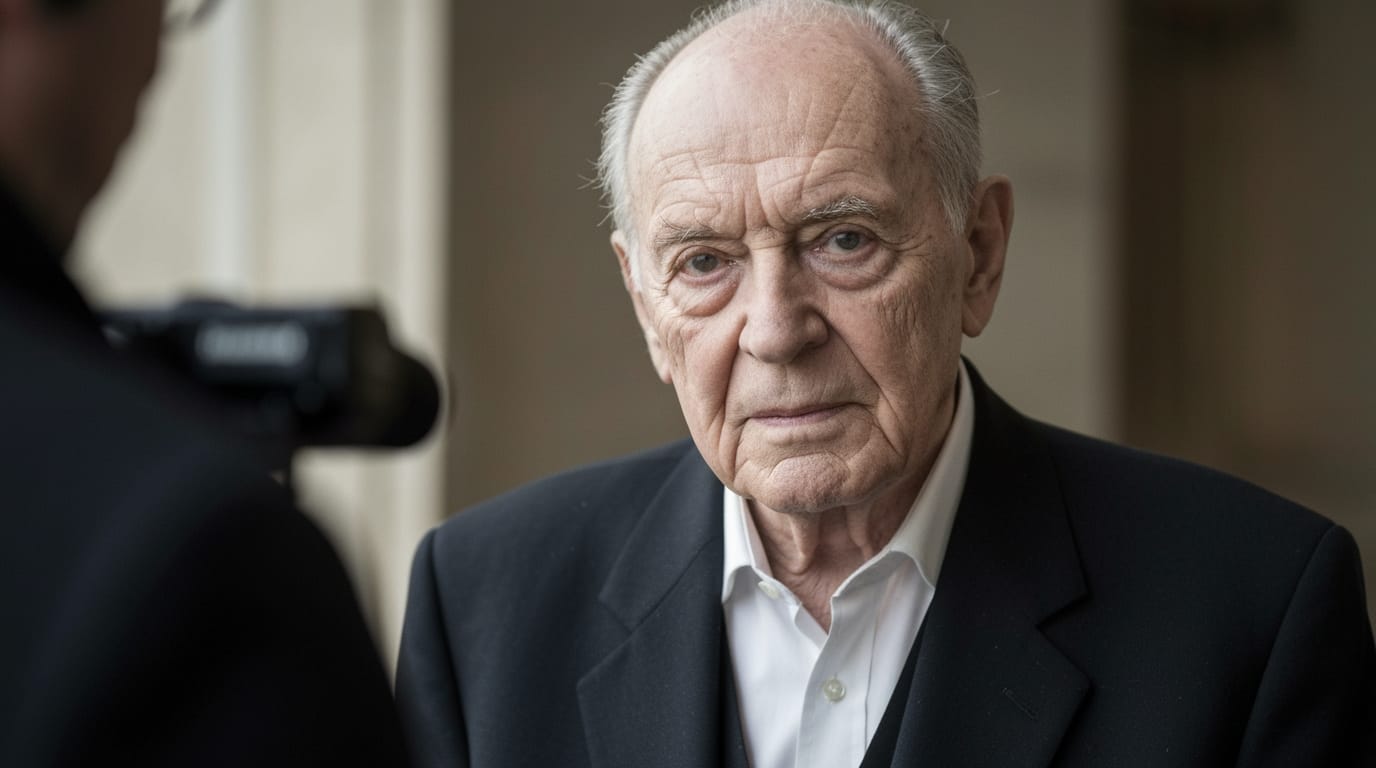
Paris, France – Mario Adorf, the revered German actor whose captivating presence and remarkable versatility graced more than 200 film and television productions over nearly seven decades, passed away on Wednesday, April 8, 2026, in his Paris apartment. He was 95 years old and had been battling a short illness. Adorf's death marks the end of an era for European cinema, as he leaves behind an indelible mark as one of the continent's most distinguished and celebrated character actors. His passing was confirmed by his management and the Reinholz film agency, with his wife, Monique Faye, also citing the news.
Adorf's career was a testament to his profound talent, spanning from gritty post-war dramas and international thrillers to celebrated works of the New German Cinema and beloved television series. Known for his powerful portrayals, whether as a menacing villain or a nuanced dramatic figure, Adorf commanded the screen with an intensity and authenticity that earned him widespread critical acclaim and enduring popularity among audiences worldwide. His passing has elicited tributes across the film community, highlighting his immense contribution to the art form and the significant void his absence creates.
From Zurich to Stardom: A Global Career Takes Root
Born on September 8, 1930, in Zurich, Switzerland, Mario Adorf was the child of an Italian surgeon, Matteo Menniti, and a German medical assistant, Alice Adorf. He spent his formative years in Mayen, Germany, his maternal grandfather's hometown, where he was raised by his single mother. Adorf's early life experiences, straddling German and Italian cultures, arguably contributed to the rich complexity he brought to his diverse array of roles. His entry into the acting world began in 1954, and he quickly established himself, making his first on-screen appearance in the World War II drama "08/15".
His breakthrough role arrived in 1957 with Robert Siodmak's crime thriller "The Devil Strikes at Night" (Nachts, wenn der Teufel kam), where he portrayed the alleged murderer Bruno Lüdke. This performance earned him significant recognition and set the stage for a career characterized by challenging and memorable characters. The film itself was nominated for an Academy Award for Best Foreign Language Film, further elevating Adorf's early profile. Throughout the 1960s, Adorf began to expand his reach beyond Germany, working extensively in Italian cinema and gaining international exposure. His distinctive Mediterranean looks and rugged demeanor often cast him as formidable antagonists, a type he played with compelling conviction.
Versatility Defined: From Villains to Acclaimed Collaborations
Adorf's impressive acting range became a hallmark of his career. He effortlessly transitioned between languages and genres, appearing in French, Italian, and American productions alongside his prolific German work. He became particularly renowned for his portrayals of villains, most notably as the notorious Santer in the iconic "Winnetou" Western films, where his character's killing of Nscho-tschi in "Apache Gold" (1963) famously stirred widespread public sentiment. Despite the intensity of these roles, Adorf was known in real life for his gentle and generous nature.
The 1970s marked a significant period for Adorf, seeing him collaborate with some of the most influential directors of the New German Cinema movement. He delivered powerful performances in films like Volker Schlöndorff's "The Lost Honour of Katharina Blum" (1975) and, most famously, Schlöndorff's 1979 adaptation of Günter Grass's "The Tin Drum," which won the Academy Award for Best Foreign Language Film. In "The Tin Drum," Adorf portrayed the complex character of Alfred Matzerath, showcasing his ability to embody deep human contradictions. He also worked with the celebrated Rainer Werner Fassbinder in the 1981 film "Lola".
Adorf's international film credits include appearances in Agatha Christie's "Ten Little Indians" and "Smilla's Sense of Snow," as well as a role in the BBC adaptation of John le Carré's "Smiley's People". Despite his success abroad, Adorf famously turned down roles in several iconic Hollywood films, including Francis Ford Coppola's "The Godfather," Billy Wilder's "One, Two, Three," and Sam Peckinpah's "The Wild Bunch," often citing concerns about character violence or other personal reasons. These decisions, while perhaps surprising to some, underscore his selective approach to his craft and his commitment to roles he found personally compelling.
An Enduring Figure in German Television and Culture
Beyond the silver screen, Mario Adorf maintained a prominent presence in German television, captivating audiences in numerous miniseries. His collaborations with director Dieter Wedel were particularly successful, including leading roles in "Der große Bellheim" (1992), "Der Schattenmann" (1995), and "Die Affäre Semmeling" (2002). These roles cemented his status as a national treasure, showcasing his ability to lead complex narratives and connect with a broad audience. Adorf's distinctive voice also made him a sought-after voice actor, lending his talents to German dubbings of animated films, such as providing the voice for Draco in "Dragonheart" (1996).
Throughout his distinguished career, Adorf received numerous accolades and honors, reflecting the profound impact he had on the entertainment industry. These include an Honorary Award at the Bavarian Film Awards in 2000, the Cine-Merit Award in 2005, and the German Film Award for lifetime achievements in 2004. In 2024, he was recognized with the Honorary Award of the Founders at the Deutscher Fernsehpreis. His contributions extended beyond acting; Adorf was also a successful author, publishing several autobiographical books that offered insights into his rich life and career.
Adorf's personal life saw him married twice. His first marriage was to actress Lis Verhoeven, with whom he had a daughter, Stella Adorf, also an actress. Since 1985, he was married to Monique Faye. He maintained residences in various European locations, including Campione d'Italia, Munich, Paris, and Saint-Tropez, embodying a true European cosmopolitanism.
A Legacy Beyond the Screen
Mario Adorf's passing leaves an irreplaceable void in the world of German and European cinema. His ability to embody a vast array of characters, from the utterly reprehensible to the deeply sympathetic, made him a captivating force on screen. He was not merely an actor; he was a storyteller who used his craft to explore the depths of the human condition, often challenging audiences with his powerful and unflinching performances. His long and illustrious career, marked by tireless work and a commitment to his art, made him a "Grand Seigneur" of acting.
In a final message shared through his manager, Michael Stark, shortly before his death, Adorf reportedly expressed his profound gratitude to his audience for their decades of loyalty. This sentiment encapsulates the deep connection he fostered with viewers throughout his life. Mario Adorf will be remembered not only for the sheer volume of his work but for the quality, intensity, and indelible authenticity he brought to every role, cementing his place as a true legend of European cinema. His legacy will continue to inspire future generations of actors and filmmakers, a testament to a life dedicated to the art of storytelling.