German Authorities Intensify Crackdown on Hells Angels, Targeting Organized Crime Networks
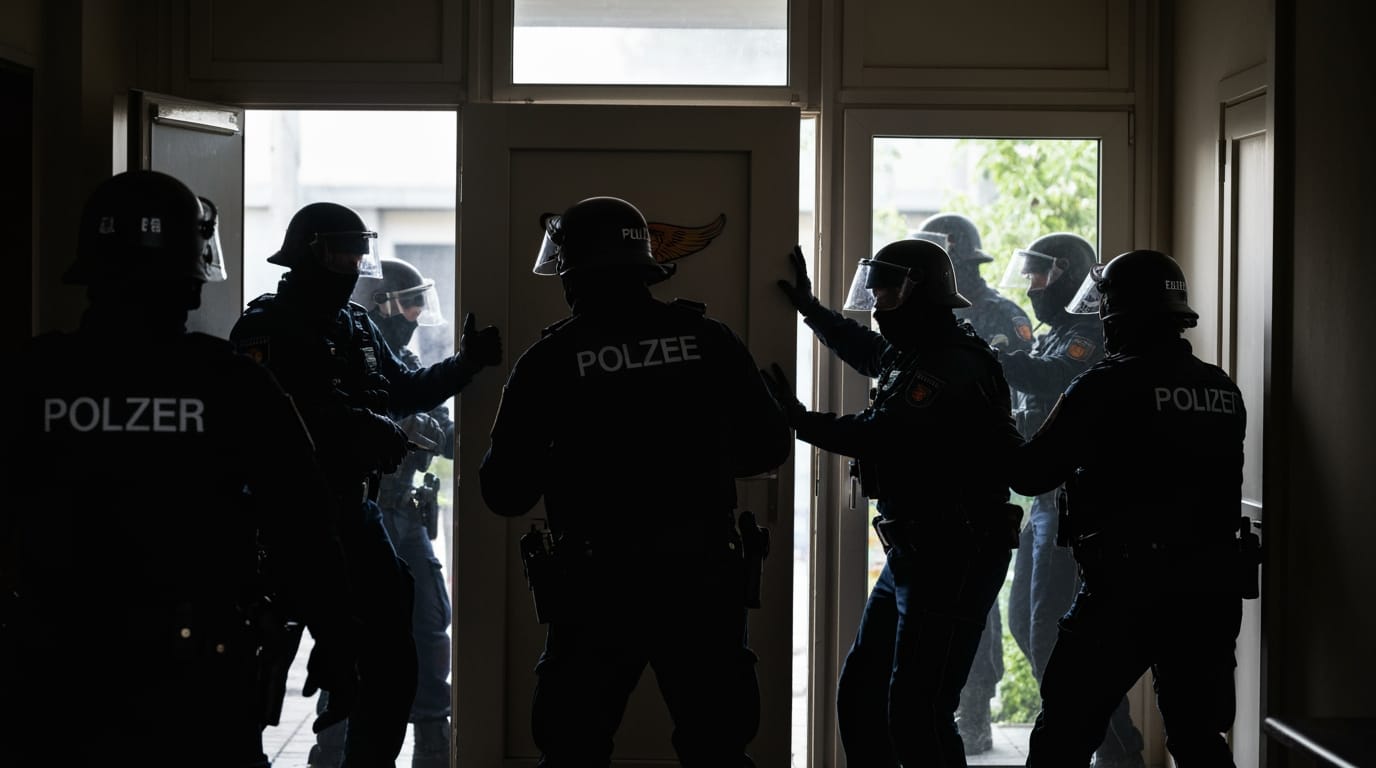
German law enforcement agencies have executed a series of significant, multi-state raids against the Hells Angels motorcycle club and affiliated groups, underscoring an ongoing national effort to dismantle organized criminal networks. These large-scale operations, involving hundreds of officers, have targeted suspected activities ranging from tax fraud and human trafficking to murder and illegal weapons dealing. The coordinated actions highlight authorities' persistent focus on combating the illicit enterprises allegedly controlled by outlaw motorcycle gangs (OMCGs) across Germany, revealing the intricate web of criminal undertakings often masked by their public image.
Coordinated Operations Strike Key Strongholds
Recent significant actions include a sweeping raid in September 2021, when more than 900 police, tax, and customs investigators descended upon Berlin's largest brothel, Artemis, which authorities linked directly to the Hells Angels. The operation resulted in six arrests, including the facility's two managers and four "madames," on suspicion of tax fraud, evasion of social security contributions, and potential human trafficking. Investigators seized a substantial €6.4 million in cash, along with numerous vehicles and properties, including 12 apartments and other premises nationwide. This large-scale intervention was reportedly triggered by information provided by a former worker who alleged mistreatment by a Hells Angels biker. While prostitution is legal in Germany, police charged that the brothel operated a "brutal and illegal" system, exploiting dependent women, many of whom originated from Eastern Europe, Russia, and various Middle Eastern countries.
Concurrently in September 2021, western Germany saw tactical units and hundreds of officers conduct raids across multiple cities including Duisburg, Moenchengladbach, Leverkusen, and Muelheim an der Ruhr. These operations targeted biker groups, several of which were identified as having ties to the Hells Angels. Over 20 premises were searched in connection with three killings: two occurring in 2013 and a third in 2014, which involved the discovery of a former biker group member's dismembered torso in the Rhine River. These raids signal law enforcement's determination to address long-unsolved violent crimes potentially linked to these organizations.
Unveiling a Pattern of Illicit Activity
The recent raids are part of a broader, sustained campaign against the Hells Angels, reflecting a consistent pattern of alleged criminal involvement stretching back over a decade. In May 2012, approximately 1,000 police officers conducted extensive searches across 80 locations in the northern German states of Schleswig-Holstein and Lower Saxony. The sites included brothels, restaurants, and private residences. These operations led to several arrests and focused on gathering evidence related to human trafficking, weapons dealing, grievous bodily harm, and blackmail. Authorities were also reportedly searching for the body of a Turkish man believed to have been involved in a conflict with the syndicate. During one such raid, special forces executed a dramatic helicopter drop into the backyard of a prominent Hells Angels leader, Frank Hanebuth, in Kiel. Just months prior, in the same year, the Cologne chapter of the Hells Angels MC was forcefully disbanded by the North Rhine-Westphalia ministry of home affairs. Police subsequently raided 32 homes of its members, confiscating all chapter property. While no arrests were made in that particular action, the public display of chapter symbols and the wearing of its regalia were explicitly banned, signaling a clear intent by authorities to disrupt their public presence and organizational structure.
These operations underscore the consistent classification of the Hells Angels Motorcycle Club by numerous police and international intelligence agencies as an organized crime group. Despite members frequently asserting their identity as merely motorcycle enthusiasts engaging in social activities, law enforcement maintains that individuals within the club engage in widespread violent crimes. Allegations include drug dealing, trafficking in stolen goods, gunrunning, extortion, and human trafficking operations.
Law Enforcement's Strategic Approach and Broader Implications
The coordinated nature and scale of these raids highlight a strategic evolution in German law enforcement's approach to combating organized crime. By involving multiple agencies—including regular police forces, special tactical units, tax investigators, and customs officials—authorities aim to strike at the heart of these criminal enterprises from various angles. The focus extends beyond street-level violence to financial crimes, such as tax evasion and money laundering, recognizing these as critical components of organized crime's sustained viability. This approach mirrors strategies successfully employed against other major criminal syndicates, targeting financial infrastructure to undermine the power base of such groups.
The consistent pressure applied through these raids aims to disrupt the operational capacity of the Hells Angels and other OMCGs. By dismantling key infrastructure, seizing assets, and prosecuting alleged leaders and members, authorities seek to diminish their influence and control over illicit markets. These actions also send a clear message regarding the state's unwavering commitment to upholding public order and safety, signaling that no group operates above the law. The ongoing efforts also reflect a determination to protect vulnerable individuals, such as those implicated in human trafficking schemes connected to these organizations.
Conclusion: A Continuous Battle Against Organized Crime
The string of major raids against the Hells Angels across Germany over the past decade demonstrates a relentless and multifaceted commitment by authorities to combat organized crime. From large-scale asset seizures and arrests at illicit businesses to investigations into historical murders and outright bans of chapters, law enforcement continues to employ diverse tactics to dismantle these powerful networks. While the Hells Angels maintain their public stance as motorcycle enthusiasts, the documented actions by German police and prosecutors consistently paint a picture of an organization deeply entrenched in serious criminal activities. These operations are not isolated incidents but rather integral parts of a continuous battle, signaling that the fight against organized crime in Germany remains a high priority for national security and public welfare. The sustained pressure exerted by authorities is expected to continue as they work to systematically disrupt the illicit operations and influence of outlaw motorcycle gangs.