German Auto Giants at a Crossroads: Navigating a Turbulent Future
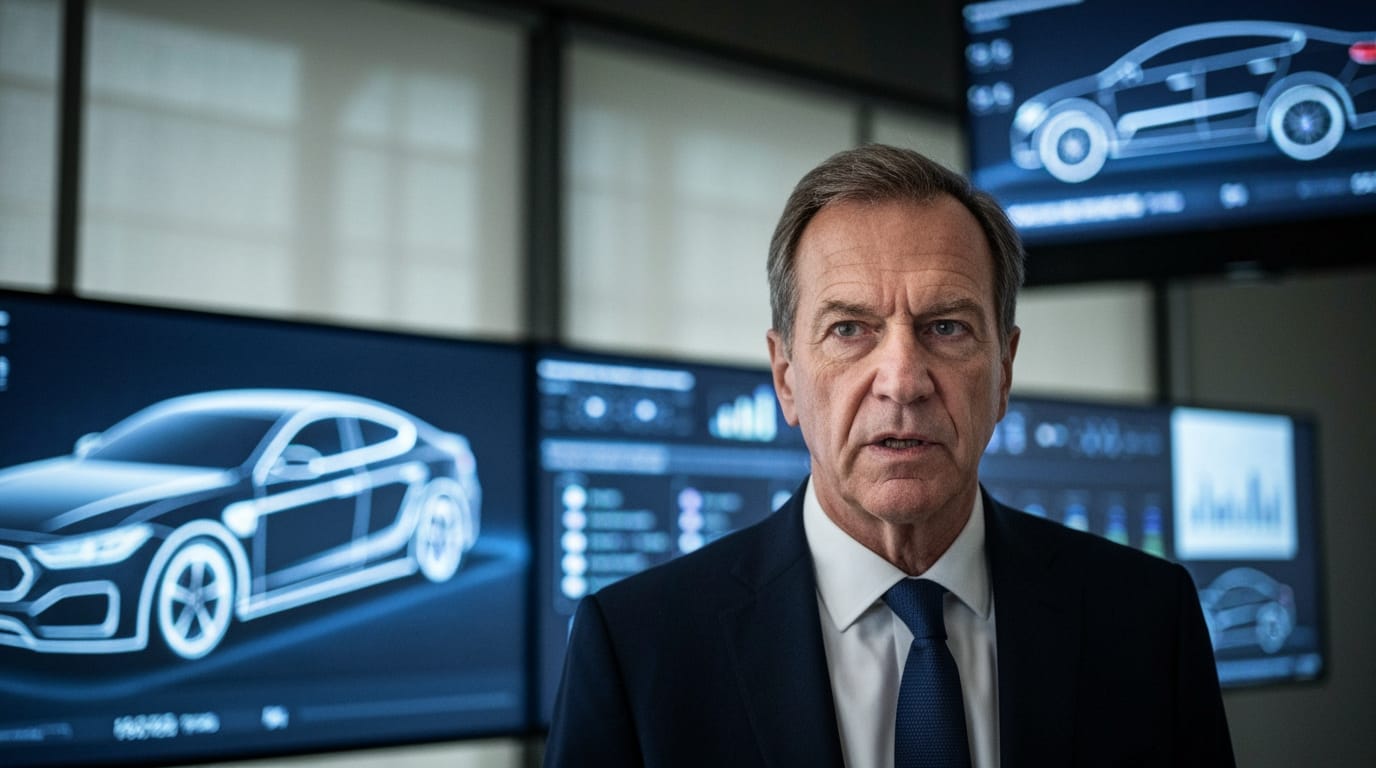
Germany's revered automotive industry, long a global benchmark for engineering prowess and luxury, finds itself at an unprecedented inflection point, grappling with a confluence of disruptive forces that threaten its very foundation. Faced with a slowing transition to electric vehicles (EVs), fierce competition from burgeoning Chinese manufacturers, and a critical struggle to master software development, iconic brands like Volkswagen, Mercedes-Benz, and BMW are undergoing radical transformations to secure their future in a rapidly evolving global market. The stakes are immense, as the automotive sector accounts for nearly 5% of Germany's GDP and directly employs over 800,000 people, signaling that the industry's success or failure will reverberate throughout the national economy.
The Electric Revolution: Stalled Momentum and Shifting Tides
The anticipated smooth shift to electric mobility in Germany has encountered significant headwinds, challenging the strategies of its major automakers. While the European Union’s 2035 ban on fossil-fuel vehicles aimed to accelerate this transition, EV sales in Germany saw a notable drop of 27% in 2024, with new registrations falling from a 19% market share in 2023 to just 13.5% in 2024. This deceleration is partly attributed to the abrupt cancellation of government subsidies for EV purchases in December 2023, a move that stunned manufacturers and unsettled consumers. Electric vehicles remain significantly more expensive than their internal combustion engine (ICE) counterparts, and the lack of widespread charging infrastructure, coupled with volatile electricity prices, further dampens consumer enthusiasm.
Many German manufacturers, such as Volkswagen, have continued to focus on combustion engines, while also investing heavily in their electric lineups. Volkswagen, for instance, aims to launch over 70 EV models by 2030 and has pledged a substantial €180 billion investment over the next five years to drive its future growth, with a goal of becoming the technologically leading volume manufacturer. Mercedes-Benz has outlined an "Ambition 2039" strategy, targeting carbon neutrality and a fully electric vehicle lineup, planning to introduce dozens of new or refreshed models by 2027 and develop separate platforms for EVs and ICEs in its core and top-end segments. BMW is pinning its future on the "Neue Klasse" platform, a next-generation electric vehicle architecture scheduled for production launch in 2025, which represents the most significant engineering investment in its history. These companies recognize the necessity of electrification but face the challenge of convincing consumers amidst economic uncertainties and infrastructure deficits.
The Rise of the East: Chinese Dominance in the EV Landscape
Perhaps the most formidable challenge comes from the East, where Chinese electric vehicle manufacturers have achieved a decisive technological lead, offering high-performance models at highly competitive prices. An analysis by EY revealed that Asian car manufacturers are increasingly outpacing German players in terms of revenue and profit. In the first quarter of the current year, while German automakers collectively saw a 2.3% decrease in sales and a 33% fall in profits, Chinese manufacturers experienced a nearly 15% increase in sales and a striking 66% rise in profits. BYD has already surpassed Volkswagen as the market leader in China, and German brands are widely perceived to be 1.5 to 2 years behind their Chinese rivals in critical areas like software and driver assistance systems.
The intense competition is particularly evident in China, a crucial market where German carmakers have historically thrived. Sales of German brand cars in China continue to fall as Chinese electric car sales increase, with Mercedes-Benz, BMW, and Volkswagen experiencing significant declines in EV sales in the region. Volkswagen's CEO, Oliver Blume, has even suggested that German manufacturers could benefit from studying China's disciplined industrial planning and structured approach. The European Union's imposition of tariffs on Chinese EVs in 2024 has not fully offset the competitive disadvantage, with Europe losing 25% of its competitiveness against China, partly due to inflation impacting European production costs.
The Software Imperative: A Race Against Time
Modern vehicles are rapidly transforming into software-defined machines, moving away from hardware-centric engineering. This shift requires sophisticated software ecosystems for connectivity, autonomous driving, infotainment, and advanced driver assistance systems (ADAS). German automakers, however, have historically grappled with developing in-house software competence, a critical weakness highlighted by the competitive landscape. Recognizing this, German auto companies are now heavily investing in proprietary software stacks. Volkswagen's software arm, CARIAD, for instance, expanded its engineering workforce by over 20% to accelerate platform development. Mercedes-Benz is developing its own proprietary operating system, MB.OS, which will debut in upcoming models.
In a significant collaborative effort, 11 German automotive companies, including BMW, Bosch, Continental, Mercedes-Benz, and Volkswagen, have united to develop an open-source automotive software ecosystem. This pre-competitive cooperation, supported by the German Association of the Automotive Industry (VDA), aims to create a shared foundation for innovation and accelerate the development of critical software components, including an autonomous driving software platform by 2026. This collaborative approach seeks to bridge the technological gap and reduce costs in software development, an area where German brands lag behind agile tech-focused competitors.
Economic Aftershocks and Strategic Responses
The challenges confronting Germany's car giants are having profound economic repercussions. Volkswagen's operating profit fell by a staggering 44% last year, leading to a decision to cut 50,000 jobs by 2030. Mercedes-Benz and BMW have also experienced profit declines in a turbulent market. The German automotive industry's revenue collectively fell by 1.6% in 2025, and the number of jobs decreased by almost 50,000, bringing employment in the sector to its lowest point in 14 years. Suppliers, in particular, have been hard hit, with a 4% revenue drop and over 10% job losses. A survey of industry executives indicated that 67% expect a "significant number" of companies to go out of business, underscoring the deep transformation pressures.
In response, German automakers are implementing aggressive cost-cutting measures, optimizing production, and diversifying their global strategies. Mercedes-Benz plans a 10% reduction in production costs by 2027 and is increasing local-for-local manufacturing, particularly in regions with lower wage structures. BMW is focusing on high-growth emerging markets and integrating AI and automation to drive efficiencies, alongside its "Neue Klasse" platform. Volkswagen is actively investing in new mobility solutions and expanding its presence in North America and China, while also making a strategic $5 billion investment in Rivian to bolster its EV software and platform innovation.
A Critical Juncture for an Iconic Industry
The path ahead for Germany's car giants is fraught with challenges, requiring a delicate balance between preserving their traditional strengths in engineering and embracing radical change. The transition to electric vehicles, the intense competitive pressure from China, and the imperative to master software development are not merely operational hurdles but existential threats. While major investments are being made, strategic partnerships are being forged, and innovative technologies are in development, the industry must demonstrate agility and adaptability on an unprecedented scale. The coming years will be decisive, determining whether these iconic companies can reassert their global leadership or if they will cede significant ground in the evolving landscape of global mobility.