German Chancellor Merz Declares Parts of New U.S. Security Strategy "Unacceptable," Signaling Deeper Transatlantic Rift
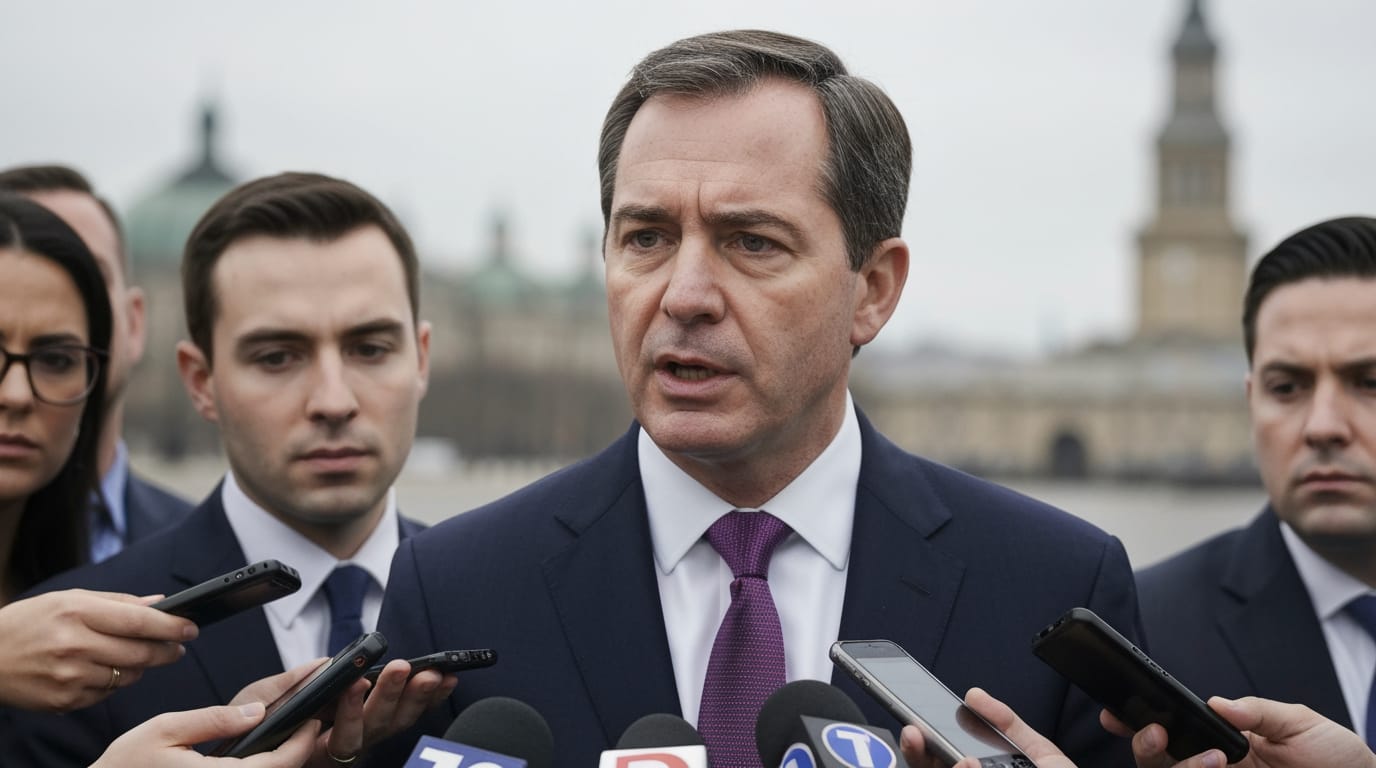
Berlin, Germany – German Chancellor Friedrich Merz has strongly rebuked key components of the recently unveiled United States National Security Strategy, deeming several sections "unacceptable from a European perspective" and casting a stark light on growing transatlantic tensions. The forthright condemnation from Berlin underscores a deepening ideological and strategic divide between two historical allies, particularly concerning Europe's internal dynamics and the assessment of global threats.
The new 33-page U.S. document, released last week, has ignited widespread consternation across European capitals, portraying the continent as a region grappling with economic decline, demographic challenges, and even facing a "real and more stark prospect of civilizational erasure" within two decades. It levies sharp criticisms against European governments, alleging that they undermine political liberty, censor free speech, and suppress political opposition, notably targeting far-right, anti-immigration movements.
Direct Rejection of U.S. Accusations and Threat Perceptions
Chancellor Merz's administration, speaking through deputy government spokesman Sebastian Hille, unequivocally rejected the U.S. strategy's "critical tones against the EU." "Political freedoms, including the right to freedom of expression, are among the fundamental values of the EU. We view attacks in this regard as ideology rather than strategy," Hille stated at a press briefing in Berlin. Merz himself articulated the sentiment directly, asserting, "We don't need Americans to save democracy in Europe."
Beyond the critique of European internal affairs, a significant point of contention revolves around the U.S. document's assessment of Russia. Berlin expressed strong disagreement with the strategy's failure to classify Russia as a threat, an assessment fundamentally at odds with NATO's unified position. "We remain committed to NATO's analysis that Russia is and remains a threat to the security of the transatlantic region," Hille affirmed, highlighting a critical divergence in geopolitical analysis. The German government views Russia's aggression against Ukraine as clear evidence that Moscow poses a danger to European and transatlantic security.
Further exacerbating the friction is the U.S. strategy's implied intent to support "patriotic European parties" and political forces that stand in opposition to Brussels' policy directions. This stance has been interpreted by German officials, including figures like Jürgen Hardt from the CDU/CSU, as direct interference in the internal politics of European states, a move Berlin considers unacceptable.
A Call for Enhanced European Strategic Autonomy
In light of these developments, Chancellor Merz has amplified his calls for Europe to accelerate its pursuit of strategic autonomy and strengthen its own defense capabilities. Following his party's success in the recent parliamentary elections in February 2025, Merz had already signaled a shift towards greater European independence from the United States in defense matters, describing it as an "absolute priority" to create unity in Europe. He emphasized that Europe could no longer afford to ignore its vulnerability given Washington's shifting foreign policy.
Merz has been candid about Europe's historical reliance on the U.S. for security, acknowledging that the continent has often "free-ridden" on American defense efforts. However, he now champions a "hedging strategy," advocating for diversified alliances stretching beyond traditional partners and urging the cultivation of alternative economic and security arrangements to withstand potential American retrenchment. This perspective reflects a growing recognition within European leadership that the transatlantic alliance, while still vital, is evolving from a values-driven partnership into a more pragmatic, interest-based relationship.
Geopolitical Context and a Shifting Alliance
The timing of these statements is crucial. The new U.S. National Security Strategy, often seen as a guiding document for a new administration's foreign policy, reflects an "America First" doctrine that prioritizes domestic interests and re-evaluates international commitments. The rhetoric within the document, accusing Europe of significant internal failings, signifies a sharp escalation of criticism against traditional allies. This approach has led to an "ideological gap" opening up between Washington and its allies, highlighting that differences are no longer confined to foreign policy but extend to fundamental concepts of democracy, identity, and sovereignty.
The emergence of Friedrich Merz as Chancellor earlier this year had already set the stage for a re-evaluation of Germany's role in the world and its relationship with the U.S. His initial post-election remarks suggested a readiness to prepare for a "worst-case scenario" regarding U.S. ties, pushing for European self-reliance. This current public disagreement further solidifies the notion that Germany, and Europe more broadly, is prepared to challenge U.S. policy when it perceives its own interests and values to be under attack or misrepresented.
Navigating a New Era of Transatlantic Relations
The public exchange between Berlin and Washington signifies a moment of reckoning for the transatlantic alliance. While German officials, including Deputy Spokesman Hille, maintain readiness for continued close cooperation with the U.S. on bilateral and multilateral levels, particularly within NATO and regarding support for Ukraine, the underlying tensions are undeniable. The disagreement extends beyond mere policy differences, touching on core principles of democracy and free speech that have long been pillars of the Western alliance.
As Europe grapples with its own security and economic challenges, the U.S. strategy's critical assessment serves as both a provocation and a catalyst for greater European introspection and self-assertion. The path forward will likely involve a delicate balancing act for Chancellor Merz – maintaining essential ties with the U.S. while robustly pursuing a more independent and unified European foreign and security policy. This period of transatlantic strain will test the resilience of the alliance and could redefine its parameters for decades to come, compelling Europe to solidify its role on the global stage without "false nostalgia" for past certainties.