German Chancellor Merz Delivers Urgent Warning at Davos: Old World Order 'Unraveling at Breathtaking Pace'
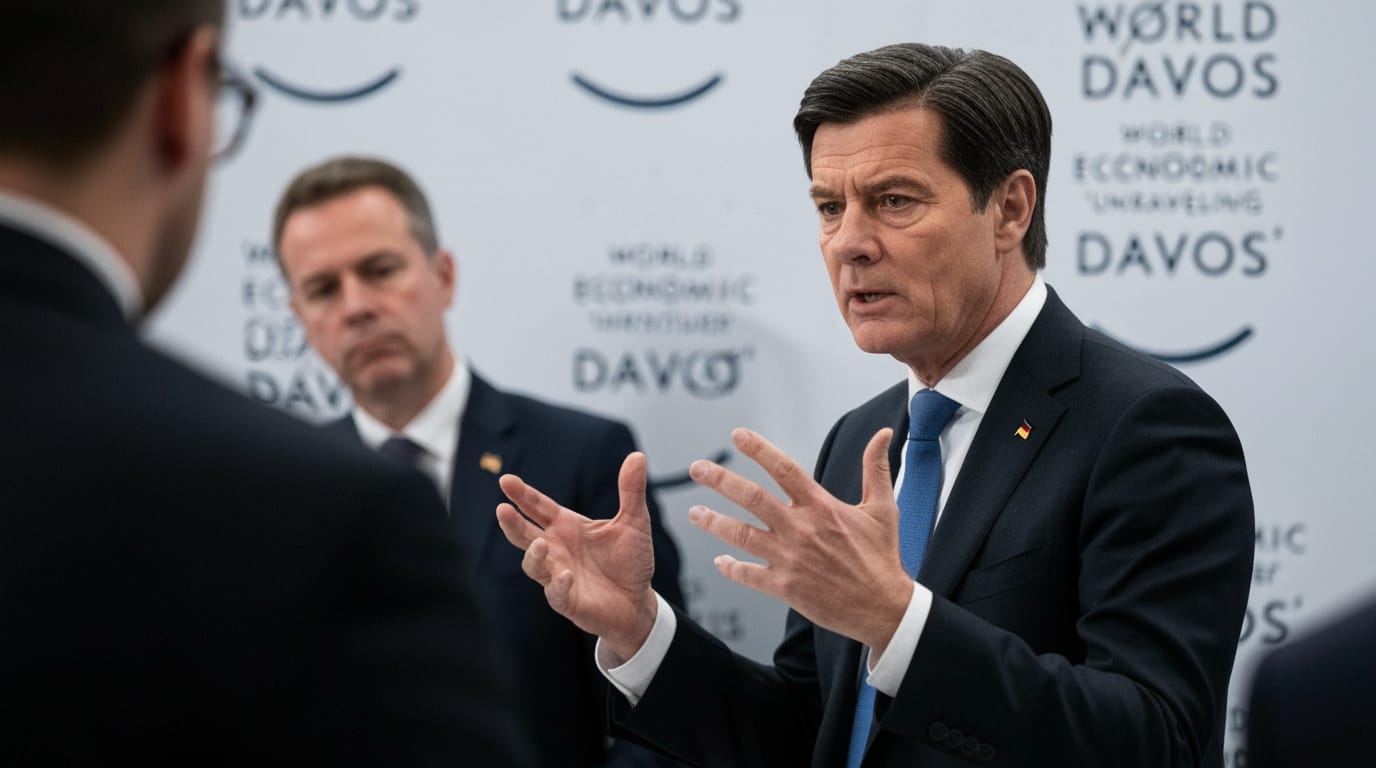
DAVOS, Switzerland – German Chancellor Friedrich Merz issued a stark warning at the World Economic Forum, declaring that the established "old world order is unravelling at breathtaking pace" amidst a complex tapestry of geopolitical shifts and escalating global tensions. Addressing an assembly of world leaders and business elites, Merz underscored a seismic shift towards an era dominated by great-power politics, where the foundations of international law are visibly shaken. His assessment painted a sobering picture of a world moving away from multilateral cooperation towards one defined by strength and, potentially, force, urging nations to confront these new realities with clear-eyed realism.
The Erosion of Stability: A New Era of Power Politics
Chancellor Merz's address at the annual World Economic Forum in Davos, held on January 20, 2026, served as a potent call to acknowledge profound global transformations. He emphasized that the calm often associated with the Swiss Alpine setting stood in stark contrast to the rapid dissolution of the global order that had largely prevailed for the past three decades. This established system, he observed, was anchored in international law but is now seeing its very foundations disturbed.
Merz highlighted several key factors contributing to this unraveling. Russia's ongoing war of aggression against Ukraine was cited as the most drastic expression of this change, yet he stressed that the underlying shifts run far deeper. The rise of China, with its strategic foresight, has propelled it into the ranks of great powers, directly challenging the global pre-eminence of the United States. Concurrently, Washington is recalibrating its foreign and security policy, further signaling a departure from previous norms. The German leader articulated that this confluence of events has ushered in a "time of great-power politics," where the global stage is increasingly shaped by power, strength, and, when necessary, force. Such an environment, he cautioned, is "not a cozy place" and poses significant dangers, particularly for smaller and medium-sized states, and ultimately for all nations.
Germany's Historical Reflection and Strategic Imperatives
Drawing a poignant parallel from history, Merz underscored the perils of a world governed solely by power. He reminded the audience of Germany's own tragic trajectory in the 20th century, stating that his country "went down this road to its bitter end" and "pulled the world into a black abyss." This historical context served as a solemn warning against the consequences of unbridled power dynamics.
Against this backdrop of global instability, Chancellor Merz outlined Germany's strategic response, emphasizing that the current reality is not an unalterable fate. He insisted that nations "do have a choice" and possess the agency to "shape the future". To navigate these turbulent waters, he stressed the need for clear-eyed realism and a willingness to confront harsh realities. For Germany and its European partners, he identified three critical pillars for maintaining strength and influence: bolstering security, enhancing economic competitiveness, and fostering unity. This includes massive investments in self-defense capabilities and concerted efforts to boost economic strength. Furthermore, Merz called for closer cooperation among European nations and with like-minded global partners, emphasizing that collective action and strong alliances built on mutual trust remain Europe's greatest strength.
Transatlantic Ties and Evolving Security Landscape
A significant portion of Merz's remarks addressed the ongoing importance of transatlantic relations, despite recent strains. He urged European partners not to hastily dismiss the transatlantic partnership and to remain committed to NATO, recognizing its crucial role in collective security. This sentiment was notably illustrated by discussions surrounding Greenland's security, an issue that had recently seen tensions between the U.S. and some European allies. Chancellor Merz welcomed U.S. President Donald Trump's statements ruling out the use of force to acquire Greenland, affirming Germany's commitment to upholding principles of territorial integrity and sovereignty. He voiced support for dialogue between Denmark, Greenland, and the United States to foster closer cooperation in the High North, acknowledging the growing strategic importance of the Arctic region in a new era of great power rivalry. Merz indicated that Germany shares the U.S. assessment of security risks posed by Russia and China in the Arctic, stressing the need for NATO to enhance its efforts in securing the region while respecting national sovereignty.
Davos Dialogue Amidst Geopolitical Volatility
Merz's powerful address resonated within a World Economic Forum Annual Meeting already grappling with complex global challenges. While the overarching theme of Davos 2026 was "A Spirit of Dialogue," discussions frequently pivoted to pressing geopolitical concerns that overshadowed traditional economic optimism. Beyond the immediate crises, other global leaders and experts at the forum also debated issues such as climate change, artificial intelligence, and the global economic outlook, all of which are increasingly intertwined with geopolitical dynamics. The sentiment of a shifting global power balance was widely shared, with some voices advocating for "middle powers" to carve out a "third path" between dominant global players. The collective sentiment underscored a growing recognition that traditional approaches to global governance and stability may no longer suffice in a rapidly transforming world.
Charting a Course Through Uncertainty
Chancellor Merz's candid assessment at Davos serves as a critical indicator of the deep concerns permeating the highest levels of global leadership. His warning that the old world order is "unravelling at breathtaking pace" signifies not merely a shift, but a fundamental reordering of international relations. The move towards great-power politics, driven by conflicts, economic competition, and the assertion of national interests, presents an urgent challenge to the principles of multilateralism and international law that have underpinned decades of relative stability. Germany, as a major economic and political force in Europe, is signaling its commitment to adapting to this new reality by strengthening its own security, economic resilience, and strategic alliances, while simultaneously advocating for continued dialogue and cooperation. The path forward, as articulated by Merz, demands realism, unity, and a proactive approach to shaping a future that avoids the pitfalls of a world solely governed by power.


