German Chancellor Merz Expresses Growing Concerns Over Iran Conflict, Questions U.S. Strategy
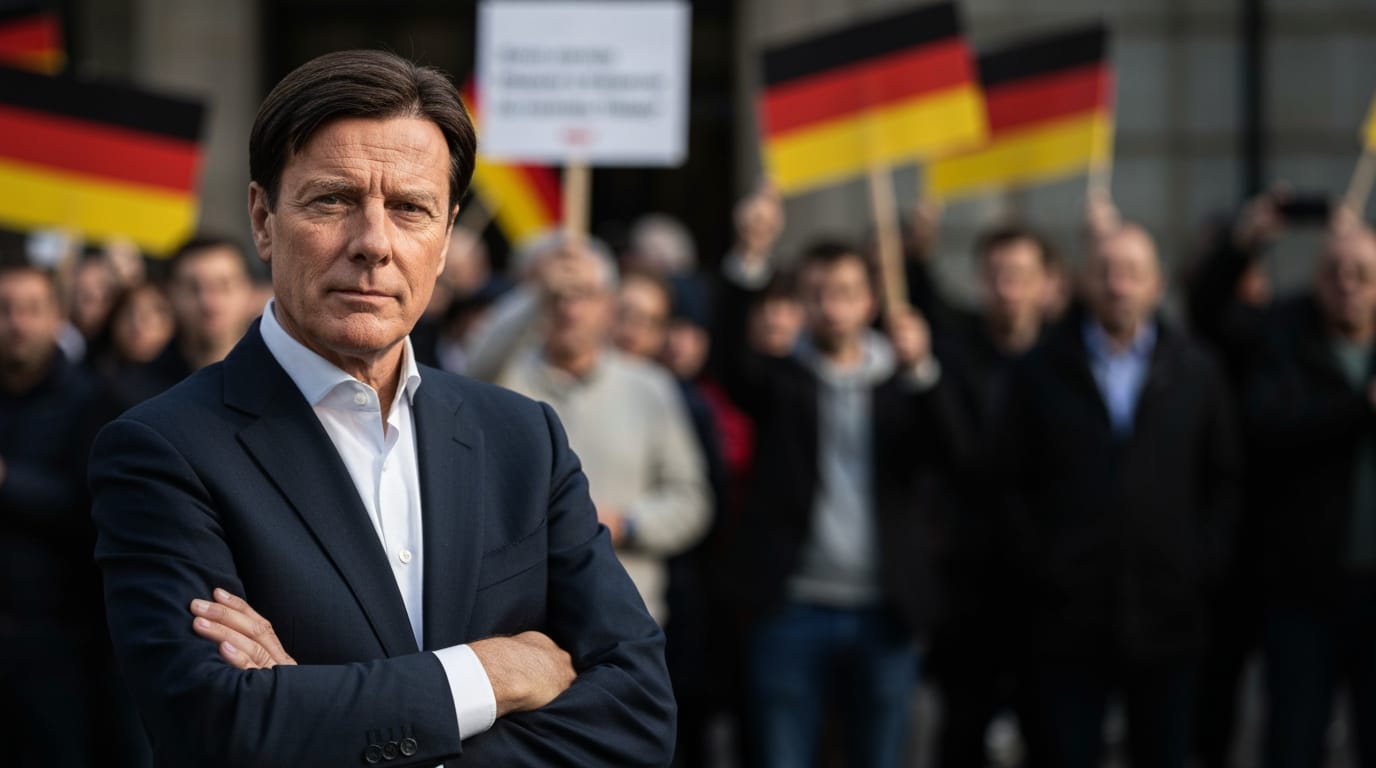
BERLIN, GERMANY — German Chancellor Friedrich Merz has increasingly voiced apprehension regarding the unfolding military conflict involving the United States, Israel, and Iran, signaling a nuanced but distinct divergence from the approach championed by U.S. President Donald Trump. While initially aligning with Washington's stated objective of countering the Iranian regime, Merz has grown critical of what he perceives as a lack of clear strategy for ending the hostilities and managing the aftermath, raising alarms about potential regional destabilization and a broader humanitarian crisis.
The conflict, termed by some as the "Iran war," refers to a series of U.S.-Israeli military actions against Iran that commenced weeks ago. Amid escalating tensions, Chancellor Merz journeyed to Washington on March 3, 2026, meeting President Trump at the White House. During this visit, Merz publicly emphasized Germany's shared view that the "terrible regime in Tehran must be toppled," suggesting a unity of purpose with the U.S. and Israel in their efforts to address the perceived threat posed by Iran. He reportedly expressed understanding for the military actions while refraining from direct criticism of the strikes themselves. However, this initial display of solidarity has evolved into a more cautious and critical stance as the conflict progresses without a visible end in sight.
Mounting European Unease and Germany's Dilemma
The German Chancellor's evolving position reflects a broader unease across Europe concerning the American-led intervention. Many European leaders, including those in France, the United Kingdom, and Spain, have privately and publicly expressed reservations about the expanding U.S.-Israeli campaign. Spain, notably, has adopted a more overtly critical stance, with Prime Minister Pedro Sánchez outright condemning the attacks and refusing to allow U.S. forces to utilize Spanish bases for military operations against Iran. This defiance prompted threats of a full trade embargo from President Trump, highlighting the pressures faced by European allies.
Germany, a key transatlantic partner, finds itself in a precarious position. Public opinion in Germany largely opposes the war, with a recent survey indicating that 58 percent of respondents view the U.S.-Israeli military action against Iran as unjustified. This domestic sentiment, coupled with geopolitical concerns, places significant pressure on Chancellor Merz to articulate a clear German stance that balances alliance commitments with national interests and international law.
The Search for a Coherent "Day After" Strategy
A central point of friction has emerged around the post-conflict scenario. Following his meeting with President Trump, Merz underscored Germany's intent to collaborate with the U.S. to prepare for "what will come the day after" the conflict. However, in subsequent days, his statements grew more pointed, reflecting a deepening concern about the lack of a clear exit strategy from the U.S. side. At a press conference in Berlin, Chancellor Merz "slammed the U.S. for having 'no common plan' to end the Iran war," expressing "rising concerns in Europe" about the "dangerous escalation" unfolding without a coherent strategy.
Merz explicitly stated that Germany and Europe have "no interest in an endless war" or in the "dissolution of territorial integrity, the statehood or the economic viability of Iran." He warned of the severe consequences that could arise from a collapse of the Iranian state, drawing parallels to the instability witnessed in Libya or Iraq, which could trigger new migration flows and endanger European security and energy supplies. This emphasis on a stable Iran, vital for regional peace and security, marks a subtle but significant distancing from any implied endorsement of an open-ended military campaign or regime change without a carefully considered plan.
International Law and Geopolitical Implications
The German Chancellor's growing reservations also touch upon the principles of international law. While he conceded that international law might reach its limits when dealing with a regime that does not respect it, he also affirmed that "freedom and human rights cannot be achieved through bombs only" and that international law is crucial for protecting these values. This reflects Germany's traditional emphasis on a rules-based international order, a pillar of its foreign policy. Critics suggest that Berlin's alignment with U.S.-Israeli military actions, particularly without robust legal justification, risks eroding Germany's credibility as a proponent of multilateralism.
The broader geopolitical implications are also weighing heavily on European leaders. The conflict in Iran poses risks to the ongoing support for Ukraine, as resources and attention could be diverted. President Trump himself alluded to the possibility of Ukraine becoming less of a priority if U.S. military capabilities are stretched thin in the Middle East. Merz has consistently maintained that despite the dramatic events in the Middle East, Europe must not falter in its support for Kyiv, recognizing the interconnectedness of global security challenges.
Merz's Balancing Act: Support for Goals, Critique of Methods
Ultimately, Chancellor Merz's position is one of a delicate balancing act. While acknowledging Iran as a "center of international terrorism" that needs to be "shut down," and asserting that the U.S. and Israel are pursuing this goal "in their own way," he simultaneously calls for restraint and a clear strategy. He underscored that the responsibility for ending the war rests with the Iranian leadership, stating that "The sooner the mullah regime stops, the sooner this war will be over."
However, the German Chancellor's refusal to overtly criticize President Trump's lack of a "day after" plan, especially during their joint appearance, while later expressing significant concerns in Berlin, highlights the deep strategic dilemma confronting Germany and other European allies. They are compelled to maintain transatlantic unity, particularly given their dependence on U.S. security guarantees, yet they harbor profound reservations about the potential for uncontrolled escalation and the long-term consequences of an ill-defined military intervention in the Middle East. Merz's evolving statements represent an effort to navigate this complex landscape, asserting German and European interests without directly undermining the critical transatlantic relationship.


