German Chancellor Merz Plunges to Historic Lows in Public Approval
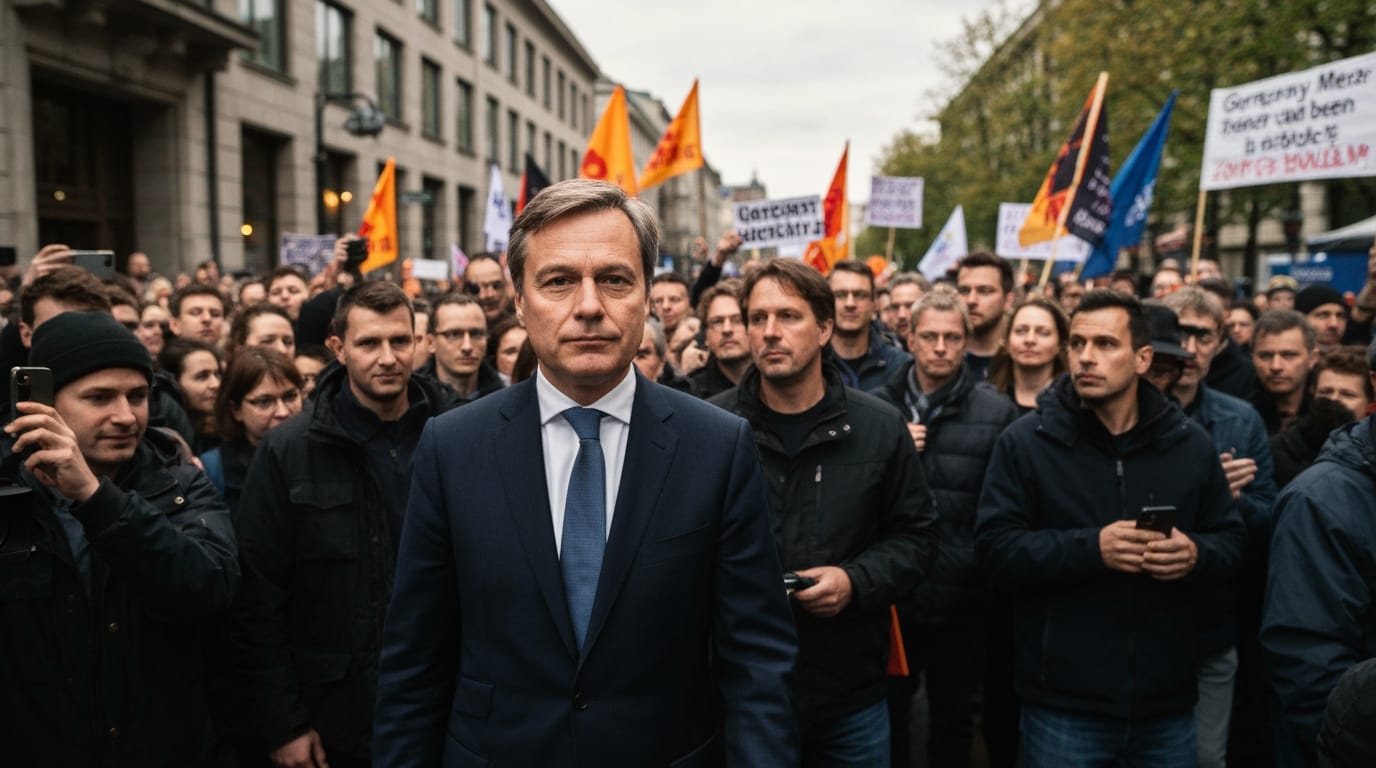
BERLIN — Less than a year into his term, German Chancellor Friedrich Merz finds himself in an unprecedented political predicament, with public approval ratings plummeting to historic lows. Hailed upon his ascension in May 2025 as a figure capable of ushering in "political change for Germany," Merz has instead presided over a rapid erosion of trust, facing widespread dissatisfaction that now eclipses the unpopularity of his predecessor, Olaf Scholz. The conservative leader's struggle to connect with the electorate and deliver on key promises has cast a long shadow over his black-red coalition government, sparking concerns about the nation's political stability.
A Rapid Descent into Unpopularity
Friedrich Merz's journey to the Chancellery was marked by significant anticipation, following years as a prominent rival to former Chancellor Angela Merkel and a vocal critic of established policies. He officially took office on May 6, 2025, leading a coalition between his conservative Christian Democratic Union (CDU-CSU) and the Social Democratic Party (SPD). However, any perceived "honeymoon period" was conspicuously absent. Almost immediately, polls reflected a skeptical public. By July 2025, just two months into his tenure, a Forsa survey indicated that only 32% of the population were content with his performance, while nearly two-thirds expressed dissatisfaction. This sentiment deepened, with an Insa institute survey revealing 59% dissatisfaction after his first 100 days in August 2025, significantly higher than the 41% who disapproved of Olaf Scholz at the same point in his chancellorship.
The trend continued unabated. Six months into office, by November 2025, Merz registered approval ratings around 25%, making him one of the least popular Chancellors in recent memory. Further surveys in March 2026 showed that less than a quarter of Germans held a positive opinion of him, with these figures continuing a swift decline. This stark reality is further underscored by the fact that only 18% of Germans, according to a November 2025 Forsa poll, would want to see Merz seek re-election in 2029. Even prior to taking office, an April 2025 Forsa poll indicated that only 21% of respondents considered him trustworthy, suggesting a foundational deficit of public confidence.
Policy Hurdles and Intra-Coalition Discord
The reasons behind Chancellor Merz's precipitous drop in popularity are multifaceted, rooted in a series of policy missteps and perceived political caution. A significant early setback occurred in June 2025 when Merz failed to deliver on a promised cut in electricity taxes for German households, with his finance minister, Lars Klingbeil, reportedly citing budgetary constraints. This inability to enact a key pledge likely frustrated voters hoping for tangible economic relief.
Further compounding his difficulties, a parliamentary vote on the nomination of three new Constitutional Court justices was abruptly canceled in July 2025. This cancellation followed a rebellion by Conservative MPs who opposed their party's leadership agreeing to an SPD candidate deemed too far-left by many on the right. Such public displays of disunity within his own ranks and the broader coalition signaled a lack of firm leadership and strategic alignment.
Critics also point to Merz's "cautious politics" and his avoidance of "crucial reforms" despite having campaigned on a platform of "political change for Germany". This perceived timidity in governance, particularly given his lack of prior government experience, has been met with voter disappointment. Instead of pursuing a dynamic agenda, his team adopted a strategy of maximum political caution, leading to an impression of inaction rather than decisive leadership.
Beyond domestic policy, Merz also faced scrutiny for his handling of international relations. In August 2025, he was criticized within his own party for raising the tone with Israel regarding the Palestinian issue and for partially suspending arms sales that could be used in the Gaza Strip. This decision reportedly surprised the Christian Social Union (CSU), the CDU's Bavarian sister party, indicating a lack of internal consensus on sensitive foreign policy matters.
Deepening Divides and Public Disillusionment
The Chancellor's unpopularity is not uniformly distributed across the German populace, highlighting deepening societal and political divides. He has notably struggled to gain traction in eastern Germany, where only 19% of voters from the former Communist states supported him, compared to 34% in western Germany. This disparity suggests a failure to address the unique concerns or connect with the historical experiences of citizens in the eastern regions. Furthermore, Merz has faced persistent accusations of misogyny, contributing to his particular unpopularity among women. A March 2024 Forsa survey, even before his chancellorship, found that only 9% of women aged 18 to 29 viewed him as a preferred chancellor candidate. This demographic disconnect represents a significant hurdle for any leader seeking broad national appeal.
The economic climate also plays a role in public sentiment. With sluggish economic growth, ongoing job worries, persistent inflation, and prevailing geopolitical fears, the mood among German voters has darkened considerably. Business leaders have also voiced complaints about the slow pace of reforms, further adding to the pressure on Merz's government. The "erosion of the party system," a trend identified by Forsa manager Manfred Güllner, has not been mitigated by Merz's black-red coalition but rather intensified, indicating a broader systemic challenge that Merz has yet to overcome.
A Precarious Future for the Chancellorship
The unprecedented unpopularity of Chancellor Friedrich Merz has significant implications for the stability and direction of German politics. His struggle to fulfill pledges and manage an "ideologically misaligned coalition" creates an environment ripe for political instability. The internal friction, exemplified by the rebellion over Constitutional Court nominations and the surprise over foreign policy decisions, points to potential challenges to his authority and the long-term viability of the CDU-SPD government.
Compounding these domestic pressures is the ascendance of the far-right Alternative for Germany (AfD), which, according to recent polls, is now "neck and neck" with Merz's conservatives. This mirrors a trend Merz himself acknowledged in 2018, when he aimed to "halve the AfD," a goal that has seen the opposite outcome with the AfD's support doubling since he took over the CDU leadership. This development underscores the growing discontent with established parties and the potential for significant shifts in the German political landscape. Merz, who turned 70 in November 2025, is now Germany's second oldest Chancellor after Konrad Adenauer, and his current unpopularity is described as a "real burden".
The current political climate in Germany is one of deep public skepticism and significant challenges to leadership. Chancellor Friedrich Merz, despite campaigning on a promise of change, has encountered a rapid decline in public trust due to perceived cautious governance, unfulfilled promises, and internal coalition struggles. His chancellorship, barely a year old, is now defined by historic unpopularity, facing a demanding electorate and a resurgent far-right. The path forward for Merz and his government remains uncertain, requiring decisive action and a renewed effort to address the deep-seated anxieties of the German people to regain any semblance of confidence.


