German Christmas Markets Grapple with Soaring Security Costs, Threatening Cherished Tradition
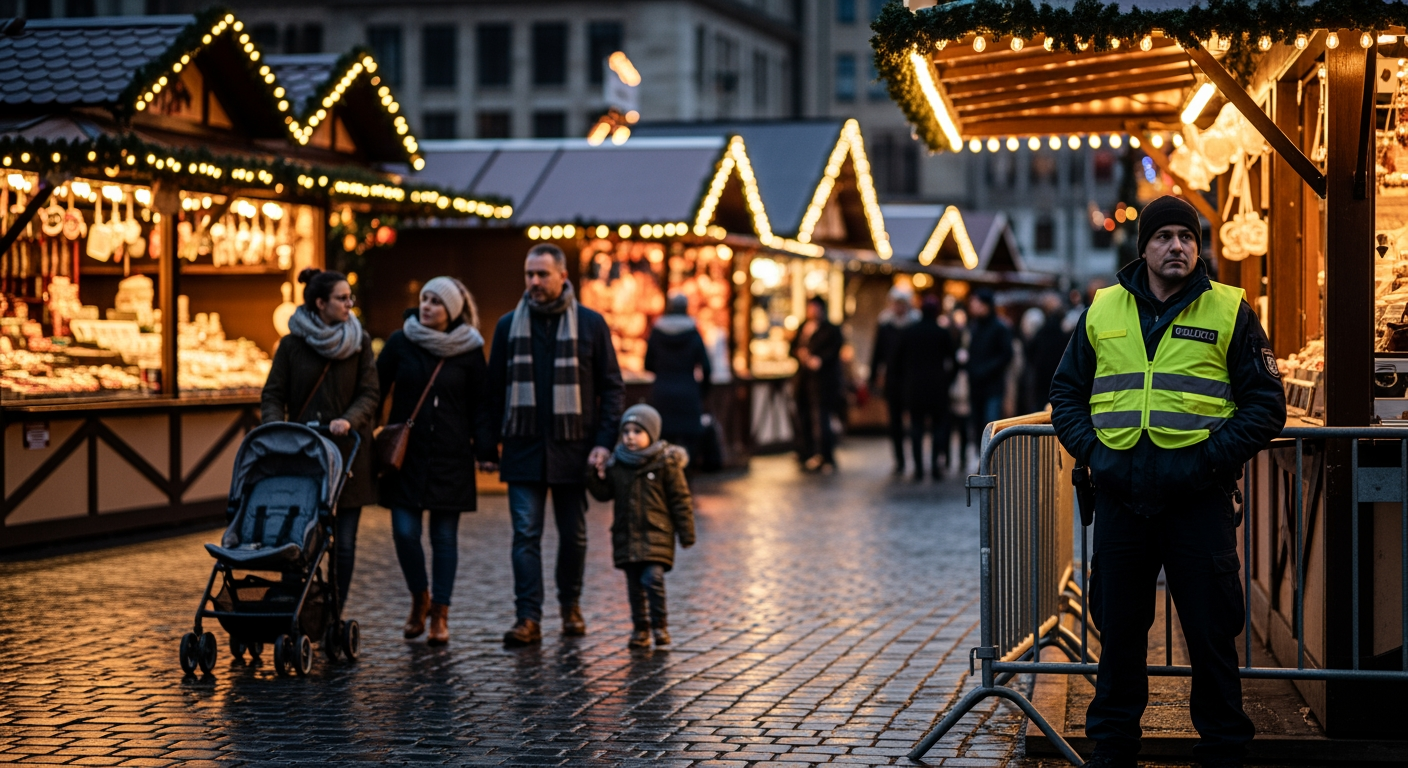
Germany's iconic Christmas markets, a beloved centuries-old tradition drawing millions of visitors annually, are confronting an unprecedented financial challenge as security costs skyrocket. Heightened concerns following a series of vehicle attacks have forced organizers to implement extensive protective measures, leading to a significant increase in operational expenses that threaten the sustainability and cherished atmosphere of these festive gatherings. The struggle to balance stringent security with the preservation of cultural heritage has ignited a national debate over responsibility and funding, leaving many smaller markets in a precarious position.
The New Security Landscape: A Response to Rising Threats
The festive enchantment of German Christmas markets now unfolds under a visibly strengthened security umbrella, a direct consequence of tragic incidents in recent years. The devastating 2016 truck attack at Berlin's Breitscheidplatz Christmas market, which claimed 13 lives and injured dozens, marked a turning point, prompting a comprehensive overhaul of security protocols across the country. More recently, a car-ramming attack in Magdeburg in December 2024 (mistakenly cited as 2022 and 2023 in some sources, but current reports indicate 2024 as the more recent significant event) killed six people and injured more than 200, further intensifying these efforts. This incident, along with other vehicle ramming attacks in Munich and Mannheim in 2025, underscored the persistent nature of the threat.
Authorities and organizers have responded with a multi-layered approach to protection. Concrete barriers, heavy water-filled containers, and retractable bollards are now commonly deployed to prevent unauthorized vehicle access to market grounds. These physical impediments are often strategically placed and, in some cities like Bochum and Munich, even decorated to blend into the festive surroundings, demonstrating an effort to mitigate their visual impact. Beyond physical barriers, security enhancements include increased police presence, both visible and discreet, surveillance systems, bag checks, and controlled entry points with real-time crowd monitoring. A nationwide ban on knives has also been implemented since 2024, with selective bag checks in effect at certain locations. For instance, Berlin's Gendarmenmarkt market has installed large concrete barriers, checkpoints, and video surveillance, with officials noting that "The requirements have become increasingly stringent." These measures are designed to provide visitors with a sense of safety, encouraging them to "let go of everything here" and "feel safe."
The Escalating Price Tag: Financial Strain on Organizers
Implementing such extensive security measures comes with a substantial financial burden. A nationwide survey by the Federal Association of City and Town Marketing (BCSD) revealed that security expenses for public events, including Christmas markets, have surged by an average of 44% over the past three years. This steep rise poses a significant challenge for market organizers, municipalities, and even individual vendors. For example, the Magdeburg Christmas market alone saw a security overhaul costing €250,000 in 2025. The Dresden Striezelmarkt, one of the oldest in the world, invested an additional €2 million in security measures.
The financial strain is particularly acute for smaller towns and privately run markets, which often lack the governmental support available to larger cities. Municipal governments are increasingly passing these costs onto market vendors, who report security fees ranging from hundreds to thousands of euros per season. This places immense pressure on small businesses, many of which are family-run and form the backbone of the Christmas market ecosystem. Vendors struggle to absorb these costs while maintaining competitive pricing for traditional goods like mulled wine and handcrafted ornaments. One third-generation vendor from Munich noted that security costs can represent 15-20% of their seasonal revenue, forcing difficult decisions about participation. The economic impact is significant, considering Germany's Christmas markets generate over €3 billion annually and attract approximately 165 to 170 million visitors, contributing substantially to local economies through tourism revenue.
A Divided Responsibility: Calls for Federal and State Support
The escalating costs have fueled a debate over who should bear the financial responsibility for securing these public events. Local authorities and market organizers, through bodies like the BCSD, are increasingly calling for greater financial support from federal and state governments. They argue that counter-terrorism measures are a national concern, falling outside the sole remit and financial capacity of local municipalities and volunteer organizers. The BCSD's head, Gerold Leppa, emphasized the need for "nationwide, reliable rules" to prevent a situation where "no one willing to take on the ever-increasing responsibility for events and shoulder the financial burden."
However, the federal government's stance, articulated by Chancellor Friedrich Merz, suggests that security for such events is primarily the responsibility of state police forces. Merz acknowledged the difficulty, stating, "It weighs heavily on me that we can no longer hold Christmas markets even in smaller towns without a comprehensive security concept," but maintained that direct federal support is not the solution. This leaves a significant gap in funding, with smaller municipalities and private organizers often forced to carry the full cost of security themselves, pushing many to the brink.
Impact on Tradition and Accessibility
The rising security costs are not merely a financial issue; they pose a tangible threat to the very essence of the German Christmas market tradition. The most stark consequence has been the cancellation of markets in some smaller towns, such as Overath and Kerpen in North Rhine-Westphalia, because local organizers simply cannot afford the mandated security measures. In Kerpen, organizers even considered transforming their traditional Christmas market into a smaller "pleasure market" focused solely on food, to reduce the security footprint and costs.
Even for markets that continue, the increased costs inevitably translate to higher prices for visitors. Berlin's Gendarmenmarkt, for instance, has introduced a €2 entrance fee, partly to cover security expenses. While some visitors express a feeling of reassurance due to visible security, others find the intensified measures, such as barriers and police presence, can alter the traditionally open and festive atmosphere, potentially creating more tension. Renardo Schlegelmilch, editor-in-chief at Domradio.de, noted that while these measures are meant to reassure people, "for some they create even more tension." The debate surrounding cancellations has amplified public unease, underscoring concerns that the commercialization of security could diminish the markets' appeal to international visitors and erode their cultural authenticity, particularly for smaller, family-run businesses preserving traditional crafts.
Balancing Security and Sentiment for the Future
As Germany navigates another Christmas season, the central challenge remains: how to ensure the safety of millions while preserving the unique charm and accessibility of its beloved Christmas markets. The enduring popularity of these events, attracting 165 to 170 million visitors annually, underscores their profound cultural and economic significance. Market organizers, local authorities, and federal entities continue to seek sustainable solutions that balance security imperatives with the preservation of tradition. Some cities are exploring public-private partnerships, while many continue to advocate for a more equitable distribution of costs, arguing that counter-terrorism is a national responsibility. The ongoing discussions and adaptive strategies will significantly influence not only Germany's cultural landscape but also serve as a model for how European nations balance security with cherished public traditions in an increasingly complex global environment. The spirit of Gemütlichkeit, or coziness, that defines these markets is resilient, but its future hinges on finding a way to absorb the rising costs without extinguishing the festive glow.
Related Articles


The Regulatory Maze: Why Taming Social Media Harms Remains an Elusive Quest
The digital public square, once heralded as a beacon of connection and information, has increasingly become a battleground rife with misinformation, hate speech, cyberbullying, and threats to mental health. Despite...


Gamescom 2026: Industry Thrives Amid Record Success, Grapples with AI's Transformative Power
COLOGNE, GERMANY – Gamescom 2026, the world's largest video game trade fair, concluded its latest edition with resounding success, demonstrating the enduring vitality and economic strength of the global gaming industry....

Volkswagen's Defining Moment: Restructuring Talks Poise to Reshape German Automotive Landscape
Wolfsburg, Germany – Europe's largest automaker, Volkswagen, stands at a critical juncture, facing what its CEO, Oliver Blume, has termed a "more than critical" situation. Intense internal discussions, dubbed "crunch...