German Coalition Faces Widespread Doubt as Public Confidence Plummets, Surveys Show
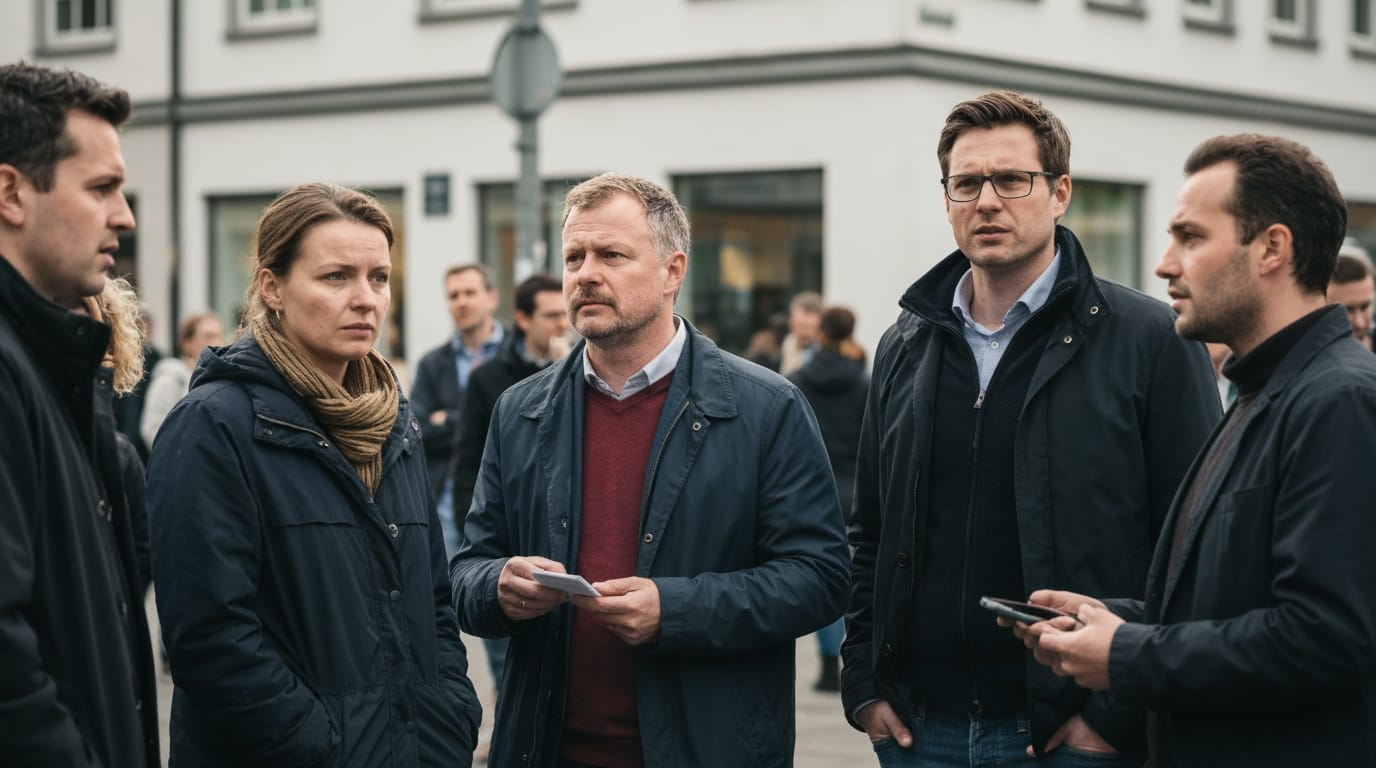
BERLIN — Germany's current coalition government is grappling with a profound crisis of public confidence, with a significant majority of citizens expressing dissatisfaction and a growing belief that the alliance is destined for failure. Recent surveys paint a bleak picture for the current administration, led by Chancellor Friedrich Merz, just over a year since it took office, underscoring a period of persistent political instability and economic apprehension in Europe's largest economy.
A Shaky Foundation: Merz Government Under Scrutiny
The current "grand coalition" of the conservative Christian Democratic Union/Christian Social Union (CDU/CSU) and the Social Democratic Party (SPD), formed after snap elections in February 2025, finds itself in an unenviable position. Chancellor Friedrich Merz's approval ratings have plummeted, with a mid-April 2026 survey by Morning Consult indicating that only 19% of Germans are satisfied with his performance, while a striking 76% express dissatisfaction. This makes Merz the most unpopular head of government among democracies surveyed. Similarly, an INSA poll conducted on behalf of Bild am Sonntag in May 2026 revealed that the ruling coalition has lost 7 percentage points in its popularity in its first year, now holding just 38% approval. These figures reflect a substantial erosion of support, falling from 38% when the government was formed in May 2025 to 32% by December of the same year, according to Forsa polls.
The sentiment of widespread dissatisfaction extends beyond the Chancellor. A November 2025 survey by the Infratest Dimap Institute for ARD found that 76% of respondents were unhappy with the government's activities six months into its tenure, with only 22% offering a positive assessment. This stark contrast to the approximately 50% support seen in June 2025 highlights a rapid decline in public trust. The perceived lack of effectiveness and the ongoing internal tensions within the coalition have contributed significantly to this negative public mood.
Echoes of the Past: The Collapse of the "Ampelkoalition"
The current government's struggles are set against the backdrop of the dramatic collapse of its predecessor, the "Ampelkoalition" (traffic light coalition) of the Social Democrats (SPD), the Greens, and the Free Democratic Party (FDP), led by former Chancellor Olaf Scholz. That government dissolved in November 2024 following irreconcilable disputes, primarily over the 2025 federal budget and the constitutional "debt brake".
Tensions within the Scholz government had been brewing for months, with public approval reaching a record low of 14% before its dissolution. By September 2024, only a mere 3% of Germans believed Scholz's three-party alliance was benefiting the country. The FDP's insistence on fiscal conservatism clashed severely with the SPD's and Greens' spending priorities, particularly in the face of a €10-billion budget shortfall for 2025. The conflict escalated when Finance Minister Christian Lindner (FDP) proposed his own budget, prioritizing tax cuts and scaling back climate initiatives, ultimately leading to his dismissal by Chancellor Scholz and the FDP's withdrawal from the coalition. This event triggered a confidence vote and paved the way for snap elections in February 2025.
The New Political Landscape and Economic Headwinds
The February 2025 snap elections ushered in a fragmented political landscape, with the CDU/CSU alliance emerging as the strongest force but without a clear majority. The subsequent formation of a grand coalition with the SPD, a familiar arrangement from previous Merkel eras, was seen by some as a pragmatic solution to avoid further political paralysis. However, this new alliance inherited a multitude of challenges, including a stagnating economy, geopolitical uncertainties, and a deeply skeptical electorate.
Germany's economy has faced significant headwinds, contracting for two consecutive years in 2023 and 2024. Industrial output has been in recession since 2018, with the public sector providing the only significant growth stimulus since mid-2023. Experts point to a "toxic mix of self-inflicted troubles," including "irrational energy policies, crippling bureaucracy, high labor costs, excessive taxes, and a skewed public debate that ignores economic and socio-political realities" as contributing factors to the economic downturn. The government's initial economic agenda, aimed at renewal and fiscal discipline, has been met with skepticism, and there are concerns that public distrust could hamper consumer confidence and private investment, crucial for economic revival.
Adding to the complexity is the notable rise of alternative political forces. The far-right Alternative for Germany (AfD) has surged in popularity, becoming the strongest political force in some polls by early 2026, reaching 27-28% support and surpassing traditional parties. The newly founded Sahra Wagenknecht Alliance (BSW) has also gained traction, capitalizing on public frustration and presenting itself as a credible alternative to mainstream politics. These developments highlight a profound shift in Germany's political landscape, signaling growing disillusionment with established parties and a potential for further fragmentation.
Public Frustration and Policy Paralysis
Public and expert dissatisfaction with the current government stems from various policy areas. Economists, for instance, have expressed mixed to negative views on the new government's economic policies. A survey of 170 economics professors conducted to mark Chancellor Merz's first 100 days in office in August 2025 revealed that 42% viewed the government as "rather negative" or "very negative," citing a lack of reforms in social systems and an absence of clear impetus for structural reforms, bureaucracy reduction, and climate protection. While some positive aspects like increased public investment and defense spending were noted, a significant portion could not name any successful decisions.
The "debt brake," a constitutional rule limiting public debt, remains a contentious issue. While it contributed to the previous government's downfall, a January 2025 Forsa poll indicated that 55% of Germans now believe the debt brake should be reformed or abolished to allow for higher investment spending. This shift suggests a public appetite for increased public investment in critical areas such as education, transport, health, and defense. However, achieving consensus on such reforms has proven challenging for successive governments.
The internal divisions within the current CDU/CSU-SPD coalition, particularly over migration policy, military service reform, pension reforms, and budget priorities, have raised questions among voters about the government's ability to govern effectively. This constant friction is perceived as a barrier to decisive action on pressing national issues.
Uncertainty on the Horizon
As Germany navigates a period of significant domestic and international challenges, the prevailing sentiment suggests deep public skepticism regarding its current political leadership. The rapid decline in approval ratings for Chancellor Merz and his coalition reflects a broader distrust in the ability of established parties to deliver effective governance and address the nation's economic woes.
The rise of populist movements on both the far-right and the left further complicates the political outlook, indicating a growing demand for alternative solutions and a clear departure from traditional political norms. With federal elections initially scheduled for 2029, the current government faces the formidable task of rebuilding public confidence amidst internal disagreements, a struggling economy, and a electorate increasingly doubtful of its long-term viability. The coming months will be critical in determining whether the current German coalition can overcome these deep-seated challenges or if it is indeed, as many Germans believe, doomed to an uncertain future.


