Mayon Volcano Unleashes Ash, Lava in Renewed Unrest, Thousands Evacuated

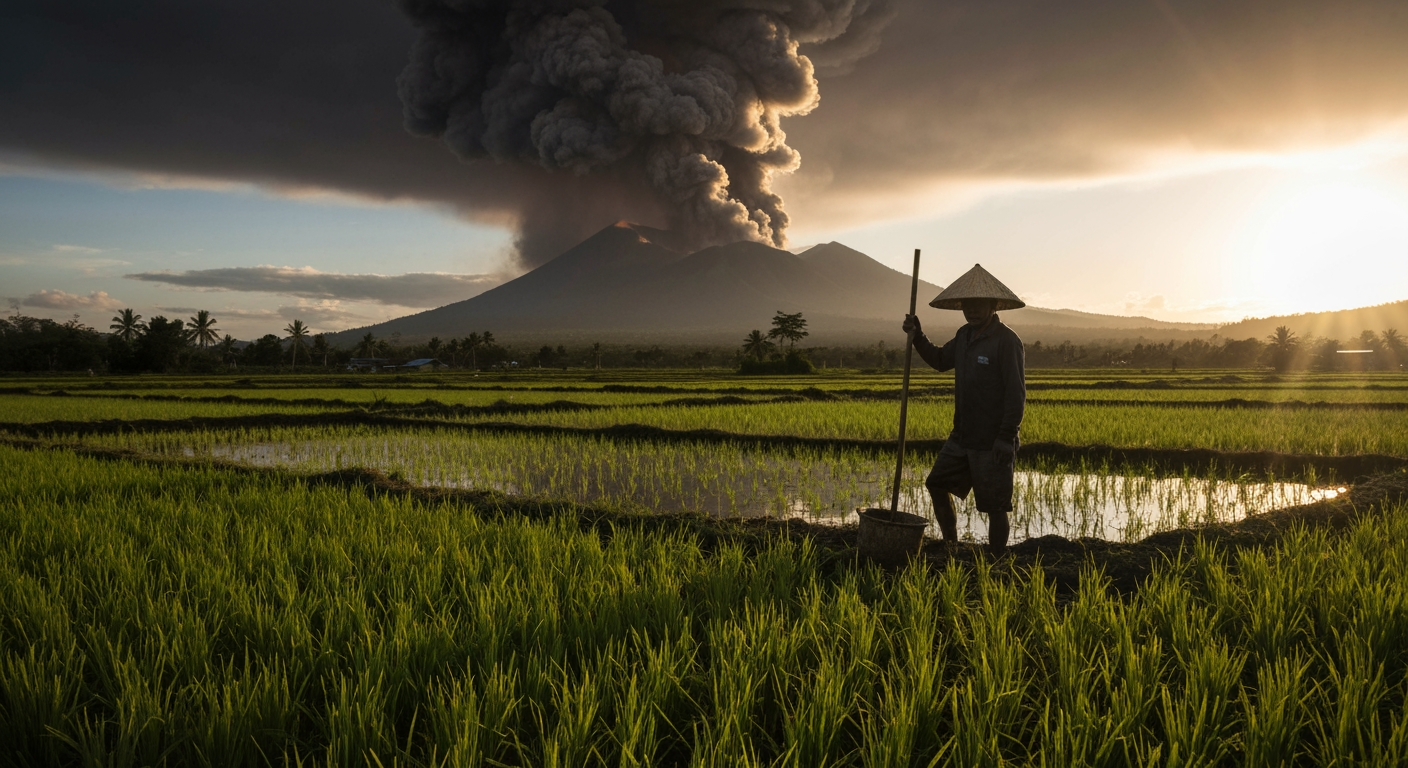
Legazpi City, Philippines – Mayon Volcano, the Philippines' most active stratovolcano, has once again dramatically demonstrated its power, spewing ash and molten lava in a series of intensified activities over the weekend. The renewed unrest has prompted the evacuation of thousands of residents and placed communities in Albay province on high alert, as authorities monitor for potential hazardous eruptions.
The Philippine Institute of Volcanology and Seismology (PHIVOLCS) reported intensified magmatic unrest at Mayon, maintaining Alert Level 3, which signifies that magma is close to the crater and a hazardous eruption remains possible within weeks. The picturesque volcano, renowned for its near-perfect conical shape, has become a focal point of concern and a stark reminder of nature's raw force.
Escalating Activity and Immediate Response
Beginning Saturday, May 2, Mayon Volcano exhibited a significant increase in activity, characterized by continuous lava effusion and prominent ashfall. Lava flows have been observed extending down three gullies: Basud Gully for 3.8 kilometers, Bonga Gully for 3.2 kilometers, and Mi-isi Gully for 1.6 kilometers. Intermittent minor strombolian activity and short-lived lava fountaining have also been noted, alongside a visible crater glow, indicating ongoing magmatic processes within the volcano.
The seismic network detected 32 volcanic earthquakes on Saturday, including 25 volcanic tremors lasting between two and 15 minutes. Additionally, 284 rockfall events and 14 pyroclastic density current (PDC) signals were recorded, with successive PDCs observed along the Mi-isi Gully within the Permanent Danger Zone (PDZ). Ashfall primarily affected the southwestern slopes of the volcano, with moderate plumes drifting west-northwest.
In response to the escalating threat, authorities have mandated a strict six-kilometer radius Permanent Danger Zone (PDZ) around the volcano, which remains off-limits to the public. Furthermore, flying aircraft close to the volcano has been prohibited to ensure safety. These measures are critical given the potential hazards associated with Alert Level 3, which include rockfalls, landslides, ballistic fragments, lava flows, PDCs, moderate-sized explosions, and lahars during heavy rainfall.
Mass Evacuations and Humanitarian Efforts
The ashfall and heightened volcanic activity have necessitated significant evacuation efforts across Albay province. Thousands of residents have been moved from their homes, with nearly 1,500 families already housed in evacuation centers as of Sunday, May 3. Preemptive evacuations were strategically carried out in communities situated within the Permanent Danger Zone. Initial reports indicate that 52 barangays (villages) in towns such as Camalig, Guinobatan, and Ligao City have been impacted by the ashfall.
The Philippine National Police (PNP) has mobilized its units in the Bicol Region to support evacuation efforts, secure residential areas, and maintain public order. PNP Chief Jose Melencio Nartatez Jr. affirmed the deployment of personnel to assist affected communities, distribute face masks to mitigate health risks from ashfall, and advise residents to limit outdoor exposure. Checkpoints and patrols have been reinforced to enforce the no-entry policy within the PDZ and secure evacuated areas. The Department of Social Welfare and Development (DSWD) has also pre-positioned over 300,000 food and non-food items to support those displaced. Despite the discomfort in evacuation centers, authorities emphasize that evacuees cannot return home until the alert level subsides.
A History of Unrest and Resilience
Mayon Volcano, standing at 2,462 meters, is located approximately 330 kilometers southeast of the capital Manila and is a central feature of the Bicol region on Luzon island. Its frequent eruptions, over 50 in the last century, have shaped both the landscape and the lives of the Albayanos. The current unrest follows a period of increased activity observed since early 2026, with Alert Level 3 being in effect since January 6, 2026.
Historically, Mayon's eruptions, while destructive, have also contributed to the region's unique ecosystem. Volcanic ash, though initially detrimental to crops, can enrich the soil with minerals, fostering fertility for future agricultural endeavors. However, thick ashfall can lead to significant crop destruction, and the threat of lahars, fast-moving mudflows triggered by heavy rains mixing with volcanic debris, remains a serious concern for lowland communities.
Economic and Agricultural Impact
The current volcanic activity has already inflicted a measurable toll on the local economy, particularly agriculture. Agricultural damage has reached an estimated PHP 14.4 million, impacting 314 farmers and fishers in Albay. Approximately 1,466 metric tons of high-value crops and fisheries across 116 hectares of farmland and fishponds have been damaged by ashfall. This includes fishponds covered with ash and agricultural areas within the danger zone. The Department of Agriculture-Bicol Region (DA-5) is providing initial assistance, including farm inputs for communal gardens in evacuation centers and cattle feed for livestock.
While eruptions pose immediate challenges, Mayon's imposing beauty also attracts tourists, earning it the moniker "perfect cone." Some reports suggest that while large-scale eruptions can lead to cancelled flights and hotel bookings, they can also paradoxically boost day-tripper tourism as visitors flock to safe vantage points to witness the spectacle. However, the primary focus remains on the safety and well-being of the affected communities.
The communities surrounding Mayon Volcano continue to face an uncertain period as PHIVOLCS maintains a vigilant watch over its activity. The repeated cycle of eruption and recovery has instilled a profound sense of resilience among the local population, who live in intimate proximity to one of the world's most active and awe-inspiring natural wonders. The collective hope is for the unrest to subside without escalating to a more catastrophic event, allowing residents to eventually return to their homes and rebuild their livelihoods.
Related Articles


Ratko Mladić, "Butcher of Bosnia" and Convicted War Criminal, Dies at 84
THE HAGUE, Netherlands – Ratko Mladić, the former Bosnian Serb military commander known as the "Butcher of Bosnia" and convicted of genocide, war crimes, and crimes against humanity, has died at the age of 84. Serbian...


Long-Awaited 9/11 Mastermind Trial Set for 2028, Decades After Attacks
GUANTANAMO BAY, Cuba – Nearly a quarter-century after the devastating terror attacks of September 11, 2001, a military judge has finally set a trial date for Khalid Sheikh Mohammed, the alleged mastermind behind the...