Ukrainian Drones Strike Russia's Primorsk Oil Terminal, Igniting Fires in Latest Escalation
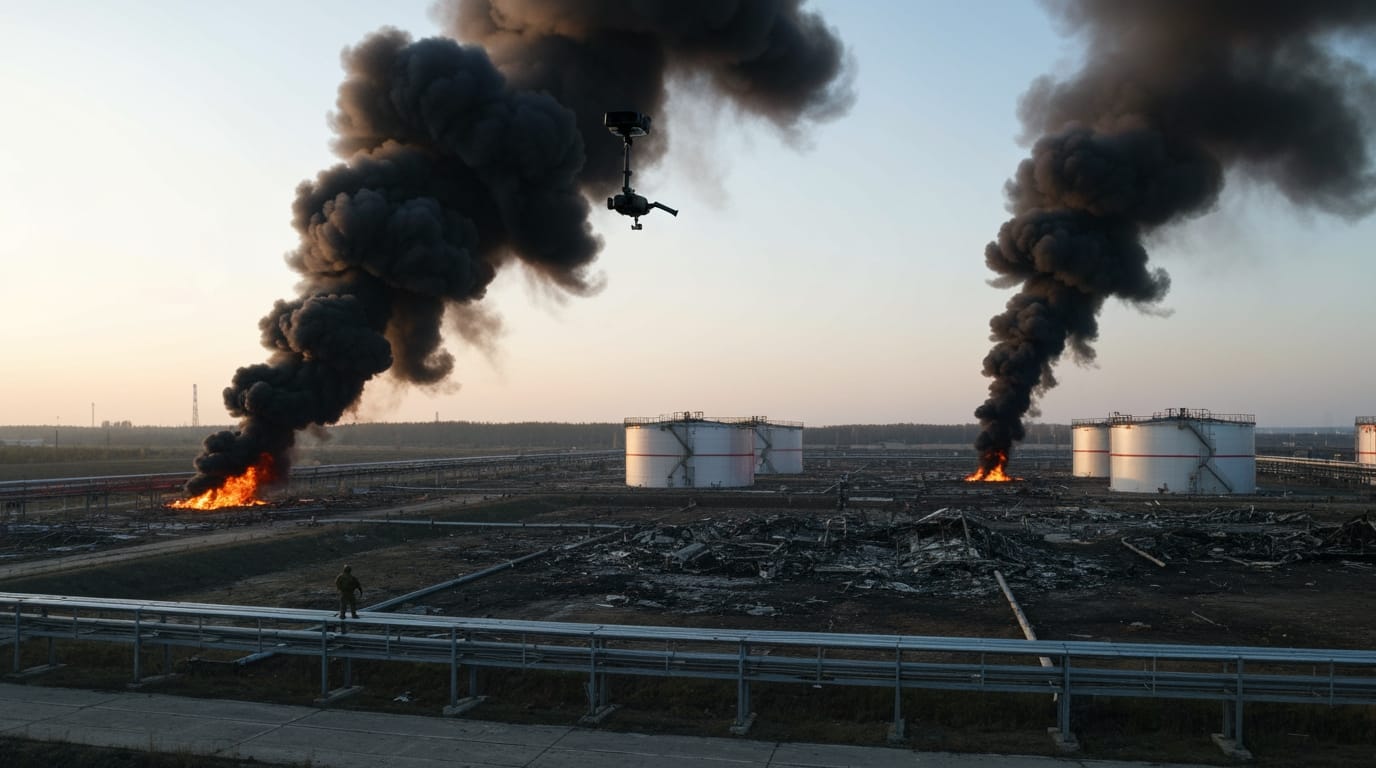
Ukrainian drones struck Russia's Primorsk oil terminal on the Baltic Sea early Sunday, igniting fires at one of the country's largest export hubs in a persistent campaign targeting Moscow's vital energy infrastructure. The attack, part of a wider barrage across western Russia, underscores Kyiv's strategy to disrupt the Kremlin's war funding by hitting targets deep within Russian territory, hundreds of kilometers from the front lines. While Russian authorities reported the swift extinguishment of the blaze and no oil spill, the incident reaffirms Ukraine's growing long-range drone capabilities and signals an enduring economic front in the ongoing conflict.
Overnight Assault on a Critical Hub
The drone attack on the Primorsk terminal occurred overnight into Sunday, May 3, 2026, in Russia's Leningrad Oblast. According to Leningrad regional governor Alexander Drozdenko, Ukrainian drones targeted the facility, sparking fires. Satellite imagery from NASA FIRMS confirmed active fire signatures at the Primorsk oil terminal on Sunday morning. Russian air defense systems reportedly intercepted more than 60 drones over the Leningrad region during the overnight assault, with Drozdenko identifying Primorsk as the "key target" of the attack.
Despite the fires, Governor Drozdenko stated that emergency teams successfully brought the blaze under control and extinguished it. He also assured that there was no resulting oil spill, a critical concern given the terminal's capacity and location. While Ukraine did not immediately claim responsibility for the Primorsk incident, President Volodymyr Zelenskyy noted on the same day that Ukrainian forces had struck two "shadow fleet" tankers near the entrance of Russia's Black Sea port of Novorossiysk, emphasizing that these vessels, actively used for oil transport, would be so no longer. These parallel strikes highlight Ukraine's widening targeting scope against Russia's maritime oil export capabilities. The Primorsk terminal lies roughly 900 to 1,000 kilometers from the Ukrainian border, demonstrating Kyiv's extended reach.
Primorsk: Russia's Baltic Oil Gateway
The Primorsk oil terminal holds immense strategic and economic significance for Russia. Situated on the Baltic Sea in Leningrad Oblast, it stands as Russia's largest oil-loading port in the region and serves as the terminus of the crucial Baltic Pipeline System. The port is a vital conduit for the export of Russian crude oil and diesel, capable of handling up to 58 million tonnes of oil annually, which translates to over 1 million barrels per day. Its infrastructure includes 18 crude oil tanks, each with a capacity of 50,000 tonnes, and it can accommodate supertankers with a deadweight of up to 150,000 tonnes.
Primorsk's strategic location provides a critical link between Russia's vast energy production and international markets, particularly in Europe. Alongside the Ust-Luga port, these two Baltic facilities collectively manage approximately 2 million barrels of Russian crude per day, accounting for about 40% of Russia's total seaborne oil exports. Its operational efficiency and capacity are paramount to Russia's oil export economy, playing a vital role in generating revenue for the national budget. The repeated targeting of such high-value assets directly aims to undermine Russia's financial stability and its ability to fund the ongoing military campaign in Ukraine.
Ukraine's Calculated Economic Warfare
The drone strike on Primorsk is not an isolated incident but rather the latest in an intensifying series of Ukrainian attacks on Russian energy infrastructure. Since early 2026, Kyiv has escalated its campaign, targeting refineries, oil depots, and export terminals across western Russia. The stated objective of this strategy is to degrade Russia's oil export capacity, reduce its crucial oil and gas revenues—which constitute about a quarter of Russia's state budget—and thereby weaken Moscow's military capabilities.
Ukraine's deep-strike capabilities have significantly increased, allowing drones to penetrate deep into Russian territory, often flying over 900 kilometers to reach their targets. This expanded range also enables attacks from multiple directions, complicating Russian air defense efforts. Previous major incidents include multiple strikes on the Tuapse oil refinery and export terminal on the Black Sea, which has been hit at least four times in recent weeks, causing significant fires and environmental concerns with toxic clouds and oil slicks. The Ust-Luga port, another critical Baltic Sea facility, has also been struck multiple times, including in March 2026, leading to operational suspensions. Even an oil pumping station in Russia's Perm region, over 1,500 kilometers from Ukraine, has been hit, demonstrating the extensive reach of these operations. Ukrainian officials claim these attacks have already cost Russia billions of dollars in lost revenue and have pushed Russian refinery output to multi-year lows.
Impact and Russia's Defensive Stance
The effectiveness and ultimate economic impact of Ukraine's drone campaign remain a subject of debate. While spectacular fires and operational suspensions are reported, the Russian government has largely refrained from disclosing the full scale of damage to its oil export operations. Some analysts suggest that while such attacks cause temporary disruptions and increase costs for Russia, they might only delay deliveries rather than cause long-term shutdowns, especially if the primary targets are storage tanks rather than critical pumping stations or compressors. However, Reuters calculations in March 2026 indicated that about 40% of Russia's crude oil export capabilities, equating to approximately two million barrels per day, were halted following a series of Ukrainian drone attacks on major western oil export ports, including Primorsk and Ust-Luga.
Adding complexity to the economic assessment, the global rise in oil prices, partly fueled by geopolitical tensions such as the Iran war, and an easing of some U.S. sanctions, may partially offset the revenue losses for Russia, helping to replenish its coffers. Nevertheless, the attacks are increasingly bringing the consequences of the war home to ordinary Russians, far from the front lines, through local evacuations, environmental damage, and disruptions. Russian officials have labeled these drone strikes as "terrorist attacks" and have indicated that "intensive work is being carried out" to strengthen air defenses at critical infrastructure facilities like Ust-Luga and Primorsk. The regional governor of Leningrad Oblast, Drozdenko, has openly declared the area around St. Petersburg a "front-line region" due to these aerial threats.
The ongoing targeting of Russia's oil infrastructure represents a significant strategic pivot in the conflict, with Ukraine leveraging asymmetric capabilities to exert economic pressure. The attacks underscore a shift where both sides are increasingly targeting high-value economic and military assets deep within each other's territories. As Ukraine continues to develop its long-range strike capabilities, these acts of economic warfare are likely to persist, maintaining pressure on Russia's financial lifeline and keeping the global energy market on edge. The latest strike on Primorsk serves as a stark reminder of the evolving nature of the conflict and the enduring commitment by Kyiv to undermine Russia's ability to wage war.


