German Farmers Embrace Wet Future to Battle Climate Crisis
A quiet revolution is underway across Germany's agricultural heartland, where farmers are increasingly facing a stark choice: continue traditional farming methods on drained lands that exacerbate climate change, or venture into the unfamiliar, often risky, territory of "paludiculture" – farming on rewetted wetlands. This transformative shift, driven by urgent climate goals, is turning centuries of land management on its head, presenting both immense challenges and profound opportunities for a sustainable future.
For generations, German farmers drained vast peatlands, transforming marshy landscapes into arable fields for crops and pastures for livestock. This historical feat of engineering, once seen as a triumph of human ingenuity over nature, has inadvertently unleashed a potent environmental threat. Dried peat soils, rich in millennia-old organic matter, decompose rapidly when exposed to air, releasing colossal amounts of carbon dioxide into the atmosphere. These emissions are so significant that Germany's drained peatlands, despite constituting a mere 7% of agricultural land, account for approximately 7.5% of the nation's total greenhouse gas emissions, and a staggering 37-40% of agricultural emissions. With an estimated 1.7 to 1.8 million hectares of drained peatland, mostly under agricultural use, Germany faces an enormous task to meet its 2045 climate neutrality target, requiring the rewetting of roughly 1.3 million hectares by 2050.
The Hidden Climate Cost of Drained Lands
The story of Germany's peatlands is one of a long-standing environmental paradox. Peatlands are natural carbon powerhouses, globally storing twice as much carbon as all forest biomass combined, despite covering only about 3% of the Earth's surface. When healthy and waterlogged, they act as massive carbon sinks, accumulating organic matter that remains preserved for millennia. However, the widespread practice of drainage, which began centuries ago to expand agricultural land, disrupts this delicate balance. By lowering the water table, oxygen penetrates the peat, leading to its decomposition and the release of sequestered carbon in the form of CO2. This process has turned these natural carbon sinks into significant carbon sources. The German Environment Agency (UBA) highlights that drained peatlands in Germany alone emit approximately 53 million tonnes of CO₂ equivalents annually. Experts like Hans Joosten of the Greifswald Mire Centre, a leading authority on peatlands, emphasize a clear message: "peatland must be wet" to yield maximum environmental benefits. The urgency is underscored by projections that Germany is set to miss its 2030 climate target for land use if action isn't accelerated, with the land use sector currently acting as a net emitter rather than a sink.
Paludiculture: Farming the Wet Way
To reverse this trend, Germany is championing "paludiculture," a novel yet ancient form of agriculture specifically adapted for wet and rewetted peatlands. Derived from the Latin word 'palus' for swamp, paludiculture involves cultivating specialized crops that thrive in saturated conditions, allowing farmers to maintain productive land use while simultaneously restoring the peatland's ecological function. Unlike traditional farming that necessitates drainage, paludiculture ensures the water levels remain high, preventing peat decomposition and the associated carbon emissions. The harvested biomass, such as reeds, cattails (Typha), sedges, and even peat moss (Sphagnum), offers a range of innovative applications.
These "wet crops" are not destined for conventional food markets but are instead finding their way into new, sustainable value chains. Reeds and cattails, for instance, can be used as insulation materials in construction, for paper and cardboard production, or as raw materials for biofuels. Sphagnum mosses are being cultivated as a sustainable alternative to traditional peat for horticultural growing media, addressing another environmental concern. This innovative approach not only mitigates greenhouse gas emissions but also contributes to biodiversity conservation and improved water quality, restoring vital ecosystem services that were lost through drainage.
Navigating the New Frontier: Risks and Rewards for Farmers
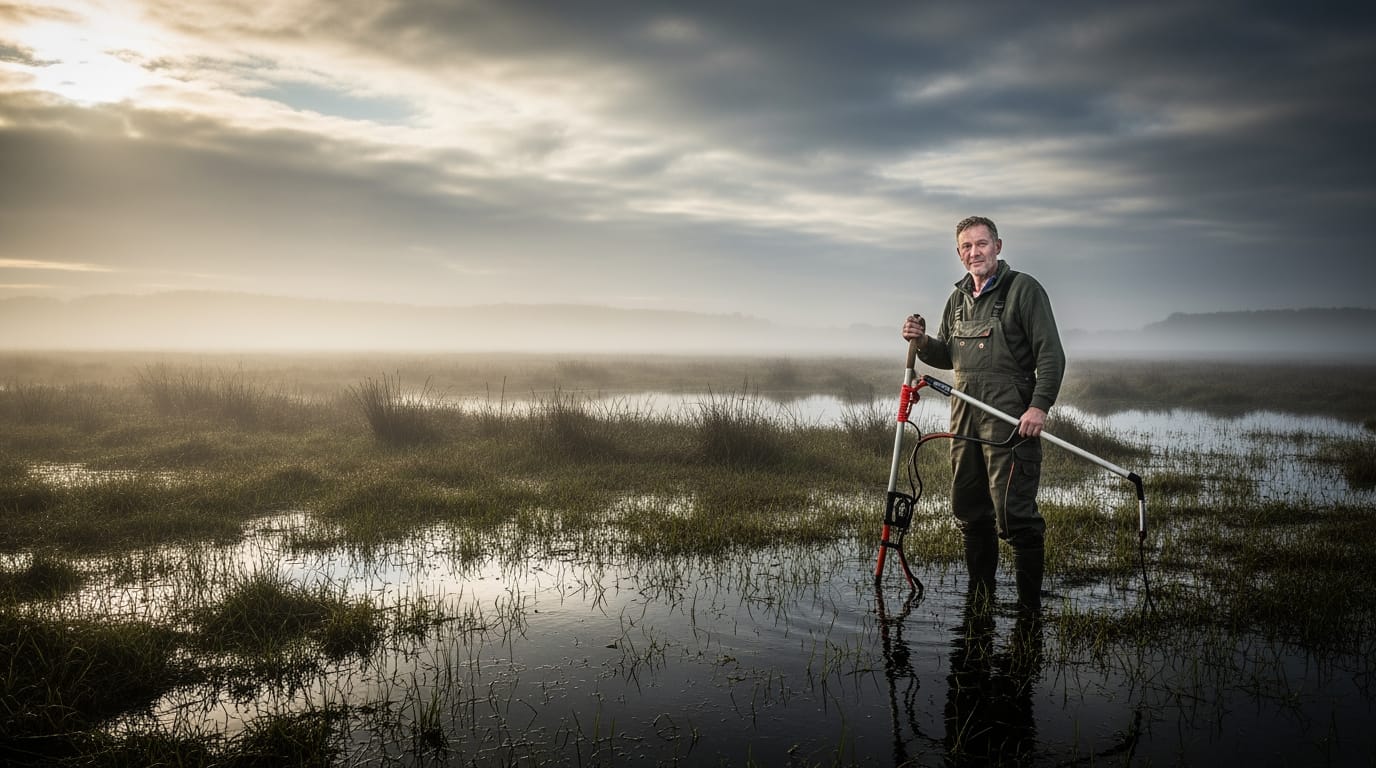
The transition to paludiculture, however, is far from straightforward. For farmers like Henning Voigt, who made the bold decision to rewet his 500-hectare cattle pasture along the Peene River, it means fundamentally altering generations of agricultural practice. Traditional crops like potatoes, grain, and maize, or even pastoral stock farming, are incompatible with the high water levels required for effective rewetting. This necessitates a steep learning curve in new cultivation techniques, management practices, and specialized machinery adapted for waterlogged environments.
Economic viability remains a significant hurdle. Farmers face considerable investment risks in adapting their operations, and markets for paludiculture products are still nascent, lacking the established infrastructure and pricing stability of conventional agriculture. There is also a cultural reluctance among some to abandon traditional farming for what might be perceived as less profitable or familiar ventures, particularly a preference for food and livestock production over biomass. Fragmented land ownership, existing rental agreements, and the potential impact on neighboring properties further complicate the rewetting process. Moreover, successful paludiculture requires careful water management, ensuring sufficient supply and appropriate quality, which can be challenged by water scarcity or nutrient imbalances. The German government recognizes that voluntary rewetting requires robust incentives and long-term planning security beyond current 5-7 year funding cycles to motivate widespread farmer adoption.
A National Imperative: Government Strategies and Support
Acknowledging the critical role of peatland restoration in its climate agenda, the German government has launched a series of comprehensive strategies and financial programs. The National Peatland Strategy (introduced November 2022) and the National Water Strategy (implemented March 2023) highlight the integral role of peatlands in achieving national climate targets. Furthermore, the Program for Natural Climate Buffers, backed by a €4 billion fund, aims to connect nature conservation with climate change mitigation.
To incentivize farmers, the Federal Ministry for the Environment (BMUV) has committed €50 million over the next decade for pilot projects specifically dedicated to advancing paludiculture practices. The federal government also launched "PaludiNet," a 10-year program to advance wetland agriculture across nine sites nationwide, fostering research and practical implementation. Beyond direct government funding, innovative private-public partnerships are emerging. The "Klimafonds" initiative, a collaboration between the National NGO for Nature Conservation (NABU) and supermarket chain REWE, compensates farmers €65 for every tonne of greenhouse gas reduction achieved through peatland conservation. Research institutions like the Greifswald Mire Centre play a vital role in providing scientific guidance and advising policy-makers on best practices for rewetting and paludiculture. These collective efforts aim to develop robust financial incentive tools and establish stable supply chains for paludiculture products, bridging the gap between scientific innovation and practical agricultural application.
A Sustainable Future, One Wetland at a Time
The journey towards a widespread paludiculture landscape in Germany is a complex and ambitious undertaking, yet it represents a critical pathway to achieving the nation's climate goals. The vision is to transform peatlands from climate liabilities into climate assets, simultaneously bolstering biodiversity and creating new economic opportunities for rural communities. While significant challenges remain in overcoming historical farming traditions, developing viable markets, and ensuring long-term financial stability for farmers, the concerted efforts from government, research institutions, and the private sector are laying the groundwork for this profound agricultural transformation. The commitment to rewetting an average of more than 50,000 hectares of organic soils annually until 2050 underscores the scale and urgency of this "generational task." As German farmers increasingly embrace the wet future, they are not just changing their livelihoods; they are actively reshaping the country's landscape in the global fight against climate change.