German Government Building Projects Face Persistent Headwinds
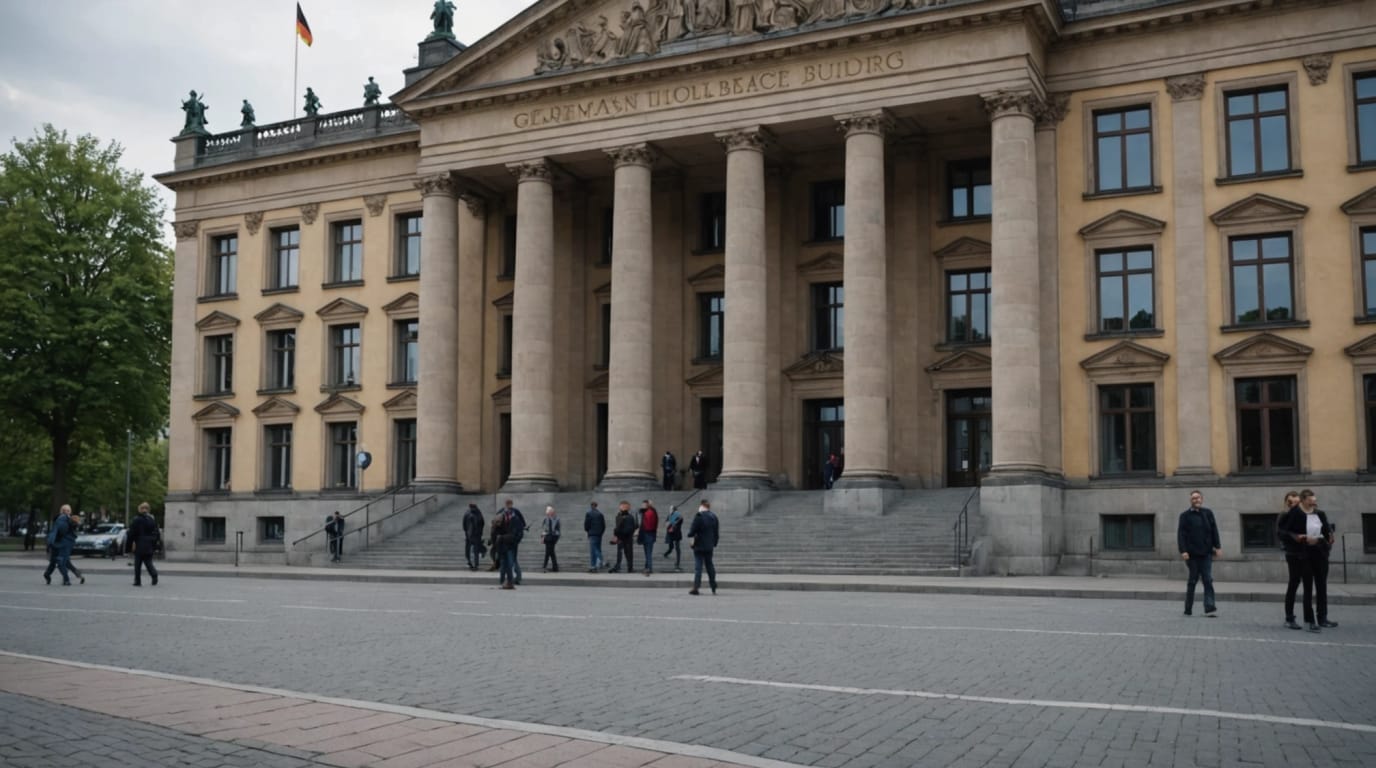
Germany's ambitious plans for modernizing its infrastructure and government buildings are encountering significant obstacles, ranging from construction delays and cost overruns to sustainability challenges and political instability. These hurdles threaten to undermine the country's economic competitiveness, climate goals, and social well-being.
Construction Industry Woes
Germany's construction sector is currently facing a multitude of challenges. The recent collapse of the coalition government has exacerbated existing problems, leading to further delays in project approvals and funding uncertainties. The Hauptverband der Deutschen Bauindustrie, the German construction industry federation, warns that urgent project decisions will be postponed by at least six months, heaping pressure on an already struggling sector. Approvals for new building projects in the first nine months of 2024 were 20% below the figure for the same period in 2023, according to the Federal Statistics Office.
Adding to the industry's woes are rising building material costs, high interest rates, supply chain disruptions caused by the war in Ukraine, and excessive bureaucracy. Felix Pakleppa, general manager of the Central Association of the German Construction Industry (ZDB), has voiced concerns that funding programs for housing construction, bridge and road renovations, and rail network expansion are at risk of running out.
The Curse of Cost Overruns
Large-scale infrastructure projects in Germany have a history of exceeding their initial budgets. A study by the Hertie School analyzed 170 public infrastructure projects and found that, on average, they were 73% more expensive than estimated. For unfinished projects, the cost overrun was 41%, with the ICT and energy sectors experiencing the highest overruns at 394% and 136%, respectively. Projects exceeding 500 million euros were, on average, twice as expensive as planned.
Several factors contribute to these cost overruns, including technological complexities, economic factors such as hidden action and perverse incentives for companies, political factors like strategic deception and inexperienced planners, and psychological factors such as "optimism bias."
Sustainability Challenges
Germany is committed to achieving climate neutrality by 2045, which requires a significant transformation of its building sector. However, the sector has repeatedly failed to meet its emission reduction targets. A large percentage of Germany's buildings are poorly insulated, and energy efficiency renovations are lagging behind.
The next government will have to implement the EU's Energy Performance of Buildings Directive (EPBD), which requires the building sector to reduce its energy consumption by at least 16% by 2030, compared to 2020. This will require a massive effort to modernize the country's building stock and switch to green heating systems.
The use of sustainable building materials is also a challenge. Substantial quantities of mineral resources are needed for construction, and many of these resources are imported. Germany's anthropogenic stock – the resources locked into building material and consumer goods – is estimated at 51.7 billion tonnes of material. Despite this vast reservoir, large amounts of waste resources from demolished buildings are not reused.
Political Instability and Uncertainty
The recent collapse of the German government has created further uncertainty for the construction sector. Programmes supporting climate-friendly construction could be severely affected, as the country is likely to enter 2025 on a provisional budget that provides no certainty whether certain schemes will be continued. The building owner protection association BHB has warned that home builders which depend on these funds could run into "significant financial challenges."
The snap election scheduled for February 23, 2025, adds another layer of uncertainty. The outcome of the election and the composition of the next government will have a significant impact on the future of construction and infrastructure projects in Germany.
Examples of Troubled Projects
Several high-profile projects have become symbols of the challenges facing German government building projects.
- Berlin Brandenburg Airport (BER): The airport's construction took 30 years and cost roughly 8 billion dollars. The opening date was delayed multiple times due to unrealistic design changes, poor spatial planning, and a faulty fire safety system.
- Stuttgart 21: This major railway development project aims to transform Stuttgart's overground terminal into an underground hub. The project has faced controversy since its inception, with rising construction costs and stringent environmental regulations leading to delays and escalating expenses. The station's opening is delayed to 2026, and costs are expected to reach 11 billion euros.
- Elbphilharmonie: Hamburg's iconic concert hall experienced significant cost overruns and delays.
Looking Ahead
Germany faces significant challenges in its efforts to modernize its infrastructure and government buildings. Addressing these challenges will require a concerted effort from policymakers, industry leaders, and the public. Key steps include:
- Reducing bureaucracy and streamlining planning processes: This will help to speed up project approvals and reduce construction costs.
- Promoting sustainable construction practices: This includes using local, organic, resource-efficient, low-emission construction materials and reusing building materials within circular systems.
- Investing in energy efficiency renovations: This will help to reduce greenhouse gas emissions from the building sector and meet the EU's Energy Performance of Buildings Directive (EPBD) targets.
- Ensuring stable funding for construction projects: This will provide certainty for home builders and investors and prevent further delays.
- Adopting sector-based benchmarking during the public planning process: This will help to safeguard projects against cost overruns.
By addressing these challenges, Germany can ensure that its government building projects contribute to a more sustainable, competitive, and prosperous future.


