German Gymnastics Club Severs Ties with Star Russian Gymnast Amid Political Storm
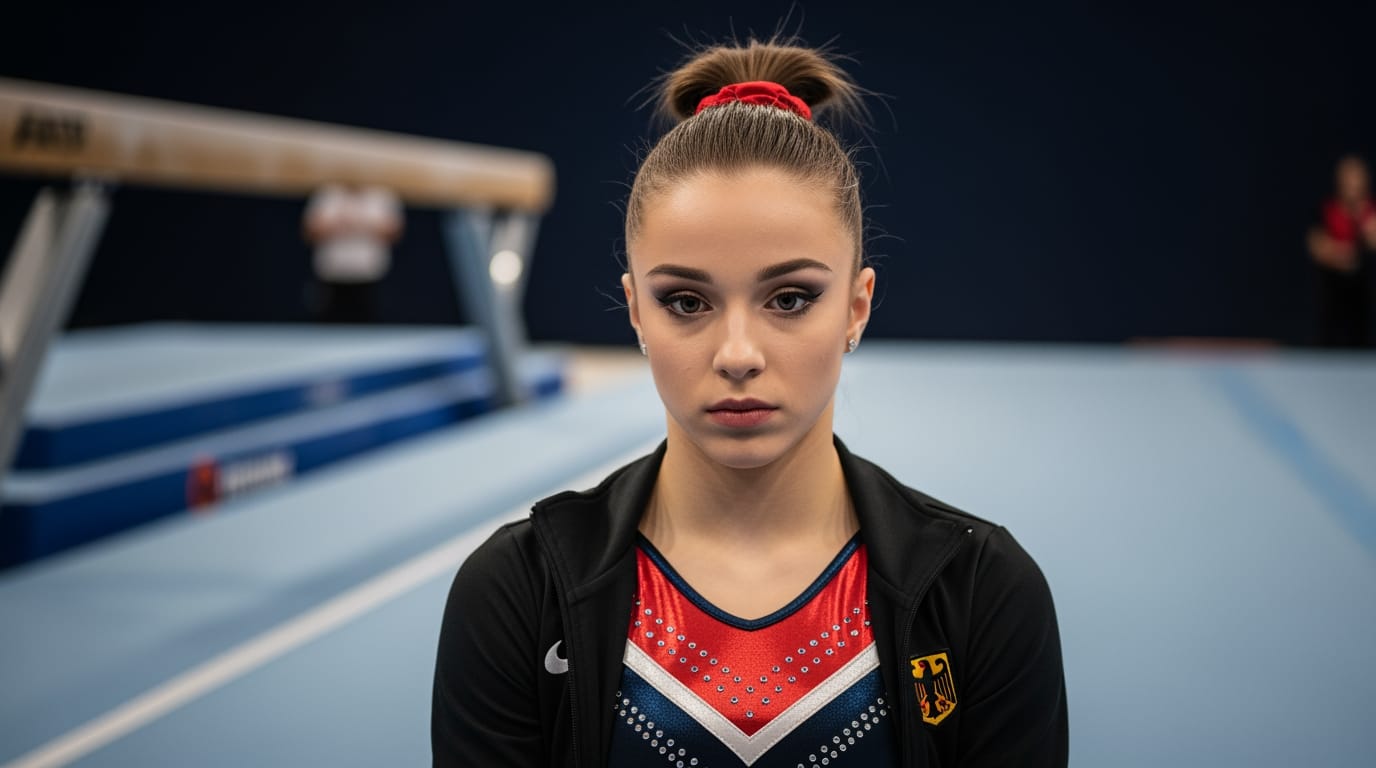
A prominent German gymnastics club, TSV Tittmoning-Chemnitz, has announced its decision to cut ties with highly decorated Russian artistic gymnast Angelina Melnikova, effectively barring her from competing in the upcoming Bundesliga finals. The move, confirmed on November 24, 2025, follows significant backlash stemming from Melnikova's public support for Russia's military actions in Ukraine and her documented political affiliations, which critics argue contravene international sports' neutrality guidelines. The club's decision underscores the escalating tensions between sport and geopolitical realities, forcing organizations to navigate complex ethical landscapes.
A Swift and Contentious Departure
The announcement from TSV Tittmoning-Chemnitz arrived just weeks after Melnikova, a 25-year-old Olympic and World champion, had initially signed with the club earlier in November. Her planned debut at the penultimate Bundesliga event on November 15 in Esslingen, a town near Stuttgart, immediately ignited controversy. Local authorities, including Esslingen's mayor Matias Klopper, publicly urged the Chemnitz club to reconsider Melnikova’s inclusion, citing her well-documented connections to Russian President Vladimir Putin and her vocal backing of the war in Ukraine. While large-scale protests did not materialize at the event, the palpable tension and mounting scrutiny ultimately led the club's board to make the difficult decision to withdraw her from the finals scheduled for November 29 in Heidelberg.
Tatiana Bachmeer, the Chemnitz coach, confirmed Melnikova's absence, indicating that the past weeks had been "incredibly demanding." Sources close to the situation suggest the club's board intervened primarily to shield its coaching staff and athletes from further public pressure and potential negative fallout. This development highlights the precarious position sports clubs find themselves in when an athlete's political stance clashes with the broader ethical expectations of the sporting community, particularly in the context of ongoing international conflicts.
Melnikova's Illustrious Career and Controversial Stances
Angelina Melnikova is widely recognized as one of the most successful gymnasts of her generation, holding the distinction of being Russia's third-most decorated gymnast of all time with a remarkable fourteen Olympic and World medals. Her accolades include a team gold at the 2020 Tokyo Olympics, a team silver at the 2016 Rio Games, and individual all-around World titles in both 2021 and 2025. She has been a consistent leader, serving as captain of the Russian women's national gymnastics team since 2017.
However, her athletic achievements are inextricably linked to her political ties, which have drawn significant international criticism. Melnikova competes for the Central Sports Club of the Army (CSKA), an organization subordinate to the Russian Ministry of Defense. This affiliation has led the Defense Intelligence of Ukraine to designate her as a "Champion of Terror," viewing athletes from this club as representatives of "the armed forces of the aggressor state." Beyond her military-linked club, Melnikova's political involvement extends to her participation in a local election in Voronezh in April 2025, where she secured the primary as a candidate for the pro-government United Russia party. Although she later withdrew her candidacy in July to prioritize her gymnastics career, critics maintain that this action did not signify a retraction of her political alignment.
Adding to the controversy, Melnikova has publicly expressed support for the war in Ukraine through social media, sharing pro-war content and utilizing the "Z-symbol," which signifies "Za pobedu" or "For victory" in Russian. These actions have placed her directly in violation of the strict neutrality guidelines that international sports federations aim to uphold.
The Precarious Path of "Neutral" Athletes
The International Gymnastics Federation (FIG) initially imposed a ban on Russian and Belarusian gymnasts from its sanctioned events in March 2022, following Russia's full-scale invasion of Ukraine. This ban was subsequently lifted on January 1, 2024, allowing athletes from these nations to return to international competition as "individual neutral athletes" (AIN). This status is contingent upon strict conditions that explicitly prohibit any national representation or overt support for the military conflict.
Despite her documented public displays of support for the war, including images with the Z-symbol, the FIG granted Melnikova "neutral status" in March 2025, enabling her participation in international events, including the recent World Championships where she secured her second all-around title. This decision by the FIG has been met with considerable contention, with many observers questioning how such a status could be granted given her apparent breaches of the neutrality guidelines. The Ukrainian Gymnastics Federation, for instance, withdrew all seven of its athletes from a 2025 World Challenge Cup in Paris in protest of Melnikova's participation. The FIG, for its part, has maintained a policy of not commenting on individual cases regarding neutral status, while the Deutsche Turn Liga, Germany's gymnastics governing body, stated it was simply adhering to FIG's established rules.
When directly questioned about her neutral status during an interview with German broadcaster SWR in Esslingen, Melnikova declined to comment, a silence that many interpreted as further evidence of the complex and uncomfortable position she and the sport find themselves in.
Broad Implications for Sport and Diplomacy
The decision by TSV Tittmoning-Chemnitz to part ways with Angelina Melnikova highlights the increasing difficulty of separating sports from the broader geopolitical landscape. While the concept of "neutral athletes" aims to allow individuals to compete regardless of their nation's political actions, cases like Melnikova's demonstrate the inherent challenges when athletes themselves actively engage in or publicly support contentious political causes.
This incident raises profound questions for international sports federations and national governing bodies about the efficacy and enforceability of neutrality rules. It underscores the immense pressure faced by individual clubs, which are often caught between upholding ethical principles, managing public perception, and ensuring the well-being of their teams. The case of Angelina Melnikova serves as a stark reminder that in an increasingly interconnected world, the lines between athletic prowess, personal conviction, and international politics remain deeply blurred, posing persistent challenges to the ideal of sport as a unifying, apolitical force.