German Healthcare System on Edge as Staff Stage Widespread Protests Against Major Cuts
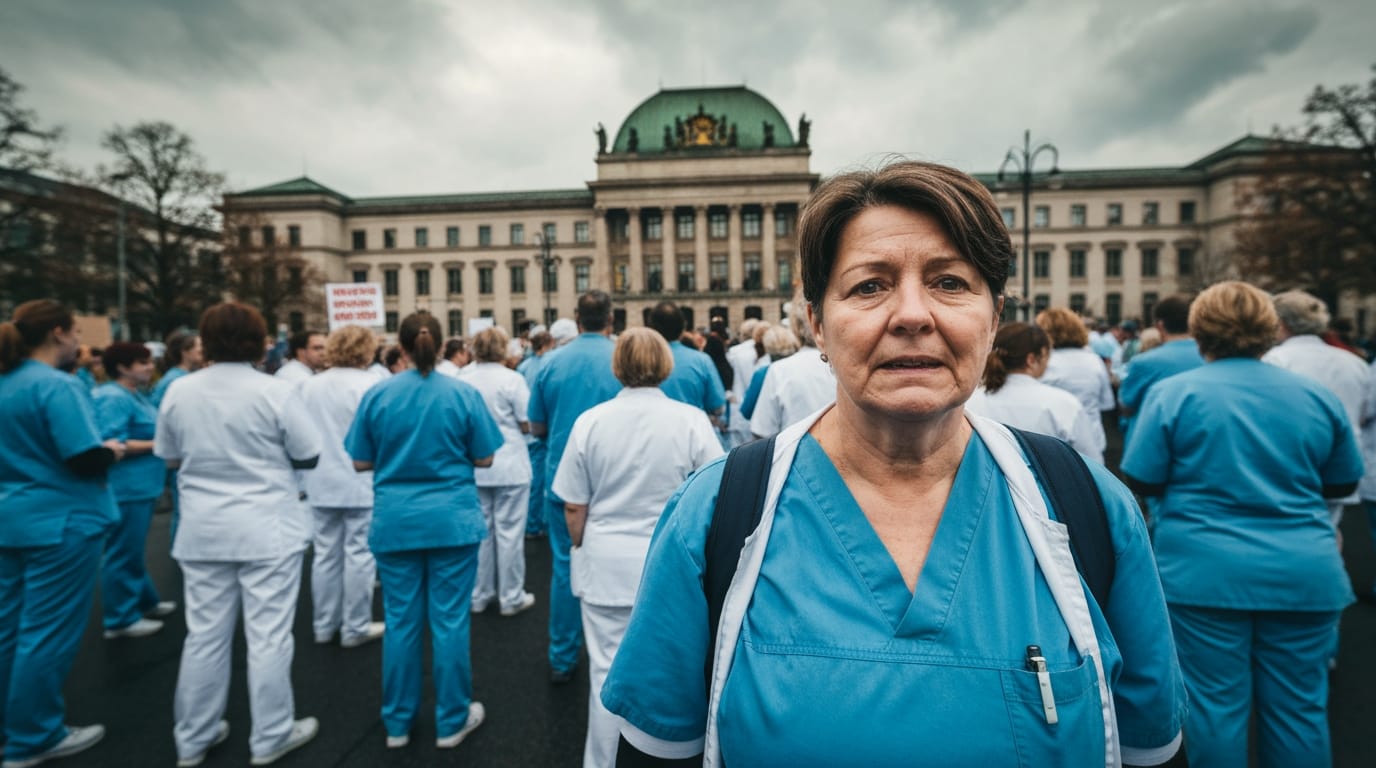
BERLIN, Germany – Germany's vital healthcare sector is grappling with a profound crisis as medical professionals nationwide intensify their protests against proposed budget cuts, deteriorating working conditions, and what they describe as a looming threat to patient care. Nurses, doctors, and various public health service workers, supported by major trade unions, have taken to the streets in recent months, signaling a deep-seated discontent with the government's austerity measures and ambitious reform plans. The ongoing disputes highlight a critical juncture for a system renowned for its quality but now strained by financial pressures and an aging population.
The current wave of industrial action underscores a widening chasm between the government's fiscal objectives and the demands of frontline healthcare staff, who argue that further cutbacks will irrevocably harm an already overstretched system. As hospitals face potential insolvencies and workers contend with stagnating real wages and heightened workloads, the protests are not merely about pay but about the very future of public health provision in Germany.
Escalating Discontent on the Frontlines
The beginning of 2026 has seen a significant escalation in protests across Germany's healthcare landscape. In February, numerous employees at 22 university hospitals participated in a warning strike, responding to calls from the service union Verdi. Nurses, laboratory workers, and administrative staff at these institutions demanded higher wages and a substantial improvement in their working conditions. Verdi initially sought a 7 percent wage increase, with a minimum rise of €300, over a 12-month contract, citing the enormous burdens faced by staff and a history of real wage cuts in recent contracts.
Similar warning strikes continued into January 2026, with nursing staff and other public sector employees participating nationwide. The unions emphasized that public sector workers have endured catastrophic conditions for years, characterized by falling real wages and exploding workloads. Chronic understaffing and persistent cuts in personnel and equipment are forcing many into a vicious cycle of overtime and burnout, with reports indicating over 46,000 unfilled healthcare posts in 2024.
This discontent is further fueled by the precarious financial state of many hospitals. For instance, Geesthacht Hospital, near Hamburg, informed 250 of its 700 employees of dismissal, closing most departments. In Brandenburg, where four out of five hospitals are reportedly operating in the red, the Wittstock hospital is slated for closure by the end of the year, signaling significant losses in care quality for patients in that region.
Government's Austerity Drive and Systemic Reforms
The protests are unfolding against a backdrop of the German government's determined effort to curb spending and reform the healthcare sector. The federal budget for 2024 saw cuts in fundamental areas, including health, and the 2025 draft budget, approved in July 2024, included further reductions, with an overall 2% cut compared to the previous year. Finance Minister Christian Lindner has emphasized adherence to the constitutional "debt brake," which limits public borrowing.
At the heart of the reform strategy is a law passed by the German parliament aimed at reorganizing the health sector. This legislation, with gradual implementation from January 2025 to 2029, seeks to slash the number of hospitals, boost clinics, and digitalize bureaucracy. Germany currently has the highest number of hospital beds per capita in the European Union, at 7.9 beds per 1,000 inhabitants, compared to the EU average of 5.3, leading to high maintenance costs and many hospitals teetering on the brink of bankruptcy.
To address a projected funding gap that could surge from €15.3 billion in 2027 to over €40 billion by 2030, Germany's Health Finance Commission presented policymakers with 66 potential measures in early 2026. These proposals, aiming for over €60 billion in savings by 2030, range from tightening the use of evidence-based medicine to potentially raising co-payments for patients and increasing taxes on certain goods. The government's objective is to shift hospital payments from solely patient diagnoses to primarily global budgets, ostensibly to reduce costs and prevent unnecessary hospitalizations.
Beyond Wages: A System Under Strain
While wage disputes are a central component of the protests, the unrest runs deeper, reflecting long-standing systemic issues within German healthcare. Healthcare workers consistently highlight chronic understaffing, increasing patient numbers per nurse, and a lack of resources as major concerns impacting patient safety and their ability to deliver quality care.
Doctors, too, have voiced their grievances. Thousands participated in strikes in 2023, protesting government policies designed to reduce healthcare funding and increase bureaucracy. They point to stagnating incomes over the past decade, with many earning less than €2,000 net per month. The German Medical Association has warned of a growing trend of qualified doctors emigrating to other European countries or the United States, further exacerbating staffing shortages. More than 4,000 German doctors are currently registered in the United Kingdom alone.
Previous successful actions, like the Berlin Hospital Movement in 2021, demonstrate the power of collective action in addressing these deeply embedded issues. After a month-long strike, hospital staff at Vivantes and Charité secured a "Relief Pay Agreement," establishing nurse-to-patient ratios and sanctions for hospitals that failed to meet them. This success underscored that improved working conditions, beyond just pay, are crucial for retaining staff and ensuring patient welfare.
A Looming Social Conflict
Trade unions across Germany, including the German Trade Union Confederation (DGB) and Verdi, have condemned the planned cuts to healthcare spending, pensions, and social benefits. On International Workers' Day in May 2026, hundreds of thousands of people demonstrated nationwide, with DGB President Yasmin Fahimi explicitly warning the government that unions are prepared to fight against such "attacks" on social protections. Fahimi stated that any encroachment on guaranteed pension levels would provoke a "large-scale social conflict."
The unions argue that the proposed measures, including potential increases in health insurance contributions and co-payments for medical treatment, would shift costs onto citizens and further burden a weakening labor market. This, combined with the government's perceived prioritization of rearmament spending over public services, has created a highly volatile situation.
As negotiations continue—or stall, as seen in the recent rejection of Verdi's demands by federal states—the tension within Germany's healthcare sector remains palpable. The widespread protests are a clear signal that healthcare professionals and their unions are unwilling to accept reforms and budget cuts that they believe compromise patient care and further devalue their critical work. The coming months will determine whether the German government can navigate this complex landscape, balancing fiscal responsibility with the urgent need to support its healthcare workforce and safeguard public health.


