German Hotel Apologizes for "No Jews Allowed" Message, Sparks Outrage and Investigation
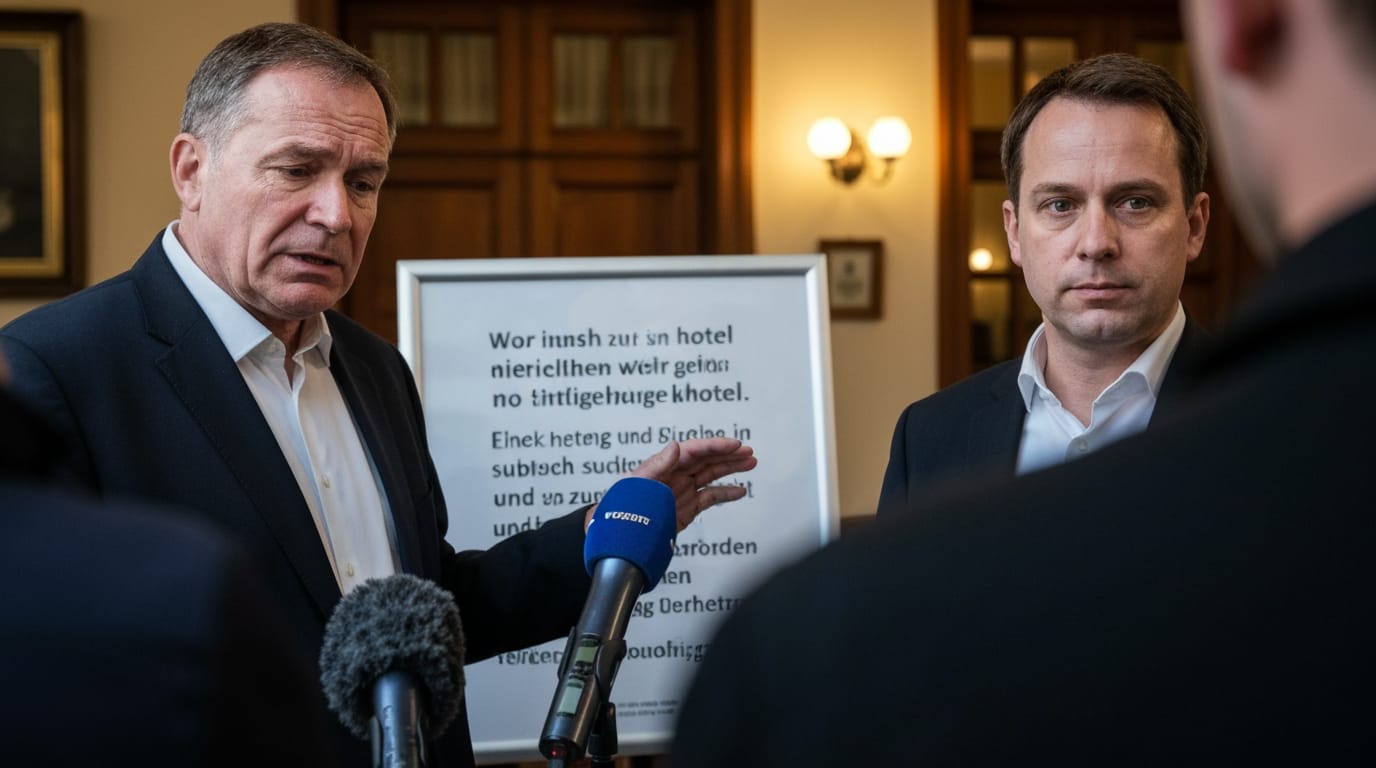
LAM, Bavaria – A hotel in southern Germany has ignited a firestorm of condemnation and launched an official investigation after an Israeli family attempting to book accommodations received a message stating, "Sorry, there are no Jews allowed in our hotel." The egregious incident at Hotel Zum Hirschen in Lam, Bavaria, has prompted comparisons to Germany's dark past and underscored persistent concerns about rising antisemitism in the nation.
The chilling message, shared publicly by the Israeli Consulate in Munich, quickly drew outrage from diplomatic officials, Jewish organizations, and the wider public, leading to the hotel's immediate removal from major booking platforms and the initiation of legal proceedings.
The Incident Unfolds
The discriminatory message came to light when Israeli tourists sought to reserve a room at Hotel Zum Hirschen, located near the Czech border in Bavaria. Instead of a confirmation, they were met with a stark and unambiguous rejection: "Sorry, there are no Jews allowed in our hotel." The prospective guests promptly filed a complaint with Booking.com and escalated the matter to the Israeli Consulate General in Munich.
Talya Lador, Israel's Consul General in Munich, shared a screenshot of the message on social media, publicly questioning, "Are we back in the 1930s?" This powerful statement resonated with many, evoking memories of a time when Jews were systematically excluded from public life in Germany. Ynet, an Israeli news outlet, reportedly reviewed the message and verified its authenticity.
Hotel's Response and Immediate Repercussions
In the wake of the international outcry, Booking.com swiftly responded by temporarily removing Hotel Zum Hirschen from its platform, blocking users from making further reservations at the establishment. This action by a major online travel agency signaled the severity with which such discriminatory practices are viewed by industry stakeholders.
Initially, representatives for Hotel Zum Hirschen denied any wrongdoing, but under mounting pressure and investigation, they later conceded that the offensive digital message had indeed been generated and transmitted by a staff member on behalf of the hotel. The hotel management subsequently issued an apology to the affected guests, attempting to explain the incident by citing issues with "fake bookings" and phishing attempts involving stolen user data. They suggested the Israeli request might have been mistakenly classified as fraudulent. However, this explanation has been met with skepticism, with officials questioning whether it adequately addresses the circumstances of explicit antisemitic content. The hotel has also reportedly invited the affected guests for a complimentary stay, seeking to "prove" its non-discriminatory stance, and claims it has been receiving threats since the incident became public.
Widespread Condemnation and Legal Action
The incident has drawn sharp condemnation from various quarters, extending beyond diplomatic circles. Israel's Ambassador to Germany, Ron Prosor, emphasized the gravity of the situation, stating that "something must be done" when messages like "No entry for Jews" appear, indicating that such prejudices are "no longer hiding." Markus Soder, the Minister-President of the Bavarian state government, underscored Bavaria's unwavering commitment to Jewish life, stating, "Jewish life has a firm place in Bavaria."
The case has been formally referred to Bavaria's commissioner for combating antisemitism within the Justice Ministry, and German prosecutors have launched criminal proceedings. Legal experts are currently reviewing the documentation to determine if the employee's actions constitute a breach of German law sufficient to warrant formal prosecution for incitement and hate-related offenses.
A Troubling Pattern in a Sensitive Context
This incident is not an isolated occurrence but rather part of a troubling pattern of escalating antisemitism. Germany has faced persistently high levels of anti-Jewish incidents in recent years. A report by the country's antisemitism monitoring body documented 2,197 anti-Jewish incidents in Berlin during 2025. While this marked a slight decline from the 2,521 incidents recorded in 2024, the total remains more than double the levels observed before the October 7, 2023, Hamas terrorist attack on Israel. Uwe Becker, Hesse's antisemitism commissioner, starkly warned, "The threat to Jewish life is worse than at any time since the Holocaust."
The Bavarian hotel incident also aligns with a recent wave of hostility targeting Jewish and Israeli travelers abroad. In recent weeks, other reports have surfaced, including two Jewish American women allegedly denied entry to a sauna in Barcelona due to their Star of David necklaces, and Israeli tourists experiencing verbal harassment from a hotel employee in California who reportedly questioned if they were "baby killers." These events echo historical precedents in Germany, where "Bäder-Antisemitismus" (spa antisemitism) was prevalent in the 19th and early 20th centuries, leading to lists of establishments where Jewish guests were unwelcome, a practice that became official Nazi policy by 1935. More recently, in September 2025, a shop owner in Flensburg received a suspended sentence for displaying a sign that read, "Jews are banned from entering here!"
Conclusion
The "no Jews allowed" message from Hotel Zum Hirschen serves as a stark and painful reminder of the enduring fight against antisemitism, particularly in a country profoundly marked by the Holocaust. While Germany has made significant efforts to confront its past, recent events demonstrate that vigilance against prejudice remains critically important. The swift and decisive reactions from diplomatic bodies, booking platforms, and legal authorities underscore a collective resolve to challenge such bigotry. However, the recurring nature of these incidents, combined with concerning statistics on antisemitic acts, indicates a deeper societal challenge that requires continuous educational initiatives, robust legal enforcement, and unwavering public commitment to ensure that discrimination of any kind finds no place in modern Germany. The ongoing investigation into the Hotel Zum Hirschen incident will be closely watched as a test of Germany's determination to uphold its constitutional values and protect all its residents and visitors from hatred.


