Germany's UN Security Council Bid Falls Short, Austria and Portugal Secure Seats
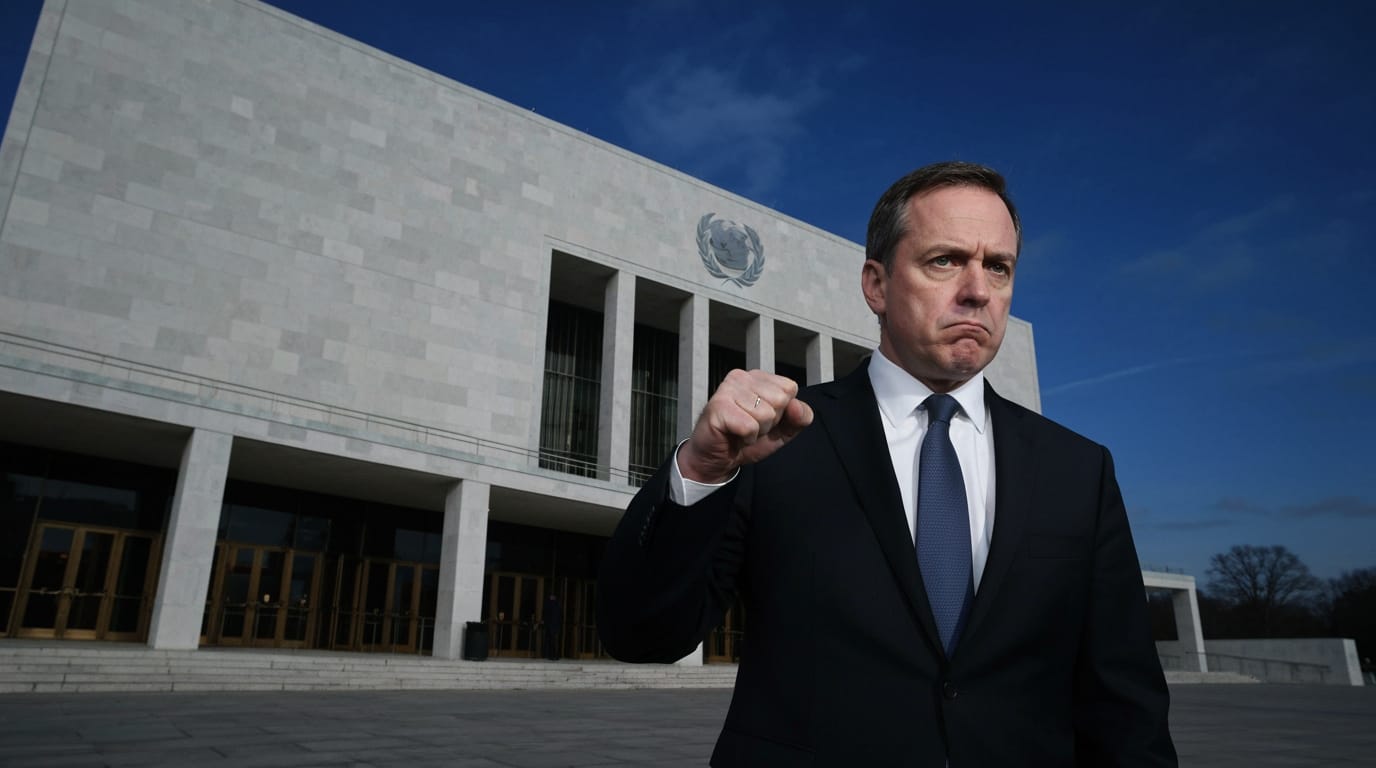
UNITED NATIONS, New York – Germany's intensive diplomatic campaign for a non-permanent seat on the United Nations Security Council for the 2027-2028 term has concluded in disappointment, with the nation failing to secure one of the coveted positions. In a closely watched election at the 80th session of the UN General Assembly on Wednesday, June 3, 2026, Austria and Portugal emerged victorious, taking the two available seats for the Western European and Others Group (WEOG). The outcome represents a significant setback for Berlin's aspirations for an enhanced role in global decision-making.
The Unexpected Outcome at the General Assembly
The vote, conducted by secret ballot, saw three well-established European nations – Austria, Germany, and Portugal – vying for two non-permanent seats on the 15-member Security Council. When the ballots were tallied, Austria and Portugal had garnered sufficient support from the 193-member General Assembly, while Germany did not. Foreign Minister Annalena Baerbock announced Germany's defeat, confirming that both Portugal and Austria had surpassed Berlin in the election held in New York. This unexpected result marked the sharpest outcome of the day's Security Council elections, which also saw Zimbabwe and Trinidad and Tobago elected, with a fifth seat for the Asia-Pacific group remaining unresolved after a deadlock between the Philippines and Kyrgyzstan. The newly elected members will commence their two-year terms on January 1, 2027, serving until December 31, 2028.
Germany's Ambitious Campaign and Long-Standing Role
Germany had launched a serious diplomatic offensive for the Security Council position, underpinned by its "Respect – Justice – Peace" motto. The country has a long history of engagement with the UN, having served six previous terms as a non-permanent member, most recently in 2019-2020. Berlin often campaigns for a Security Council seat approximately every eight years, reflecting its consistent commitment to multilateralism. Germany views itself as a significant contributor to international aid and development programs and one of the largest financial contributors to the United Nations, bolstering its claim for a more influential global voice.
Foreign Minister Johann Wadephul had publicly acknowledged the fierce competition ahead of the vote, describing the race against Austria and Portugal as "tough" due to their status as "close allies." He reiterated Germany's desire to "actively involve itself once more in the world's most important multi-lateral committee for peace and security," emphasizing the nation's readiness to assume greater global leadership responsibilities. Germany's campaign platform centered on themes such as conflict prevention, crisis resolution, upholding international law and the UN Charter, and advocating for the role of women in peace processes and addressing climate change's impact on peace and security. These priorities underscored Germany's vision for a rules-based international order, aiming to leverage its economic and diplomatic weight on critical global issues.
Factors Contributing to the Setback
Diplomatic observers and German officials alike have begun to scrutinize the factors that may have led to Germany's defeat. A prominent point of concern raised by critics was Germany's "blanket support for Israel" during the recent conflict in Gaza. This stance, coupled with a perceived "reluctance to take a tougher stance despite war crimes committed in Gaza," was identified as a "potential liability" that could have alienated crucial votes, particularly from member states in the Global South. Foreign Minister Wadephul had defended Germany's position, asserting that Berlin does not ignore violations of international law and had, for instance, temporarily suspended arms exports to Israel that could be used in Gaza. However, critics also pointed to "perceived double standards," citing Germany's hesitation to explicitly label certain actions by the United States or US-Israeli strikes on Iran as violations of international law.
Furthermore, the secret ballot nature of the election allows for "quiet vote-trading and regional solidarity" to often outweigh public campaign rhetoric. Austria and Portugal, both experienced in Security Council diplomacy (Austria having served three times and Portugal also three times), presented strong candidacies that resonated with a sufficient number of UN member states. While Germany's historical commitment to multilateralism and its financial contributions are significant, the nuanced geopolitical landscape at the time of the vote, especially surrounding the Ukraine conflict and broader European security arrangements, might have influenced voting patterns in ways that did not favor Berlin despite its serious diplomatic efforts. Christoph Heusgen, Germany's former ambassador to the UN, had previously expressed doubts about the success of Germany's bid, linking it to Berlin's stance on Israel.
Implications for German Diplomacy and Global Governance
The loss of a Security Council seat, particularly after a concerted campaign, carries notable implications for Germany's foreign policy and its ambition to be a leading voice in global governance. The Security Council serves as the primary international forum for addressing issues of peace and security, and a seat on the body provides a unique platform for shaping global responses to crises. Berlin's absence for the 2027-2028 term means it will lose a direct voice in the Council's deliberations at a time when the body continues to grapple with complex and pressing global challenges, including the war in Ukraine, the Palestinian question, and other regional conflicts.
This outcome may prompt a re-evaluation within Berlin regarding its diplomatic strategies, its engagement with various regional blocs within the UN, and how its policy positions are perceived on the global stage. While Germany remains a powerful economic and political force within the European Union and internationally, the election results underscore the competitive nature of multilateral diplomacy and the need for broad international consensus, which can sometimes be influenced by sensitive geopolitical issues. Germany will likely continue its significant contributions to UN initiatives and multilateral cooperation, but its direct influence on the Security Council's agenda and resolutions will be diminished for the upcoming term. The experience might serve as a catalyst for Germany to refine its approach to international relations, seeking to build broader coalitions and adapt its diplomatic engagement to better navigate the complexities of global opinion.


