German National Team Looks to Youth: Bayern Duo Karl and Urbig Earn Maiden Call-Ups
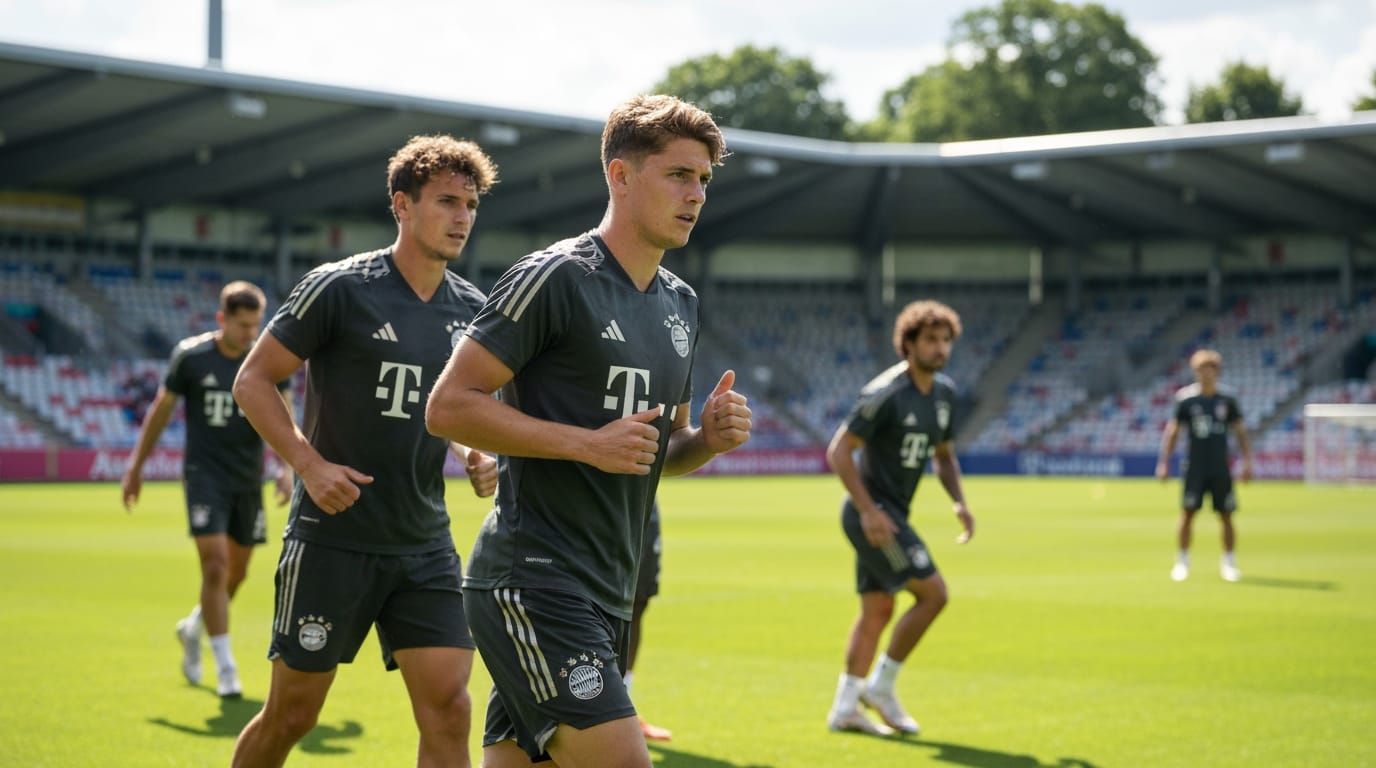
FRANKFURT, Germany – In a significant move signaling a renewed focus on youth development and a strategic shift toward the future, Germany national team coach Julian Nagelsmann has extended first-time senior call-ups to Bayern Munich talents Lennart Karl and Jonas Urbig. The inclusions of the 18-year-old forward and 22-year-old goalkeeper into the squad for the upcoming March friendlies against Switzerland and Ghana mark a pivotal moment for both players and the national team's preparations for the 2026 FIFA World Cup. This decision underscores a broader initiative within German football to integrate promising young players, aiming to cultivate a flexible and resilient squad capable of competing at the highest international level.
A New Chapter for the National Side
The announcement, made on Thursday, March 19, 2026, generated considerable excitement within German football circles. The March international break serves as a critical period for Nagelsmann to fine-tune his squad, as these friendlies are widely considered precursors to the final 26-man roster for the World Cup in North America. Nagelsmann emphasized his intention to "mix things up" and bank on flexibility, acknowledging that Germany's squad, while very good, needs variability to bridge the gap to the world's top teams.
Lennart Karl and Jonas Urbig join a roster that also features established Bayern Munich stars such as Joshua Kimmich, Serge Gnabry, Leon Goretzka, and Aleksandar Pavlović. Notably absent from this squad is Bayern's influential attacking midfielder Jamal Musiala, who is recovering from a recurring ankle injury. Nagelsmann expressed his desire for Musiala to fully recover, highlighting the importance of his fitness for both club and country.
The upcoming matches will see Germany travel to Switzerland on March 27 before hosting Ghana three days later. These fixtures provide an invaluable platform for Nagelsmann to assess new and returning players under match conditions, shaping the core of the team that will represent Germany on the global stage.
Urbig's Rise Through the Ranks
Jonas Urbig, born August 8, 2003, has quickly established himself as one of Germany's most promising young goalkeepers. His journey to the senior national team has been characterized by consistent development and seizing critical opportunities. After progressing through the youth ranks at 1. FC Köln, Urbig gained valuable first-team experience during loan spells with Jahn Regensburg and Greuther Fürth in the 2. Bundesliga. His strong performances caught the eye of Bayern Munich, leading to his transfer to the Bavarian giants in January 2025.
At Bayern, Urbig quickly found himself thrust into the spotlight, stepping in as the starting goalkeeper following an injury to veteran Manuel Neuer. This season, Urbig has made 13 appearances across all competitions, including crucial Champions League matches. He notably played a key role in Bayern's 6-1 Champions League victory over Atalanta, despite suffering a concussion in the first leg, only to return for the second. Nagelsmann lauded Urbig's "extremely strong psychological stability" and his ability to perform under pressure, particularly in "cold-start" situations where he has had to make immediate impacts.
Having represented Germany at every youth international level from U17 to U21, Urbig brings a wealth of experience despite his young age. For these friendlies, he is expected to serve as the third-choice goalkeeper, learning from seasoned professionals like Oliver Baumann and Alexander Nübel. His rapid ascent positions him as a strong candidate for a long-term successor to Neuer, a testament to his potential and Bayern's faith in his abilities.
Karl: The Teenager Breaking Records
Lennart Karl, at just 18 years old (born in 2005), represents the vanguard of Germany's next generation of attacking talent. His call-up is particularly remarkable given his age and the rapid pace of his development. Karl, who can operate as a forward, winger, or number 10, has made a significant impact since making his senior debut for Bayern Munich this season.
One of his most notable achievements includes becoming Bayern's youngest-ever Champions League goalscorer, a feat he accomplished with a goal against Club Brugge in October. His "sensational" performances for the Bundesliga leaders this season have evidently convinced Nagelsmann that he is ready for the senior international stage. The national coach expressed his desire for Karl to simply continue doing what he does for Bayern, bringing the dynamism and youthful exuberance expected from such a talent.
If Karl makes an appearance in either of the upcoming friendlies, he would etch his name further into the history books as the seventh-youngest debutant for the German national team, a remarkable achievement that places him among esteemed company. His inclusion highlights Nagelsmann's willingness to reward in-form young players and integrate them early into the national team setup, fostering their growth and accelerating their transition to elite football.
Germany's Long-Term Vision: Cultivating Future Stars
These call-ups are not isolated incidents but rather a clear reflection of a systemic shift in German football's approach to youth development. Following disappointments in recent major tournaments, the German Football Association (DFB) has intensified its efforts to rebuild and nurture young talent. This strategic overhaul emphasizes a player-centered approach in academies, focusing on individual growth, tactical intelligence, and a holistic development philosophy.
The DFB's youth development program, structured in four steps covering ages 3 to 18+, involves a collaborative effort across clubs, schools, regional associations, and national youth teams. The goal is to motivate young players, enhance their technical, tactical, physical, and personal skills, and ultimately achieve success at the international level. Reforms, such as changes to small-sided games at younger age groups, aim to increase touches on the ball and decision-making opportunities, rather than relying solely on physical dominance.
This renewed emphasis on developing homegrown talent is visible across the Bundesliga, with clubs showing a greater willingness to provide academy graduates with first-team minutes. The call-ups of Karl and Urbig are direct beneficiaries of this evolving system, demonstrating that a clear pathway exists from club academies to the national team. Their presence in Nagelsmann's squad signals to other aspiring young German footballers that dedication and exceptional performance will be recognized and rewarded, irrespective of age.
Looking Ahead
The integration of Lennart Karl and Jonas Urbig into the senior national team represents a significant step forward for German football. It not only provides these two promising Bayern Munich players with invaluable experience on the international stage but also reinforces the DFB's commitment to building a resilient and dynamic national team for the future. The upcoming friendlies against Switzerland and Ghana will offer the first glimpse of how these young talents, alongside their more experienced counterparts, contribute to Nagelsmann's vision for the 2026 World Cup. The journey towards football's ultimate prize is long, but with emerging talents like Karl and Urbig, Germany appears to be laying a strong foundation for sustained success.