German Rocket Explodes Seconds After Launch in Test Flight
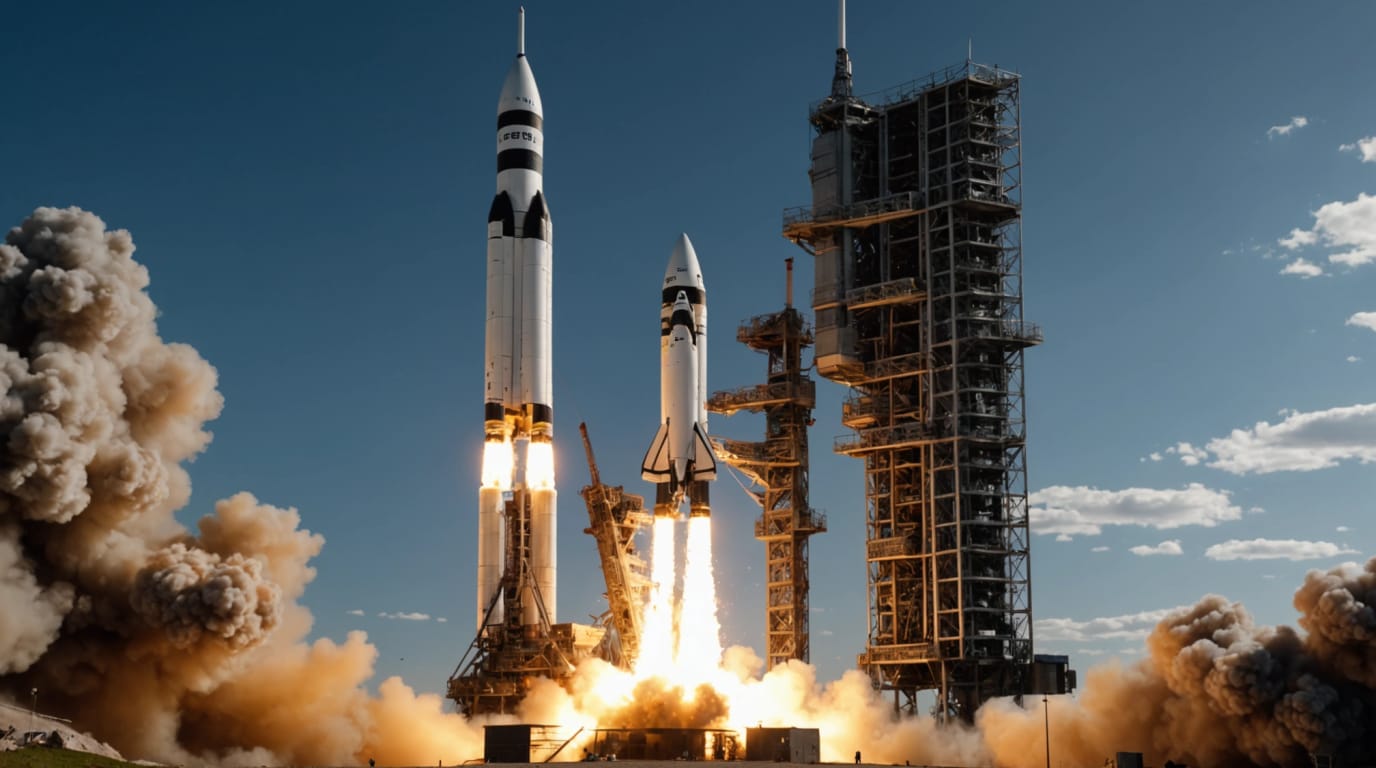
A test rocket, intended to spearhead European satellite launches, exploded approximately 40 seconds after liftoff from a spaceport in Norway on Sunday. The rocket, named Spectrum, was developed by the German startup Isar Aerospace and was unmanned for this initial test flight.
The launch, which took place at Andoya Spaceport in Norway, was designed to collect data on the company's in-house developed launch vehicle. Isar Aerospace had cautioned that the initial launch might conclude prematurely. Despite the explosion, the company maintains that the test was a success, yielding substantial data for analysis.
Europe's First Privately Funded Orbital Attempt
The Spectrum rocket's launch marked the first attempt at an orbital flight originating from Europe that was almost exclusively financed by the private sector. Several European nations, including Sweden and Britain, have expressed interest in capturing a portion of the growing commercial space mission market. The two-stage rocket, standing 92-feet tall, is designed to carry small and medium-sized satellites weighing up to one metric tonne into orbit. The rocket was not carrying a payload during this test flight.
Daniel Metzler, CEO and co-founder of Isar Aerospace, stated that the test flight met all expectations. He noted the clean liftoff, 30 seconds of flight, and the successful validation of their Flight Termination System. The company reported that the rocket fell into the sea, and the launch pad remained intact.
Setbacks and the Quest for Space Sovereignty
The failed launch underscores the challenges Europe faces in establishing independent access to space. Following the loss of Russian launch capabilities after the 2022 invasion of Ukraine, Europe has struggled to find alternatives.
Marie-Christine von Hahn, Managing Director of Germany's BDLI aerospace industries association, emphasized the need for Europe to ensure its sovereignty in space. She stated that alternatives to Elon Musk's Starlink are necessary.
Other European countries are also vying to become space launch hubs. Sweden, with its Esrange launch site, and Britain, with its SaxaVord Spaceport in the Scottish Shetland Islands, are competing with the Norwegian site. SaxaVord is aiming for its first satellite launch in the third quarter of 2025, while Esrange also plans to conduct its inaugural launch this year. SaxaVord experienced a setback last year when a rocket engine exploded during a test.
Elon Musk Weighs In
SpaceX CEO Elon Musk commented on the failed launch, acknowledging the difficulties of spaceflight. He noted on X that "Space is hard" and that it took SpaceX four attempts to reach orbit. Musk added that while Isar Aerospace might succeed in fewer attempts, achieving true reusability remains a significant challenge, one that only SpaceX has currently mastered.
Data Collection and Future Plans
Isar Aerospace maintains that the primary objective of the test flight was to gather data, regardless of reaching orbit. The company said the mission provided a first integrated test of all its systems. Two additional Spectrum rockets are currently under development.
Norwegian authorities confirmed that the incident caused no injuries or damage beyond the rocket itself. Andoya Space, the operator of the launch site, activated crisis response measures following the explosion.
Looking Ahead
Despite the explosive end to the test flight, Isar Aerospace views the mission as a valuable learning experience. The data collected will be crucial for future development and testing. The company remains committed to its goal of providing independent and cost-effective access to space for small and medium-sized satellites, contributing to Europe's growing presence in the commercial space sector. The incident highlights the inherent risks and challenges of space exploration, but also the determination of private companies to push the boundaries of what is possible.


