German Student Leaders Challenge Australia's Social Media Ban, Advocate for Digital Literacy
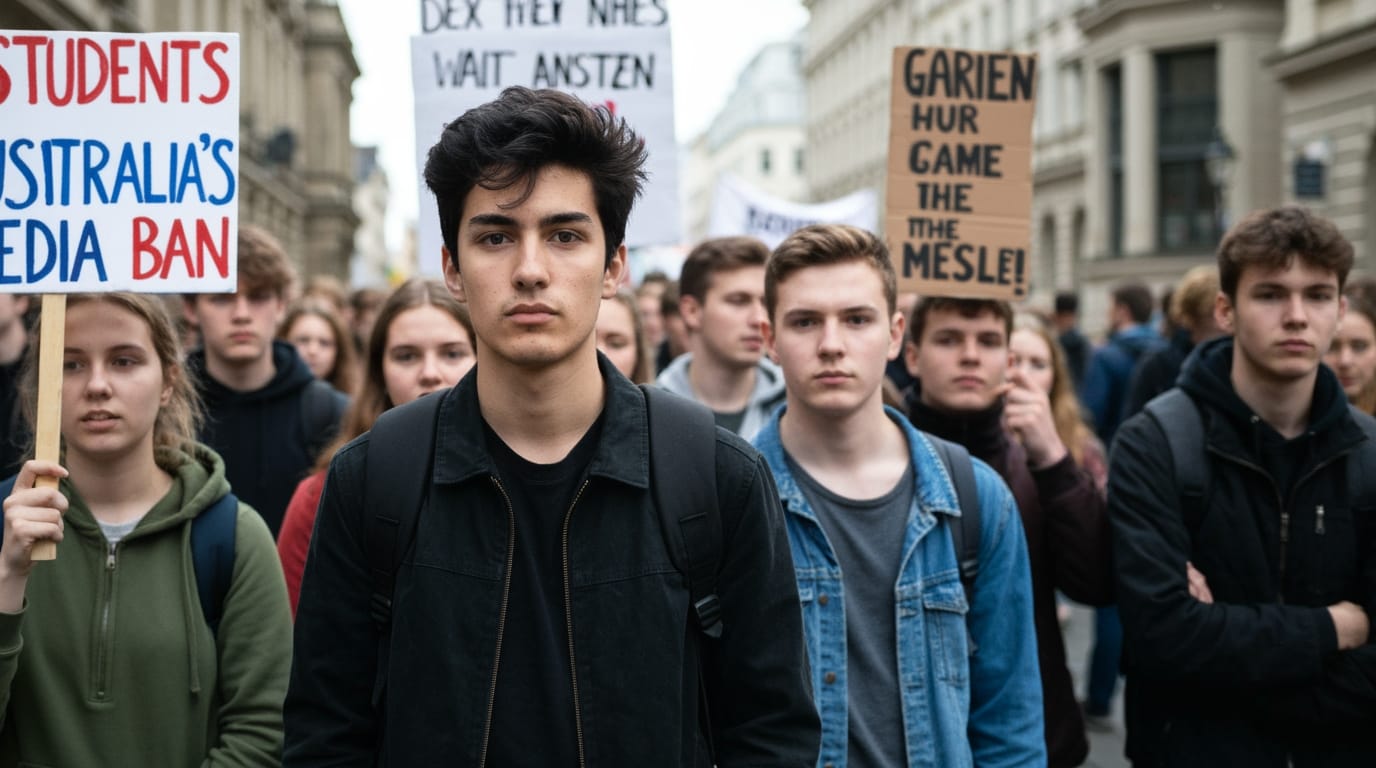
Berlin, Germany — As Australia today implements a groundbreaking ban prohibiting individuals under 16 from accessing major social media platforms, a vocal contingent of German student leaders has stepped forward to express strong opposition, arguing that education and digital literacy, not outright prohibition, are the more effective pathways to fostering responsible online engagement among youth. The controversial Australian measure, which came into effect on December 10, 2025, has ignited a global debate, drawing both praise for its protective intent and criticism for its restrictive nature.
The Australian government's sweeping legislation mandates that tech giants like Meta (Facebook, Instagram, Threads), TikTok, Snapchat, YouTube, X (formerly Twitter), Reddit, Kick, and Twitch must deactivate accounts held by users under the age of 16 and prevent new registrations from this age group. Platforms failing to comply face substantial fines, potentially reaching up to A$49.5 million (approximately 30.5 million Euros). Prime Minister Anthony Albanese championed the ban as a "landmark reform" aimed at protecting the mental health and well-being of Australian children, citing concerns over cyberbullying, exposure to harmful content, and addictive algorithms. This move positions Australia as the first democracy to enact such a comprehensive age-based restriction on social media, a decision closely watched by policymakers worldwide.
Australia's Precedent-Setting Digital Clampdown
The genesis of Australia's ban stems from escalating concerns about the detrimental effects of social media on young people. Research indicated that a significant majority of Australian children and teenagers were actively using social media, often below the platforms' self-imposed minimum age of 13. The government highlighted rising rates of suicide and self-harm among Gen-Z Australians, alongside issues such as body image problems, sexual exploitation, and phone addiction, as key motivators for the legislation. Officials have stated that the ban aims to shield children from "predatory algorithms" and provide parents with "greater peace of mind". While tech companies generally agreed to comply, some, like YouTube, initially described the laws as "rushed," warning they might push children into "deeper, darker corners of the internet". The eSafety Commissioner has been tasked with ensuring platforms take "reasonable steps" to enforce the ban, with potential for fines if non-compliance is identified. The implementation itself has not been without initial challenges, with reports of some under-16s reportedly circumventing age verification tests, though the government acknowledges that perfection from day one is not expected.
German Youth Leaders Champion Education Over Exclusion
In stark contrast to Australia's prohibitionist stance, German student leaders have publicly critiqued the ban, asserting that it represents a misstep in addressing the complexities of the digital age. "German student leaders say Australia's under-16 social media ban is the wrong path, arguing that education and digital literacy—not prohibition—should come". This perspective underscores a broader philosophical difference: rather than erecting barriers, these student representatives advocate for equipping young people with the critical skills necessary to navigate online environments safely and discerningly. They believe that understanding and managing digital risks through comprehensive education is more sustainable than a blanket ban that could inadvertently isolate young people or drive them to less regulated online spaces.
Germany has historically approached digital safety with an emphasis on media literacy. Debates surrounding smartphone use in German schools, for instance, often lean towards teaching responsible use rather than implementing outright bans, recognizing that digital tools are an integral part of modern life. Advocates for digital literacy argue that banning platforms removes opportunities for young people to develop crucial digital citizenship skills, such as evaluating information, understanding privacy settings, and engaging in online civic discourse. They contend that such bans might limit access to supportive online communities, particularly for marginalized youth, and could hinder the development of political knowledge, which often occurs through social media engagement.
A Nation Divided: Public Opinion vs. Student Advocacy
Despite the strong stance from German student leaders, public sentiment within Germany presents a more nuanced picture. A recent YouGov poll revealed that a significant majority of German citizens—77 percent—are either "fully" or "somewhat" in favor of Germany adopting an Australia-style social media ban for under-16s. The poll, which surveyed 2,000 German citizens, found only 13 percent expressed opposition. This public support is largely driven by concerns over social media's perceived harm to children and teenagers, with 82 percent of respondents believing that platforms are detrimental due to content or addictive design. German children spend an average of 2.7 hours daily on social media during weekdays, highlighting the pervasive nature of these platforms.
Germany already has a robust framework of legislation aimed at protecting minors online, including the German Interstate Treaty on the Protection of Minors in the Media and the German Protection of Young Persons Act. Currently, German minors aged 13 to 16 can use social media with parental consent, a policy that some child protection advocates argue is insufficient. While German politicians have debated stricter regulations, including calls to ban TikTok over privacy concerns, the national discourse often circles back to the balance between protection and fostering digital competence.
Navigating the Digital Divide: Protection vs. Empowerment
The global reaction to Australia's ban, and the divergent views emerging from Germany, highlight a fundamental tension in digital policy: how to safeguard young people in an increasingly interconnected world without unduly curtailing their freedoms or isolating them from essential communication channels. Proponents of the ban emphasize the immediate protection it offers from documented harms, viewing it as a public health intervention. Critics, including the German student leaders, warn of the potential for unintended consequences. They argue that bans might push youth to covert or unregulated platforms, making them harder to monitor and support. Moreover, concerns exist that age verification technologies could be bypassed by tech-savvy teens, or that the focus on prohibition detracts from the urgent need to integrate comprehensive digital literacy into educational curricula.
The debate also touches on the broader implications for digital citizenship. For many young people, social media platforms are not just sources of entertainment but also crucial spaces for self-expression, accessing information, building communities, and participating in political discourse. Limiting access could disenfranchise a generation already accustomed to these digital avenues. As the world observes Australia's "grand social experiment," the effectiveness of such bans will be closely scrutinized, with outcomes potentially shaping digital policy in other nations.
Conclusion: A Complex Path Forward
Australia's bold move to ban social media for under-16s marks a pivotal moment in the global effort to regulate digital spaces for minors. While lauded by many for its protective intentions, the strong opposition from German student leaders underscores a critical alternative philosophy: one that prioritizes empowerment through education over outright restriction. The contrasting views within Germany—between a supportive public and advocating student body—reflect the complex dilemma faced by governments worldwide. As countries like Denmark, France, and Malaysia consider similar age-based restrictions, and as the European Union debates tighter regulations, the long-term impacts of Australia's ban will offer invaluable insights. The ongoing international dialogue will ultimately determine whether the future of youth digital engagement lies in stringent prohibition, comprehensive education, or a nuanced combination of both.


