Germany and India: Navigating a Complex Path to Deeper Partnership
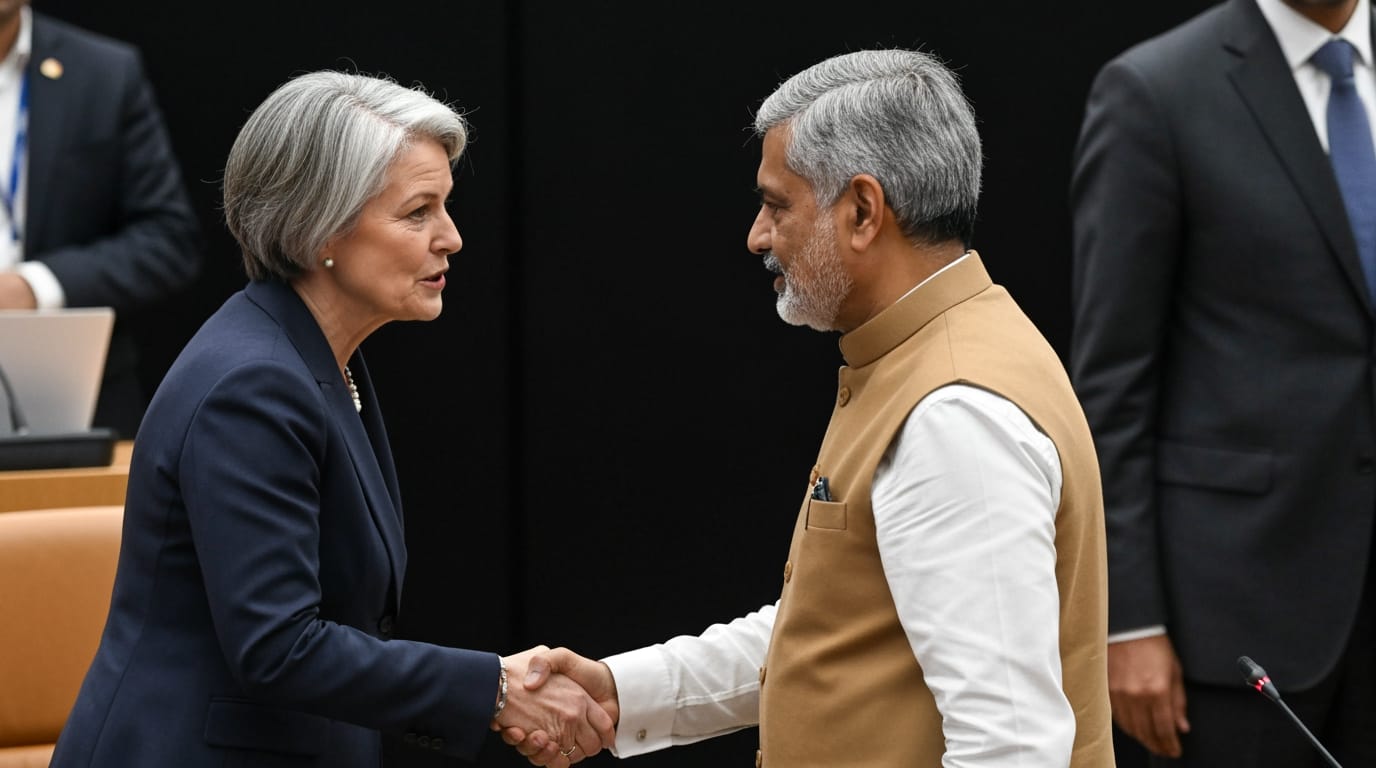
Despite decades of diplomatic engagement and a burgeoning recognition of mutual strategic necessity, the relationship between Germany and India remains a nuanced and intricate affair. Both global powers, operating within a rapidly evolving geopolitical landscape, acknowledge the imperative to strengthen their partnership. Yet, the journey toward a truly comprehensive strategic alliance is marked by historical hesitations, economic complexities, and differing perspectives on global challenges. The prevailing sentiment often echoes the German phrase "Luft nach oben," suggesting significant room for improvement despite undeniable progress.
A Strategic Imperative Amidst Global Volatility
The diplomatic ties between India and Germany stretch back to the 1950s, with West Germany playing a role in India's military development even during the Cold War. The relationship was formally elevated to a "strategic partnership" in 2001, and the two nations celebrated 70 years of diplomatic relations in 2021. However, for much of its history, this partnership has been described as one of "unfulfilled promises" and at times, "lacklustre."
The current global environment, characterized by geopolitical tensions in the Indo-Pacific, the war in Ukraine, and the imperative for nations to "de-risk" from over-reliance on single partners, has injected fresh momentum into the Indo-German dialogue. Germany, traditionally focused on China in its Asia policy, signaled a significant shift in October 2024 with the adoption of a new "Focus on India" strategy paper. This strategic pivot reflects Berlin's desire to diversify its economic and trade relations in Asia and to identify democratic partners for stability and security in the Indo-Pacific region. Concurrently, India, navigating its own border tensions and complex relationships with Beijing, has intensified its efforts to diversify international partnerships, viewing Europe, and Germany in particular, as increasingly crucial. This convergence of strategic interests has been evident in high-level diplomatic engagements, including the 7th German-Indian Intergovernmental Consultations in October 2024 and the visit of Indian External Affairs Minister Subrahmanyam Jaishankar to Germany in May 2025, underscoring "high expectations" for bilateral ties.
Economic Promise and Persistent Hurdles
Economic cooperation forms a bedrock of the Indo-German relationship, yet it is also an area where considerable untapped potential lies. Bilateral trade currently stands at approximately $33 billion, a figure both nations believe can be substantially increased. Germany views India as a significant potential growth market and a key partner in its strategy to reduce economic dependence on China. Efforts toward a comprehensive EU-India Free Trade Agreement are seen as a potential "game-changer," with strong backing from Germany. India, for its part, has been actively implementing reforms aimed at improving the ease of doing business, including a High-Level Fast Track Mechanism for companies, signaling its commitment to attracting greater foreign investment.
Despite these positive signals, challenges persist. While specific hurdles are not always explicitly detailed in public statements, the journey to a fully integrated economic partnership involves navigating regulatory differences, market access issues, and sometimes, varying expectations regarding investment environments. To realize the full economic potential, both sides will need to translate political will into pragmatic solutions that facilitate smoother trade and investment flows.
Geopolitical Divergence and Emerging Defense Ties
While Germany and India share broad interests in multilateralism, counter-terrorism, maritime security, and cyber security, their geopolitical alignments have historically presented areas of divergence, especially concerning security cooperation. Germany's traditional hesitation to engage robustly in defense matters, particularly with partners outside of established alliances, has been a recognized deterrent to deepening military collaboration with India. This reluctance stood in contrast to India's defense partnerships with other European nations like France, hindering the Indo-German relationship from reaching its full potential in a critical domain.
However, recent shifts indicate a new trajectory. Both nations now identify the Indo-Pacific as a region of shared strategic interest, bringing China into sharper focus for Berlin and strengthening New Delhi's resolve to engage with like-minded partners. This evolving understanding has led to tangible progress in defense cooperation. The year 2024 witnessed a notable increase in military collaboration, including joint maneuvers such as "Tarang Shakti," which marked the first instance of German forces actively training with their Indian counterparts in Indian airspace and the Indo-Pacific. This development signals a significant departure from past reticence and opens new avenues for defense collaboration.
Nevertheless, "elephants in the room" continue to shape the broader geopolitical dialogue. India's ongoing diplomatic and economic ties with Russia, particularly in the context of the Ukraine war, and its complex relationship with China, including continued trade despite border disputes, present areas where Indian and German approaches do not always perfectly align. Germany, while seeking to diversify its own dependencies, also holds distinct views on global security architecture that sometimes necessitate careful navigation with New Delhi.
Fostering Deeper Connections: Beyond Statecraft
Beyond high-level diplomatic and economic engagements, the enduring strength of the Indo-German relationship will also rely on fostering deeper people-to-people and commercial connections. While enhanced diplomatic contacts and economic relations are crucial, a "truly strategic" partnership also requires robust commercial and societal ties.
Both nations recognize the importance of broadening collaboration into new and emerging sectors. Areas highlighted for future cooperation include talent and mobility, digital technologies and Artificial Intelligence, and sustainability initiatives. These domains offer fertile ground for shared innovation, knowledge exchange, and direct engagement between citizens, businesses, and academic institutions. Regular high-level visits, such as those by Chancellor Olaf Scholz to India and External Affairs Minister Jaishankar to Germany, serve not only to address immediate policy concerns but also to build personal rapport and reinforce the commitment to a shared future. Translating this diplomatic warmth into tangible outcomes for individuals and businesses will be key to moving beyond the "unfulfilled promises" of the past and building a more resilient and integrated partnership.
The Indo-German relationship stands at a crucial juncture. While political will and a recognition of converging strategic interests are stronger than ever, fully realizing the potential of their declared strategic partnership will demand sustained diplomatic engagement, pragmatic solutions to economic hurdles, and a long-term commitment from both Berlin and New Delhi to bridge historical gaps and navigate complex global landscapes. The path forward remains challenging, but the imperative for closer ties continues to drive both nations towards a more intertwined future.