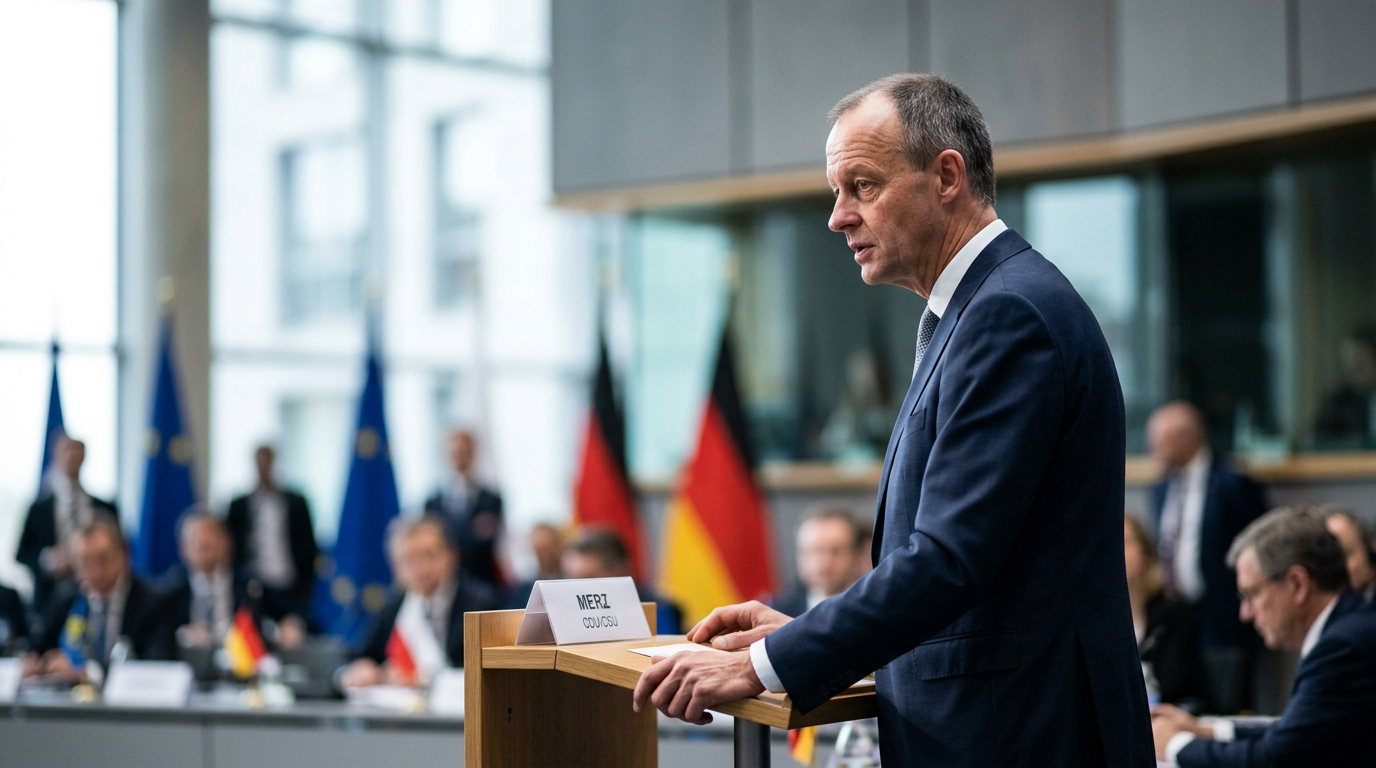
Germany Approves Trillion-Euro Defense and Infrastructure Overhaul, Reshaping European Security Landscape
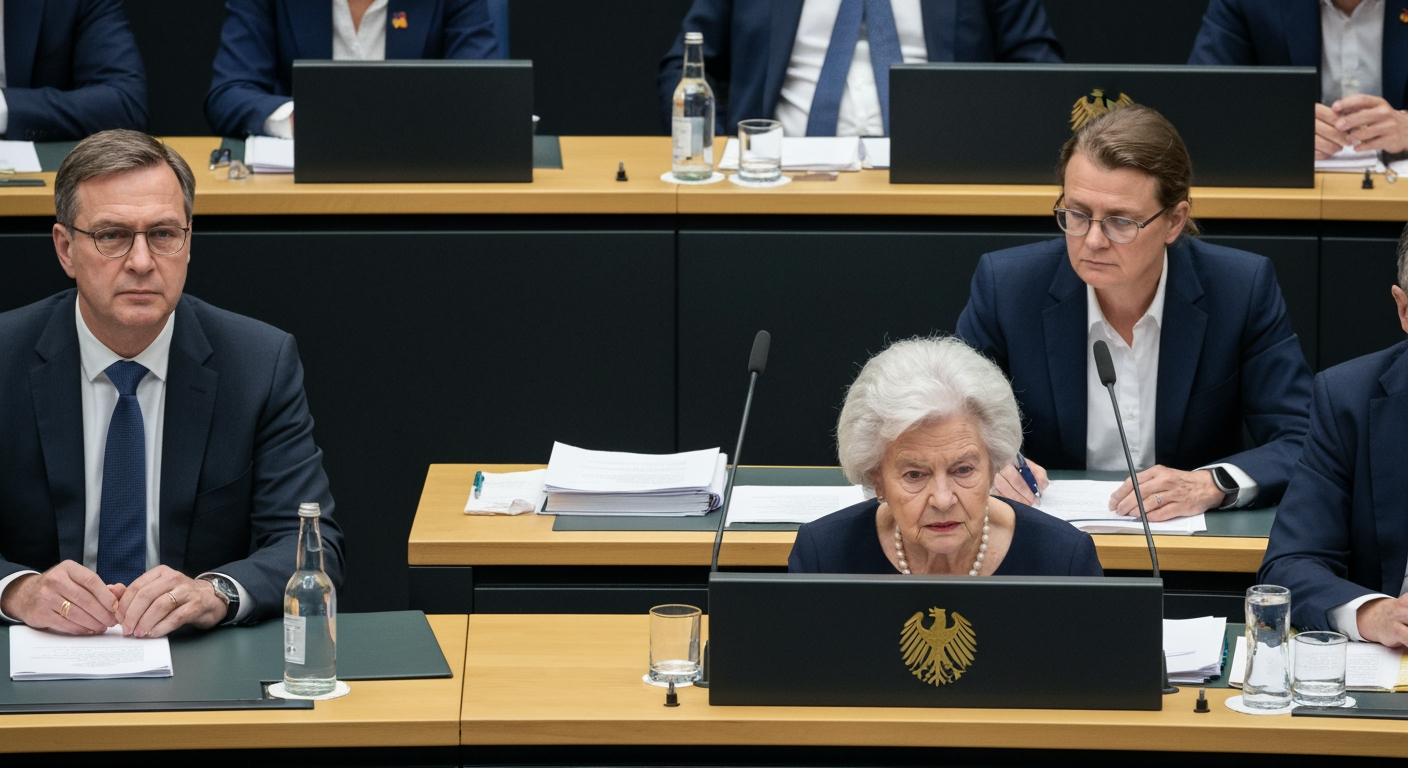
BERLIN – In a monumental departure from decades of post-World War II defense policy, Germany's parliament has given its resounding approval to an unprecedented series of spending packages, earmarking over a trillion euros for military modernization, infrastructure development, and climate action over the next decade. This historic financial commitment, solidified through significant legislative actions in early and late 2025, underscores a profound shift in Germany's strategic outlook, largely driven by the imperative to bolster national and European security amidst escalating geopolitical tensions. The move effectively dismantles long-standing fiscal restrictions, positioning Germany as a central pillar of defense in Europe.
The legislative surge culminated in March 2025 with the passage of a comprehensive €500 billion spending package for infrastructure and defense, followed by the approval of a record-breaking €86.37 billion defense budget for 2025 in September. These measures represent a dramatic re-evaluation of the nation's role on the global stage, reflecting a determined effort to overcome past underinvestment and meet the demands of a rapidly evolving security environment. The Bundestag's decisions signal a new era of robust military expenditure and a strategic reimagining of the country's defense capabilities and responsibilities.
The Zeitenwende Takes Concrete Form
The foundation for Germany's defense renaissance was laid in 2022, shortly after Russia's full-scale invasion of Ukraine, when former Chancellor Olaf Scholz declared a "Zeitenwende" – a historic turning point. This declaration initially led to the establishment of a €100 billion special fund for the Bundeswehr, aimed at addressing urgent equipment shortfalls and initiating long-overdue modernization efforts. However, the events of 2024 and 2025 necessitated a far more expansive response.
In a crucial parliamentary maneuver in March 2025, German lawmakers voted to ease the country's strict constitutional "debt brake," a fiscal rule enshrined in the Basic Law that typically limits new borrowing to 0.35% of annual gross domestic product. The relaxation of this constraint, which required a two-thirds majority in both the Bundestag (lower house) and Bundesrat (upper house), was a critical enabler for the massive spending plans. It explicitly exempts defense and security expenditures exceeding 1% of GDP from the debt rules, allowing for significant investment without immediate fiscal penalties. This political consensus, involving the Christian Democratic Union (CDU), its Bavarian sister party (CSU), the Social Democrats (SPD), and the Greens, marked a significant bipartisan agreement on national security priorities. This broader package, described by German media as an "XXL-sized" cash "bazooka," is projected to unlock more than one trillion euros in spending over the next decade, with substantial portions dedicated to infrastructure alongside defense.
Subsequently, in September 2025, the German parliament approved the 2025 budget, which allocated a staggering €62.31 billion for the Ministry of Defense, an increase of €10.36 billion from the previous year. An additional €24.06 billion was channeled into the Special Bundeswehr Fund, bringing Germany's total defense spending for 2025 to an unprecedented €86.37 billion. This figure not only marks the largest defense budget in German history but also firmly entrenches the nation as a leading military spender globally, approaching NATO's 2% GDP target for defense expenditures.
Bolstering the Bundeswehr: A Procurement Spree
The influx of capital is earmarked for a sweeping modernization of the Bundeswehr, addressing long-standing equipment deficits and enhancing its operational readiness. Key allocations from the recent approvals reveal a clear focus on strengthening capabilities across air, land, and sea. A single budget committee meeting in December 2025 is expected to green-light a record €52 billion for military procurement across 29 separate contracts.
Among the significant acquisitions are €22 billion for essential military equipment and clothing, €4.2 billion for Puma infantry fighting vehicles, and €3 billion dedicated to advanced Israeli Arrow-3 air defense systems. The defense package also includes €1.6 billion for surveillance satellites, critical for intelligence gathering and strategic oversight. Further procurement details from the 2025 budget include €796.97 million for Eurofighter weapons systems, €363.42 million for aircraft and other aviation equipment, and €142.44 million for naval ships and equipment. A substantial €3.03 billion has been allocated for ammunition purchases, addressing a critical vulnerability exposed by recent conflicts.
Beyond hardware, Germany is also focusing on its personnel and foundational defense structures. The reintroduction of military service was agreed upon in December, aiming to bolster troop numbers and national preparedness. Furthermore, projects initiated under the earlier €100 billion special fund continue, including funding for F-35 Lightning II fighter aircraft, the Poseidon reconnaissance and anti-submarine warfare system, and STH heavy-lift helicopters. These investments are designed not only to equip the Bundeswehr with cutting-edge technology but also to position it as "the pacemaker of defence in Europe," as described by Defence Minister Boris Pistorius.
Geopolitical Imperatives and a Redefined Role
The dramatic recalibration of Germany's defense posture is an undeniable consequence of the geopolitical upheavals witnessed since early 2022. Russia's ongoing war against Ukraine served as a stark awakening, exposing Europe's vulnerabilities and the need for greater self-reliance in security matters. The conflict intensified calls from NATO allies for Germany to meet its commitment to dedicate 2% of its GDP to defense, a target it had consistently fallen short of for decades. In 2024, Germany's military expenditures soared to $88.5 billion, reaching 1.9% of GDP and making it the world's fourth-largest military spender, the highest in Central and Western Europe since reunification. The country aims to exceed the 2% target by 2028.
This shift is also informed by concerns regarding the future of transatlantic relations, particularly in light of signals from figures like former U.S. President Donald Trump, which have cast doubt on the enduring commitment of the United States to European security. Recognizing its considerable economic strength as Europe's largest economy, Germany is now proactively seeking to strengthen continental defense capabilities, not merely as a burden-sharing exercise but as a strategic imperative for its own security and that of its partners. The enhanced defense budget includes an additional €3 billion in military aid for Ukraine, underscoring Germany's commitment to supporting the war-torn nation and demonstrating its growing role in global security.
Navigating Challenges and Future Trajectories
Despite the broad political consensus for increased defense spending, particularly among the CDU, CSU, SPD, and Green parties that ensured the passage of the debt brake reforms, the journey has not been without its complexities. The 2025 budget approval, for instance, saw opposition from the far-right Alternative for Germany (AfD), the Left Party, and the Greens, who voted against it. Concerns have also been raised about Germany's ability to efficiently manage such a massive influx of funds, given historical issues with Bundeswehr procurement processes and bureaucratic inefficiencies. Some critics note that special funds, while offering flexibility, can effectively function as "outsourced debt pots," raising questions about long-term fiscal transparency. The initial €100 billion special fund, for example, is projected to be depleted by the end of 2026, necessitating continuous strategic financial planning beyond the immediate measures.
However, the current leadership, including incoming Chancellor Friedrich Merz, emphasizes the strategic necessity of these investments. The plans are viewed as a critical opportunity to foster innovation within Germany's defense-tech sector, driving both national security and economic growth. Embedding these priorities within a broader European framework is also seen as crucial, potentially enhancing cost-effectiveness and strengthening the continent's collective defense posture. The commitment to robust defense spending represents a profound shift from a country that, for decades, exercised considerable restraint in military matters. The success of this ambitious undertaking will depend on Germany's ability to translate financial commitments into tangible improvements in its defense capabilities and its seamless integration into a more resilient European security architecture.
Conclusion
Germany's parliament has decisively moved to fundamentally alter the nation's defense landscape, committing unprecedented financial resources to overhaul its military and critical infrastructure. The approval of multi-billion-euro defense packages and the historic easing of the constitutional debt brake signify a resolute break from post-war defense policies, ushering in an era where Germany is poised to assume a significantly more prominent role in European and global security. Driven by the stark realities of contemporary geopolitics, particularly the conflict in Ukraine, and sustained pressure from its NATO allies, Berlin has embraced a new strategic imperative. While challenges related to efficient implementation and long-term fiscal management remain, this monumental shift reflects Germany's determination to modernize its armed forces, bolster collective defense, and project stability in an increasingly uncertain world.
Related Articles

Ratko Mladić, "Butcher of Bosnia" and Convicted War Criminal, Dies at 84
THE HAGUE, Netherlands – Ratko Mladić, the former Bosnian Serb military commander known as the "Butcher of Bosnia" and convicted of genocide, war crimes, and crimes against humanity, has died at the age of 84. Serbian...

Long-Awaited 9/11 Mastermind Trial Set for 2028, Decades After Attacks
GUANTANAMO BAY, Cuba – Nearly a quarter-century after the devastating terror attacks of September 11, 2001, a military judge has finally set a trial date for Khalid Sheikh Mohammed, the alleged mastermind behind the...