Germany Charts Independent Course Amidst Transatlantic Tensions
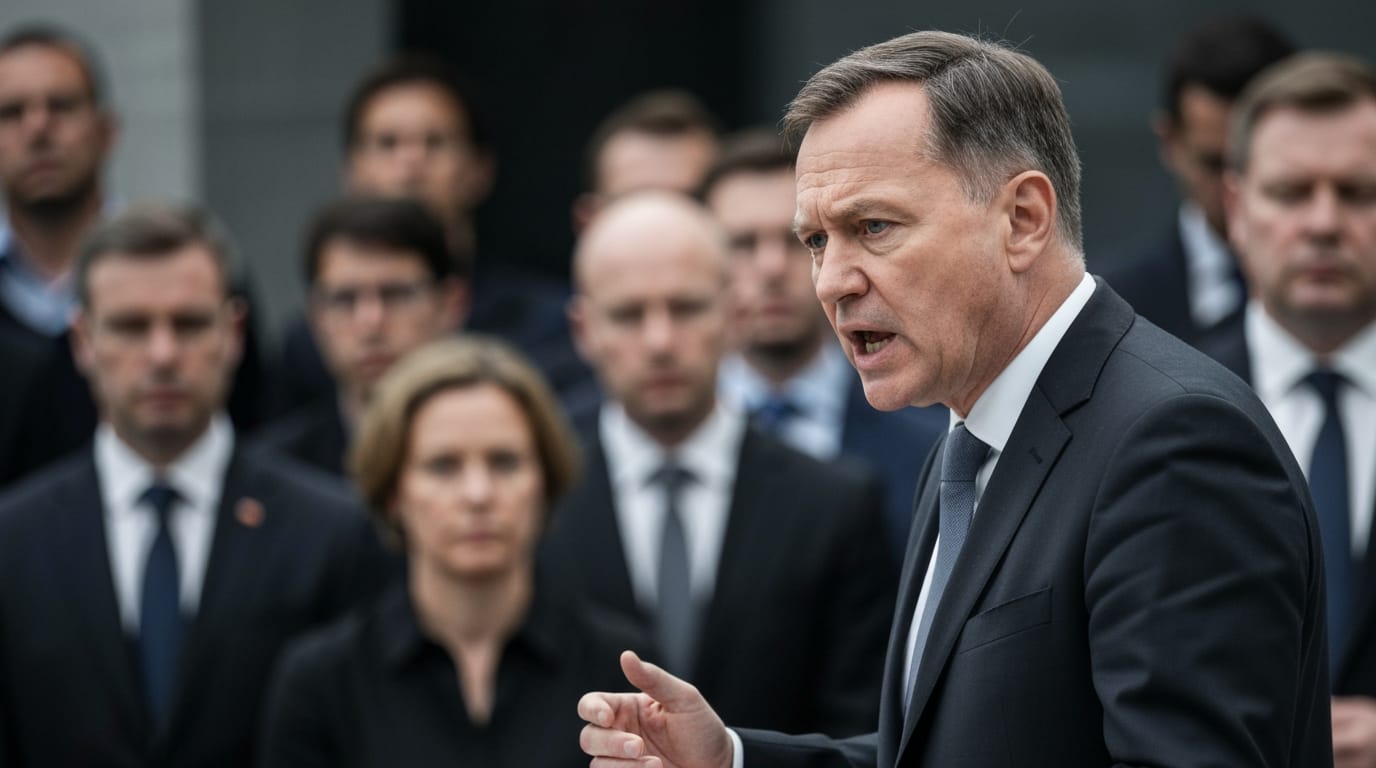
Berlin, Germany – A prominent figure within German Chancellor Friedrich Merz's party recently articulated a firm stance, declaring that Germany requires no guidance from Donald Trump, underscoring a deepening divergence in transatlantic political discourse. This statement emerges amidst a backdrop of escalating rhetoric between the former U.S. President and leading German politicians, highlighting a complex and evolving relationship between two long-standing allies. The pointed remark reflects a growing sentiment in Berlin that Germany is increasingly prepared to chart its own course, particularly concerning defense, foreign policy, and economic priorities, even as the specter of a potential second Trump administration looms.
The current friction represents a significant test for the transatlantic alliance, built on decades of shared democratic values and security cooperation. At its core, the dispute revolves around differing perspectives on global responsibilities, particularly regarding defense spending, international conflicts, and the very nature of multilateral engagements. As Germany continues its "Zeitenwende" – a profound shift in its security and foreign policy – the calls for greater European autonomy from Washington are becoming more vocal, signaling a new chapter in the nation's international role.
The Spark: Diplomatic Exchanges and Direct Criticisms
The recent escalation in rhetoric can be traced to pointed remarks made by both Donald Trump and German Chancellor Friedrich Merz. Earlier this year, Chancellor Merz publicly criticized the United States' handling of the ongoing conflict in Iran, suggesting that U.S. efforts were proving ineffectual and that Tehran was, in essence, humiliating Washington at the negotiation table. He voiced concerns over the absence of a clear strategic exit for the U.S. and the lack of consultation with European allies before military actions. Merz highlighted the economic repercussions of the conflict on Germany and emphasized the urgent need for a resolution.
Trump swiftly retaliated through social media, urging the German Chancellor to focus on domestic challenges within Germany, specifically citing issues with immigration and energy, and criticizing what he perceived as Merz's ineffectiveness in ending the conflict in Ukraine. Trump maintained that efforts against the "Iran Nuclear threat" were making the world, including Germany, safer, and that Merz should refrain from interfering. This exchange underscored a transactional approach to foreign policy often associated with Trump's previous presidency, wherein he frequently tied security cooperation to perceived economic or political concessions from allies.
Beyond the immediate verbal sparring, Trump has also resurrected past threats regarding the withdrawal of U.S. troops from Germany. During his first term, he had announced plans to cut the U.S. military presence in Germany by a third, approximately 12,000 troops, relocating some to other European countries and sending others back to the United States. While these plans were ultimately reversed by the subsequent Biden administration, the renewed discussion of troop reductions signals a persistent pressure tactic from Trump. Such moves are seen by many as a means to compel Germany to increase its defense spending and align more closely with U.S. foreign policy objectives.
Germany's Evolving Defense Posture and "Zeitenwende"
The notion that Germany needs no external "tips" is deeply intertwined with its recent strategic pivot, known as "Zeitenwende," or a "watershed era." Triggered by geopolitical shifts, particularly the conflict in Ukraine, this shift involves a fundamental re-evaluation of Germany's defense and security policies. Under Chancellor Merz, Germany has not merely committed to increasing its defense budget but is actively redefining its role as a significant, more assertive player in European security.
Historically, Germany has maintained a more restrained military posture since World War II, relying heavily on the collective security framework of NATO and the robust U.S. military presence in Europe. However, the current environment has necessitated a dramatic change. Germany is now the largest military spender in Europe, actively working to meet and even exceed NATO's 2% of GDP defense spending target. Some reports even indicate an aspiration to eventually reach 5% of GDP for defense, a figure previously suggested by Trump. The government has established a €100 billion special fund for the Bundeswehr (German armed forces) and is acquiring advanced military hardware, such as F-35 fighter jets, to bolster its capabilities.
The presence of approximately 36,000 U.S. troops across various German bases remains a critical component of both European security and America's global military reach. These bases serve as vital strategic hubs for logistics, intelligence, and power projection. While Trump views them as a "charitable contribution" to "ungrateful Europeans," defense analysts emphasize their reciprocal value, providing indispensable infrastructure for U.S. operations beyond Europe. Potential troop reductions, therefore, carry not only strategic but also significant economic implications for German regions that have long benefited from the American military presence.
Navigating a Complex Transatlantic Future
The current political rhetoric underscores a deepening skepticism within Germany regarding the reliability of the United States as an unwavering partner, particularly in the context of a potential Trump return to the White House. While the Christian Democratic Union (CDU), led by Merz and his deputy Carsten Linnemann, generally maintains a strong Atlanticist orientation, advocating for robust transatlantic ties, there is an increasing emphasis on European self-reliance. This perspective is reinforced by the awareness that the U.S., under a more transactional leadership, might prioritize its own interests above traditional alliances.
Public opinion in Germany reflects this evolving sentiment. Recent surveys indicate a sharp decline in the perception of the U.S. as a good foreign policy partner, with a significant portion of Germans now viewing relations as strained. This shift is particularly pronounced following previous Trump administrations and his recent re-entry into the political arena. The discussion extends to fundamental security guarantees, with some German politicians even contemplating closer nuclear cooperation with European partners like France and the United Kingdom, should the U.S. nuclear umbrella appear less reliable.
Internally, Germany's political landscape is also adapting. While mainstream parties like the CDU/CSU and the Social Democrats (SPD) generally champion transatlantic cooperation, the rise of populist parties, such as the Alternative for Germany (AfD), further complicates matters. The AfD, which takes a more skeptical stance toward traditional alliances like NATO and expresses euroscepticism, challenges the established consensus on foreign policy and could exert pressure on future German governments.
In essence, the declaration that Germany needs no "tips" from Donald Trump encapsulates a broader aspiration within Berlin to assert greater independence and leadership on the global stage. This is not a rejection of alliances but a recalibration, driven by a desire for strategic autonomy and a recognition that the "Europe of yesterday," with its implicit reliance on solitary U.S. leadership, is a thing of the past. As both Germany and the U.S. approach crucial electoral cycles, the ongoing dialogue and the foundational principles of their relationship will continue to be rigorously tested. The future of transatlantic cooperation will likely hinge on an honest re-evaluation of shared responsibilities and a mutual commitment to navigating an increasingly complex global order.


