Humpback Whale Timmy Embarks on Perilous North Sea Journey, Fate Remains Uncertain
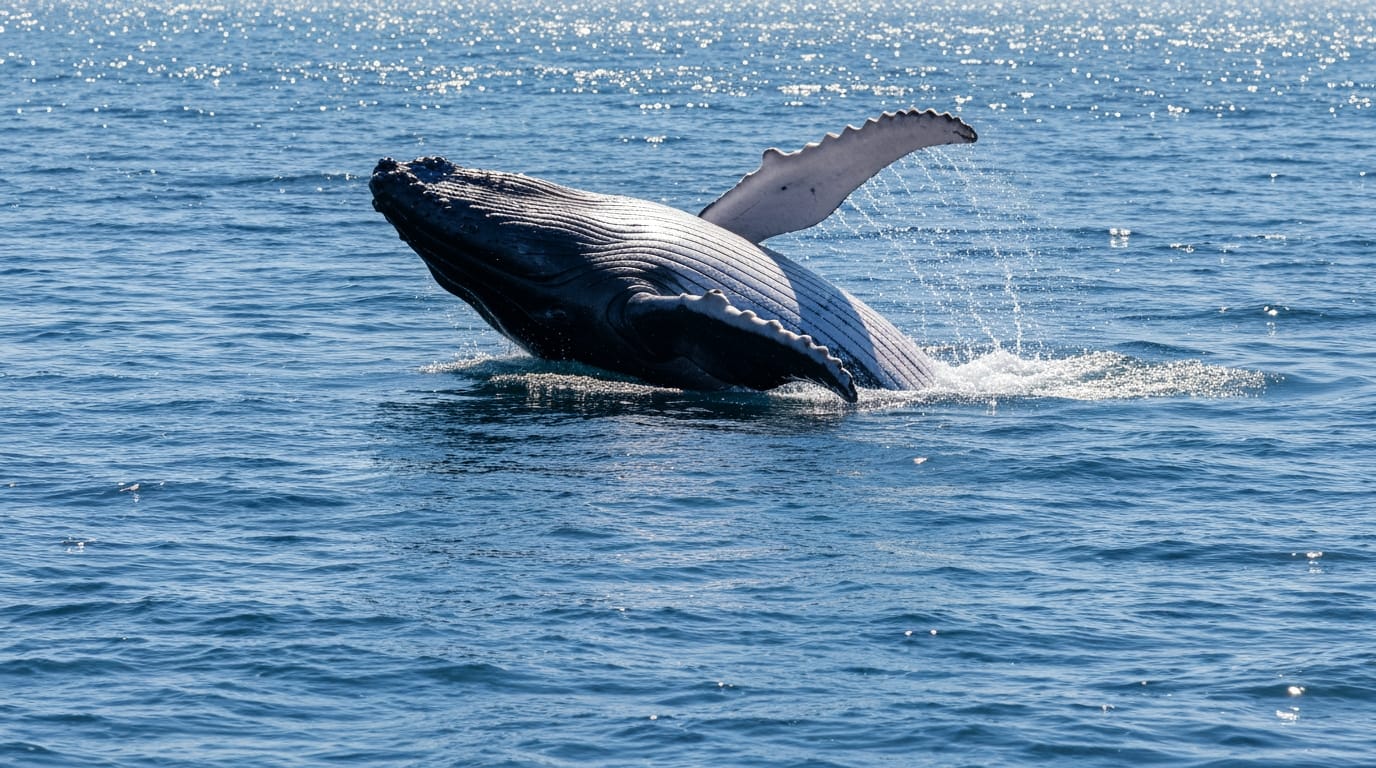
Berlin, Germany – A dramatic and controversial rescue operation has seen "Timmy," a juvenile humpback whale, transported from the shallow, brackish waters of Germany's Baltic Sea coast towards the North Sea, but the success of its arduous journey back to its natural Atlantic habitat is far from guaranteed. The 12-tonne whale, whose plight has captivated audiences globally since its appearance in early March, is now on a specially adapted barge, slowly navigating a path fraught with environmental challenges and critical health concerns. This ambitious undertaking, dubbed "Operation Cushion," represents a monumental effort to save a magnificent creature, yet it is shadowed by intense debate among experts regarding its chances of survival.
A Whale Adrift: From Baltic Stranding to Deteriorating Health
Timmy, estimated to be between 12 and 13.5 meters long, was first spotted near Germany's Baltic Sea coast on March 3, 2026, far from the typical feeding grounds of humpback whales in the Atlantic Ocean. Humpbacks are marine mammals known for their vast migrations between polar feeding areas and equatorial breeding grounds, preferring deep, saline waters. Why Timmy ventured into the shallow, low-salinity Baltic Sea remains unclear, with theories ranging from chasing shoals of herring to disorientation during migration.
The Baltic Sea proved to be an unsuitable environment for the young whale. Over several weeks, Timmy repeatedly became stranded in shallow waters, particularly near Wismar and the island of Poel. These repeated strandings took a severe toll on its health. Reports indicated a deteriorated condition, irregular breathing, and a notable lack of movement. The low salt content of the Baltic Sea also caused a severe skin condition, prompting rescuers to apply zinc ointment. Furthermore, there were initial concerns about a fishing net entanglement and potential internal injuries due to the pressure of its own body weight during prolonged periods on sandbanks. Early attempts by authorities to coax Timmy into deeper waters were unsuccessful, as the weakened whale consistently returned to the shallows. By mid-April, with Timmy's health rapidly declining, some officials and experts had all but given up hope, suggesting that allowing the whale to die peacefully might be the most humane option.
"Operation Cushion": A High-Stakes Rescue Mission
As the official prognosis for Timmy grew grim, a private initiative, spearheaded and funded by two German millionaires, Karin Walter-Mommert and Walter Gunz (founder of the MediaMarkt electronics chain), stepped in to launch a last-ditch rescue effort. This ambitious plan, known as "Operation Cushion," received the green light from Till Backhaus, the environment minister for Mecklenburg-Vorpommern, despite initial scientific reservations.
The complex operation commenced on April 28, involving a coordinated team of international experts, including veterinarians and marine animal specialists from organizations like the Whale Sanctuary Project's Whale Aid Team. The core of the rescue involved guiding Timmy onto a specially converted flooded cargo barge, typically used for transporting other boats. Rescuers painstakingly dredged a channel in the sandy seabed to facilitate access to the vessel. After hours of careful maneuvering and using straps, Timmy, exhibiting a surprising burst of effort, swam into the barge, eliciting cheers from the rescue team and onlookers. American veterinarian Dr. Jenna Wallace, part of the rescue team, expressed optimism, noting Timmy's strong desire to live. The journey towards the North Sea began on April 29, with the barge and its precious cargo being towed by tugboats at a slow pace to minimize stress on the already weakened animal. The planned route involves navigating around the northern tip of Denmark, through the Skagerrak strait, covering approximately 400 kilometers over several days.
Scientific Skepticism and Lingering Risks
Despite the successful loading onto the barge, the rescue mission has been met with considerable skepticism and ethical debate within the scientific community. Many experts argue that the intensive intervention could inflict further stress and injury on an already compromised animal. Thilo Maack, a marine biologist at Greenpeace, publicly stated his belief that Timmy would die soon and questioned the ethics of prolonging its suffering. Similarly, the German Oceanographic Museum voiced doubts about the rescue's success due to Timmy's poor health and the high risk of injury and noise trauma during transport. Marine biologist Fabian Ritter highlighted concerns about muscle stiffness (myopathy) from weeks of immobility, making it difficult for Timmy to swim naturally even if released.
The Baltic Sea's unsuitability for humpbacks underscores the core problem: Timmy is far from its natural range. Even if successfully released into the North Sea, it faces the immense challenge of navigating back to the Atlantic Ocean. The North Sea, while more saline than the Baltic, may not offer sufficient food sources or optimal conditions for a recovering humpback. Scientists stress that Timmy would need to regain considerable strength to undertake the extensive swim to the Atlantic. Weather conditions, including forecasts for rougher seas, could further complicate the barge's journey, potentially adding to the whale's stress.
An Uncertain Future as the Journey Continues
As of early May 2026, the barge carrying Timmy has reached Danish waters, including the Kattegat, slowly progressing towards its destination in the North Sea. The whale is reportedly resting peacefully and has vocalized, interpreted by some as a positive sign of its well-being. Upon release, Timmy will be equipped with a GPS tracking device, allowing experts to monitor its movements and assess its ability to adapt to its new environment and eventually find its way back to the open Atlantic.
The dramatic rescue of Timmy has ignited a global conversation about human intervention in the lives of wild animals. It pits the public's emotional desire to save a charismatic creature against scientific caution and the harsh realities of nature. While the immediate goal of transferring Timmy to the North Sea appears to be within reach, the true test of this extraordinary rescue will be the whale's ability to recover, navigate, and ultimately thrive in its natural habitat. The coming days and weeks will be crucial in determining whether this high-stakes gamble will result in a triumphant return to the ocean or a tragic end to an inspiring, yet precarious, journey.


