Germany Cheers as Overt Neo-Nazi Candidate Narrowly Defeated in Mayoral Run-off
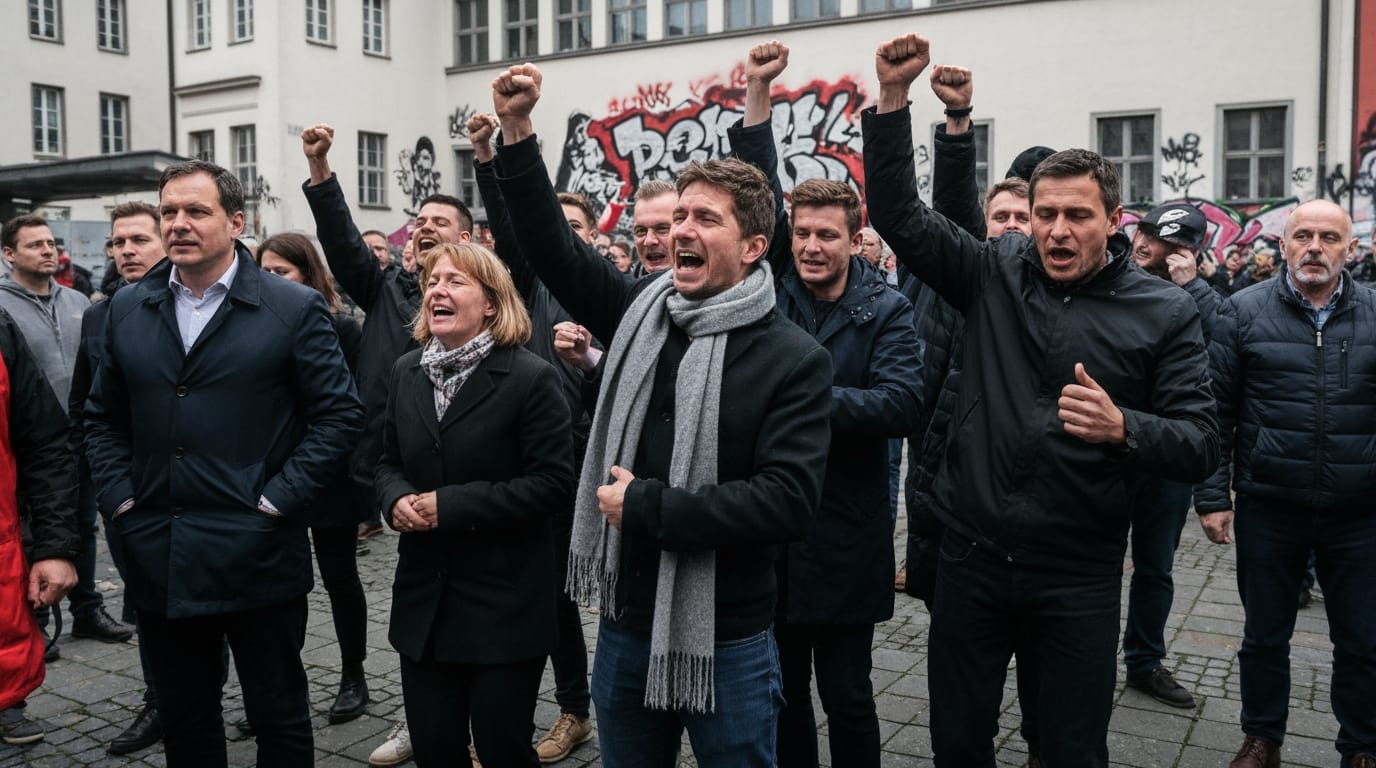
Aue-Bad Schlema, Germany – In a moment of palpable relief and renewed commitment to democratic principles, voters in the eastern German town of Aue-Bad Schlema narrowly averted the election of an openly neo-Nazi mayor, delivering a surprising defeat to a candidate whose political affiliations have long been a source of national alarm. Stefan Hartung, a prominent figure in the radical far-right "Free Saxons" party, lost the mayoral run-off election to conservative challenger Marcus Hoffmann of the Christian Democratic Union (CDU) by a margin of just 508 votes. The close call, which saw a significant mobilization of the democratic electorate, has been hailed as a crucial victory against overt extremism, even as it underscores the persistent and growing influence of the far-right across parts of Germany.
The election outcome in June 2026 prevented what would have been an unprecedented victory for a candidate with direct ties to neo-Nazism in democratic Germany's post-war history. For eight decades, a foundational tenet of the nation's identity has been a firm rejection of its Nazi past, making any potential electoral success for such a figure a profoundly disturbing prospect. The result in Aue-Bad Schlema, therefore, stands as a testament to civic vigilance, yet it also serves as a stark reminder of how close such figures can come to power.
A High-Stakes Contest in Saxony
The mayoral election in Aue-Bad Schlema garnered national attention due to the high likelihood that a representative of radical far-right forces could take control of a city government. Stefan Hartung, co-founder of the "Free Saxons" party, had performed strongly in the first round of voting, positioning him as a serious contender for the mayoral office. His opponent, Marcus Hoffmann, a candidate from the established conservative CDU, ultimately secured 5,007 votes against Hartung's 4,499 in the second round. The final margin of 508 votes reflected an intense contest and a mobilized democratic turnout, with more than 15,000 local citizens eligible to participate in the local elections.
The electoral near-miss in Aue-Bad Schlema sent ripples of concern through German society. Experts and media outlets openly identified Hartung as a neo-Nazi, further magnifying the stakes of the election. His party, the "Free Saxons," is under constant surveillance by Germany's state intelligence service due to its extremist tendencies. Hartung's political trajectory includes a long-standing membership in the National Democratic Party of Germany (NPD), now known as "Homeland." This party has been formally ruled by Germany's highest court as "similar in nature to National Socialism," a legal term underscoring its historical and ideological proximity to Nazism. The prospect of a politician with such a background holding executive power was a disquieting thought for many across the nation.
The Landscape of Far-Right Politics in Germany
The close call in Aue-Bad Schlema cannot be viewed in isolation. It unfolds against a backdrop of increasing electoral success for far-right parties in Germany, particularly in the eastern states. While the "Free Saxons" represent a more explicitly neo-Nazi wing, the Alternative for Germany (AfD) party has seen a significant surge in support, achieving milestones that have challenged Germany's post-war political consensus.
Just last year, in July 2023, Hannes Loth became the first full-time mayor from the AfD in Raguhn-Jeßnitz, Saxony-Anhalt, winning with 51.13% of the vote. This victory marked a critical moment, as the AfD state chapter in Saxony-Anhalt is classified as a suspected right-wing extremist case by the Office for the Protection of the Constitution. The AfD has also secured other significant local administrative positions, including a district administrator in Thuringia and mayoral seats in other smaller towns. These successes demonstrate a growing disillusionment with mainstream parties and a willingness among some voters to support parties further to the right of the political spectrum.
However, the defeat of Stefan Hartung in Aue-Bad Schlema suggests that there remains a crucial distinction in the minds of many voters. While some are willing to cast their ballots for the AfD, which presents itself as a more mainstream conservative party despite its extremist elements, there appears to be a stronger resistance to candidates whose associations are more overtly neo-Nazi. This nuanced dynamic highlights the ongoing struggle within German society to define the boundaries of acceptable political discourse and representation.
Implications for German Democracy
The outcome in Aue-Bad Schlema has been met with relief by proponents of liberal democracy, yet it also serves as a potent reminder of the fragility of democratic institutions when confronted by well-organized extremist movements. The high voter turnout in the run-off election suggests a strong mobilization of the democratic electorate, indicating that citizens recognized the gravity of the choice before them. This active engagement is a vital bulwark against the erosion of democratic norms.
Nonetheless, the narrow margin of victory for the mainstream candidate underlines the deep divisions and underlying grievances that extremist groups exploit. Factors such as economic anxieties, dissatisfaction with federal government policies, and a sense of neglect in certain regions are often cited as drivers for the far-right's appeal. The challenge for Germany's democratic parties remains to address these concerns effectively, thereby reducing the fertile ground for extremist ideologies.
The "surprising defeat" of Stefan Hartung is not merely a local election result; it is a national cautionary tale. It emphasizes the need for continuous vigilance and proactive engagement from citizens and political leaders alike. While a significant immediate threat was averted in Aue-Bad Schlema, the broader trend of far-right ascendancy in parts of Germany suggests that the fight for democratic values is far from over.
Conclusion
The narrow but significant defeat of Stefan Hartung in Aue-Bad Schlema represents a critical juncture in Germany's ongoing efforts to safeguard its democratic foundations. It offered a moment of collective breath-holding, followed by a sigh of relief as voters ultimately rejected a candidate explicitly aligned with neo-Nazism. This outcome stands as a testament to the resilience of democratic institutions and the power of civic engagement, demonstrating that a united democratic front can, when mobilized, push back against the tide of extremism.
However, the victory is not absolute. The alarming proximity of such a candidate to power, alongside the broader gains made by the far-right AfD, signals that the battle for Germany's democratic soul is an ongoing one. The Aue-Bad Schlema election has highlighted the delicate balance between acknowledging legitimate public frustrations and drawing an unwavering line against ideologies that seek to undermine the constitutional order. The challenge now lies in solidifying this democratic resilience and continuing to build a society where such close calls become increasingly rare.


