Germany Consecrates First Bishop of Indian Heritage in Historic Ceremony
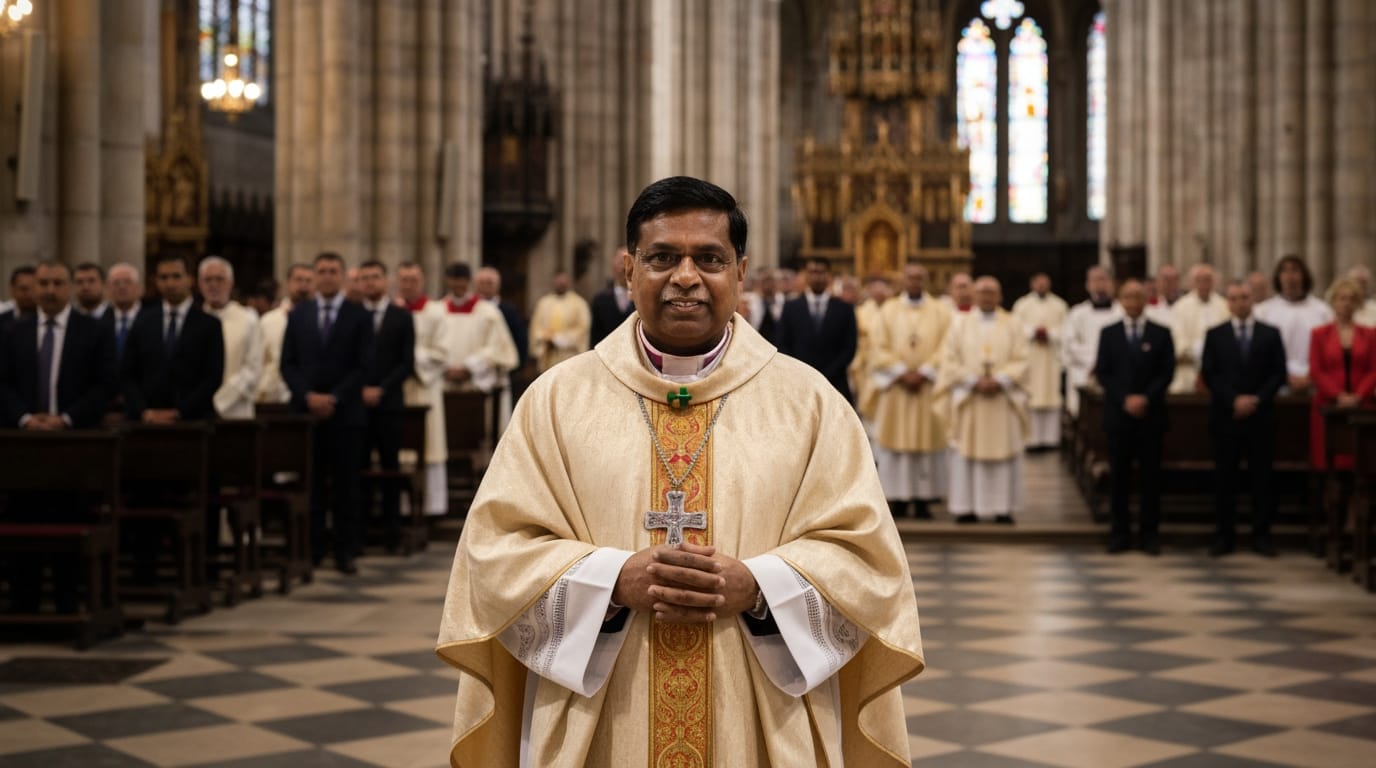
Mainz, Germany – In a landmark moment for the Catholic Church in Germany, Reverend Joshy George Pottackal was consecrated auxiliary bishop of the Diocese of Mainz on Sunday, March 15, 2026. This appointment marks a significant milestone, as Bishop Pottackal becomes the first bishop of non-European heritage in Germany and the first Indian priest to be elevated to such a position within a German diocese. The historic ceremony, held at the venerable Mainz Cathedral, underscores the evolving demographics of Catholicism in Germany and signals a new era of diversity within its ecclesiastical leadership.
The elevation of the 48-year-old Carmelite priest is viewed as a powerful affirmation of the global nature of the Catholic Church and a recognition of the growing contributions of immigrant communities to its spiritual and administrative life in Germany. His consecration comes at a time when the German Church is grappling with various challenges, including declining numbers of local clergy and an increasing proportion of foreign-born faithful, making his perspective particularly relevant.
A Journey from Kerala to the Episcopacy
Born on April 30, 1977, in Meenkunnam, a village in the southern Indian state of Kerala, Joshy George Pottackal's journey to the German episcopate is one marked by dedication and personal resilience. Meenkunnam, known for its scenic waterfalls and paddy fields, was also home to a giant replica of Michelangelo's Pietà, perhaps an early spiritual influence. He was the second of three sons, facing personal tragedy early in life when his mother died in an accident in 1995, followed by his father's death from a long illness in 1996. His aunt stepped in to support the brothers during these difficult times.
Bishop Pottackal joined the Carmelite Nivas Minor Seminary in 1992 and entered the novitiate in 1995. Although he initially harbored dreams of serving as a missionary in northern India or Africa, his path led him to Germany after his priestly ordination in 2003. He quickly integrated into the German ecclesiastical landscape, serving the Mainz diocese for 21 years in various capacities, including youth ministry, parish vicar, forane vicar, and as a diocesan referent for priests. His long tenure and widespread acceptance within the community cultivated him as a deeply trusted figure, paving the way for his historic elevation. The Carmelite order in Kerala has a long-standing relationship with Germany, with the first Carmelite foundation in India being established in 1973 by the order's Upper German province.
A Symbol of Shifting Demographics and Diversity
Bishop Pottackal's appointment powerfully underscores the demographic shifts occurring within the Catholic Church in Germany. Recent data from 2024 indicates that 16.7% of Catholics in Germany hold foreign citizenship, with this figure rising to 26.6% within the Mainz diocese. This trend highlights the increasing reliance on clergy and faithful from diverse international backgrounds to sustain the Church's mission and ministries.
The presence of a significant Indian Catholic community in Germany dates back to the 1960s and 1970s, when Germany actively recruited healthcare workers from Kerala to address shortages. In subsequent decades, a growing number of Indian priests have filled vacancies in German parishes, offsetting a decline in local vocations. Bishop Pottackal's elevation is therefore not merely symbolic but reflects a practical and pastoral reality, acknowledging the vital contributions of these communities. Bishop Peter Kohlgraf of Mainz lauded the nomination as "a powerful and important signal for our time," emphasizing the importance of diversity in leadership. The appointment is also seen as an endorsement by the Vatican of the vibrant Kerala Church and its missionary zeal.
Navigating a Changing Landscape
The German Catholic Church is currently navigating a period of introspection and reform, often referred to as the "Synodal Way." This internal process seeks to address critical issues, including clergy sexual abuse, declining church attendance, and calls for greater lay participation and women's roles. Within this context, the presence of a non-European bishop could bring fresh perspectives and a broader understanding of Catholicism's global dimensions.
While the cultural and mental landscapes of Catholicism in India and Germany present distinct differences, Bishop Pottackal's extensive experience and deep integration into the Mainz diocese are anticipated to facilitate a nuanced approach to his new responsibilities. His appointment signifies a willingness within the German episcopate to embrace leadership that mirrors the increasingly multicultural composition of its congregations. The consecration ceremony itself, presided over by Bishop Peter Kohlgraf, Archbishop Stephan Burger of Freiburg, and Bishop Wilmar Santin of Brazil, further emphasized this universal aspect of the Church.
A New Chapter for German Catholicism
The consecration of Bishop Joshy George Pottackal marks a pivotal moment, ushering in a new chapter for the Catholic Church in Germany. It represents a tangible step towards greater inclusivity and recognition of the diverse fabric of its faithful. His journey from a small Indian village to an auxiliary bishop in one of Germany's historic dioceses serves as an inspiring testament to faith, service, and the evolving global character of Catholicism. This event not only celebrates an individual achievement but also highlights the ongoing integration of international communities within the German Church, promising a richer, more diverse future for its spiritual life and leadership.


