Germany Debates Fiery Tradition: Calls for Fireworks Ban Intensify Amid Mounting Concerns
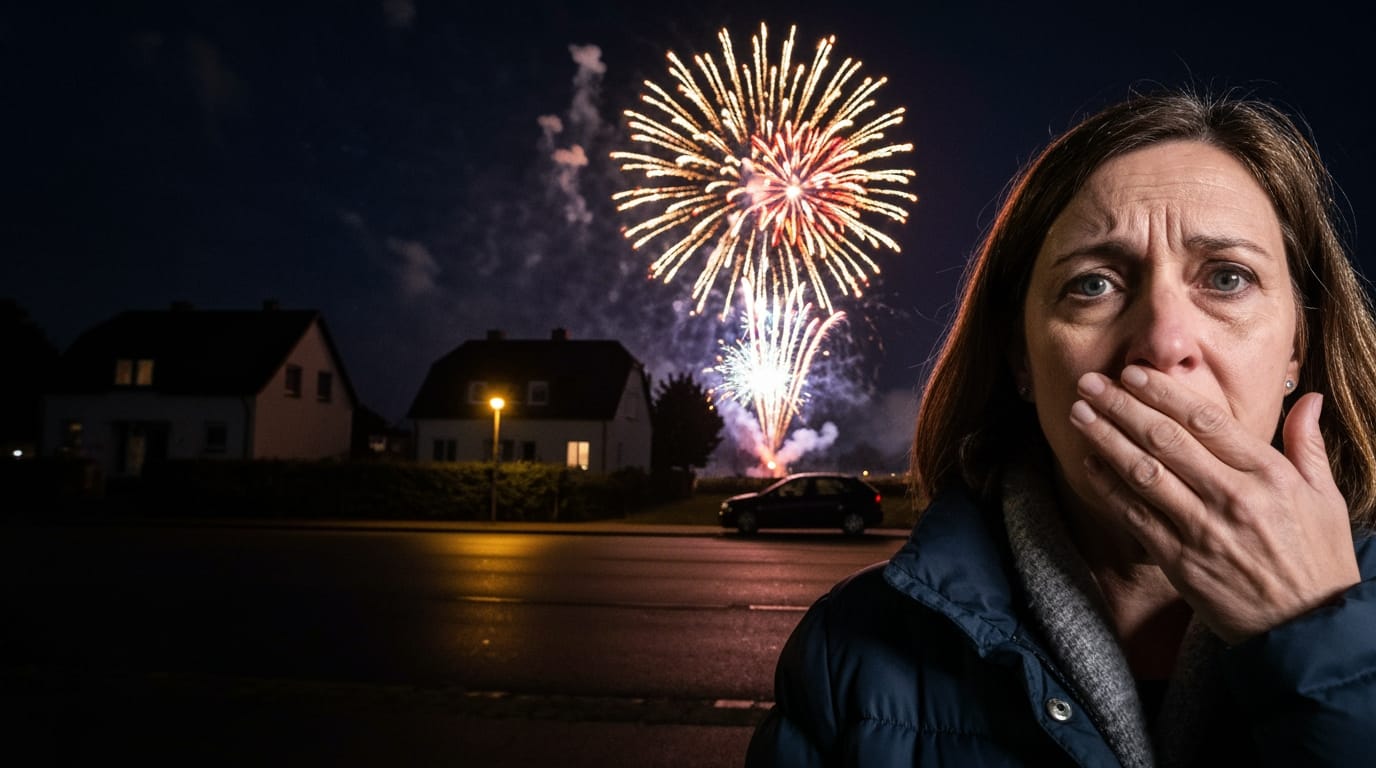
Germany finds itself at a pivotal moment, with a deep-seated New Year's Eve tradition of private fireworks now squarely in the crosshairs of public opinion and policy debate. A substantial and growing segment of the population is advocating for a ban or significant restrictions on private pyrotechnics, citing escalating concerns over safety, environmental damage, and animal welfare. This evolving sentiment challenges a practice ingrained in German culture for centuries, setting the stage for a nationwide discussion on how to balance tradition with modern responsibilities.
Shifting Tides: Public Sentiment Towards a Ban
Public support for a ban on private fireworks has steadily gained momentum in recent years. While the initial perception might suggest "almost half" of all Germans desire such a measure, more recent surveys indicate even stronger backing for restrictions. A Forsa survey, for example, found that 59% of Germans favor a general ban on fireworks. Similarly, polls from early 2025 suggested approximately 60% of Germans are in favor of a ban, with this figure rising to 75% in the capital, Berlin. These figures represent a notable increase from earlier years, such as a 2019 YouGov poll where 57% of respondents supported banning the public use of fireworks on New Year's Eve. Even in 2021, during the height of the pandemic, 66% of Germans agreed with the decision to ban private fireworks sales, primarily to alleviate pressure on healthcare systems. The trend clearly points towards a society increasingly willing to reconsider, and potentially forgo, this long-held custom.
This changing perspective is driven by a confluence of factors that have become increasingly apparent and problematic with each passing New Year's celebration. What was once seen as an exhilarating expression of festivity is now widely perceived by many as a source of avoidable hazards and detrimental impacts on public well-being and the environment. The discussions are no longer confined to niche groups but have entered mainstream political and public discourse, indicating a fundamental reassessment of the practice.
The Heavy Toll: Injuries, Strain on Emergency Services, and Environmental Damage
The human cost associated with New Year's Eve fireworks is a primary driver behind the calls for a ban. Annually, German hospitals and emergency services report a surge in severe injuries, ranging from burns and soft tissue damage to grievous hand, face, and eye injuries, sometimes resulting in the loss of limbs or permanent vision impairment. For example, the Unfallkrankenhaus Berlin alone treats an average of 50 firework-related injuries each New Year's Eve. Tragically, the celebrations for New Year's Eve 2024/2025 saw five fatalities across Germany attributed to fireworks accidents. These incidents often involve the misuse or improper handling of pyrotechnics, including illegal "Kugelbomben" (spherical bombs) that are illicitly imported and significantly more dangerous than regulated fireworks.
Beyond direct physical harm, emergency responders frequently face immense pressure and even direct attacks. Police officers, firefighters, and paramedics are often targeted with fireworks, straining resources and endangering those dedicated to public service. Berlin police reported 1,453 New Year's-related crimes for the 2024/2025 transition, which included 58 attacks on emergency workers and 44 injured officers. Such incidents underscore a growing concern about public disorder and the weaponization of fireworks.
The environmental impact is equally alarming. New Year's Eve fireworks contribute to a massive spike in air pollution, particularly fine particulate matter (PM2.5 and PM10). On a single night, fireworks displays can release approximately 2,050 tonnes of particulate matter across Germany, accounting for almost 1% of total annual PM10 emissions and nearly 2% of annual PM2.5 emissions. Older estimates even suggested up to 4,000 tonnes, equivalent to 15% of annual vehicular emissions. These pollutants, often laden with toxic metallic compounds like copper, barium, lithium, strontium, lead, and titanium, pose significant health risks, exacerbating respiratory and cardiovascular conditions. Cities like Munich have recorded PM2.5 levels up to 26 times the maximum limit recommended by the EU on New Year's Eve. The aftermath also leaves vast quantities of waste, contributing to ecological concerns.
A Nightmare for Animals: Widespread Distress and Ecological Harm
The cacophony and bright flashes of New Year's Eve fireworks also inflict widespread distress upon animals, both wild and domestic. Animal welfare organizations, such as the German Animal Welfare Federation, vocally advocate for a ban, highlighting that millions of animals experience profound fear, stress, and panic during the celebrations.
Pets, with their sensitive hearing, often tremble, hide, or attempt to flee, sometimes suffering long-term noise phobias. Outdoor cats may run away in fright and become disoriented, unable to find their way home. Wild animals, particularly birds, hedgehogs, pigs, cattle, and horses, are also severely affected. Startled birds may abandon their roosts, expending critical energy reserves in winter that can prove fatal. Farm animals can injure themselves in panicked attempts to escape. Furthermore, the remnants of fireworks, containing toxic dyes and heavy metals, frequently contaminate natural environments, causing lasting ecological damage. The "Böllerciao" campaign, supported by over 50 organizations including pet owners and environmental groups, explicitly addresses these concerns, advocating for a full ban on private pyrotechnics.
Tradition, Economic Interests, and Political Impediments
Despite the mounting evidence and public pressure for change, the tradition of New Year's Eve fireworks, known as "Silvester" in Germany, remains deeply entrenched for many. Its roots trace back to pre-medieval customs intended to ward off evil spirits with loud noises. For proponents, it is an indispensable part of welcoming the new year, a cherished expression of joy and community.
The economic dimension also plays a significant role. Germany boasts a considerable pyrotechnics industry, with annual sales of New Year's Eve fireworks estimated at around 180 million Euros in 2023. Major manufacturers and retailers rely on these seasonal sales, and a blanket ban would have substantial economic repercussions. The German Pyrotechnic Industry Association (VPI) naturally opposes a ban, emphasizing the industry's economic contributions.
Politically, the issue is contentious. While some politicians, particularly from the Green party, support stricter regulations or outright bans, others, including Chancellor Olaf Scholz, have expressed reservations, acknowledging the long-standing tradition. Current regulations permit the sale of Category F2 fireworks only for the last three days of December, with use restricted to December 31st and January 1st, and specific bans near sensitive locations like hospitals and churches. However, local authorities retain the power to implement additional firework-free zones, a measure increasingly adopted in cities like Berlin, Hamburg, and Munich. The ongoing debate reflects a broader societal tension between individual freedoms, cultural heritage, and collective well-being.
Navigating the Future of Festive Explosions
The impassioned debate surrounding private fireworks in Germany underscores a complex societal challenge. On one side stands a powerful tradition, economic interests, and a segment of the population that views the celebratory explosions as an essential element of New Year's Eve. On the other, a growing majority of citizens, supported by emergency services, medical professionals, environmentalists, and animal welfare advocates, call for an end to a practice they deem dangerous, polluting, and distressing.
The path forward likely involves a multifaceted approach. Increased enforcement against illegal fireworks, expansion of firework-free zones, and public awareness campaigns about the risks are already in motion. However, as public opinion continues to shift, the pressure for a more comprehensive, nationwide ban on private pyrotechnics is expected to intensify. Alternatives such as professionally organized public displays or innovative drone and light shows are emerging as viable options, offering festive spectacle without the associated dangers and environmental harm. Germany's journey to redefine its New Year's celebrations represents a broader societal negotiation, seeking to forge a new balance where collective safety and environmental stewardship can coexist with the spirit of festivity.


