Germany Deploys Naval Units to Mediterranean, Poised for Potential Hormuz Role Amid Regional Tensions
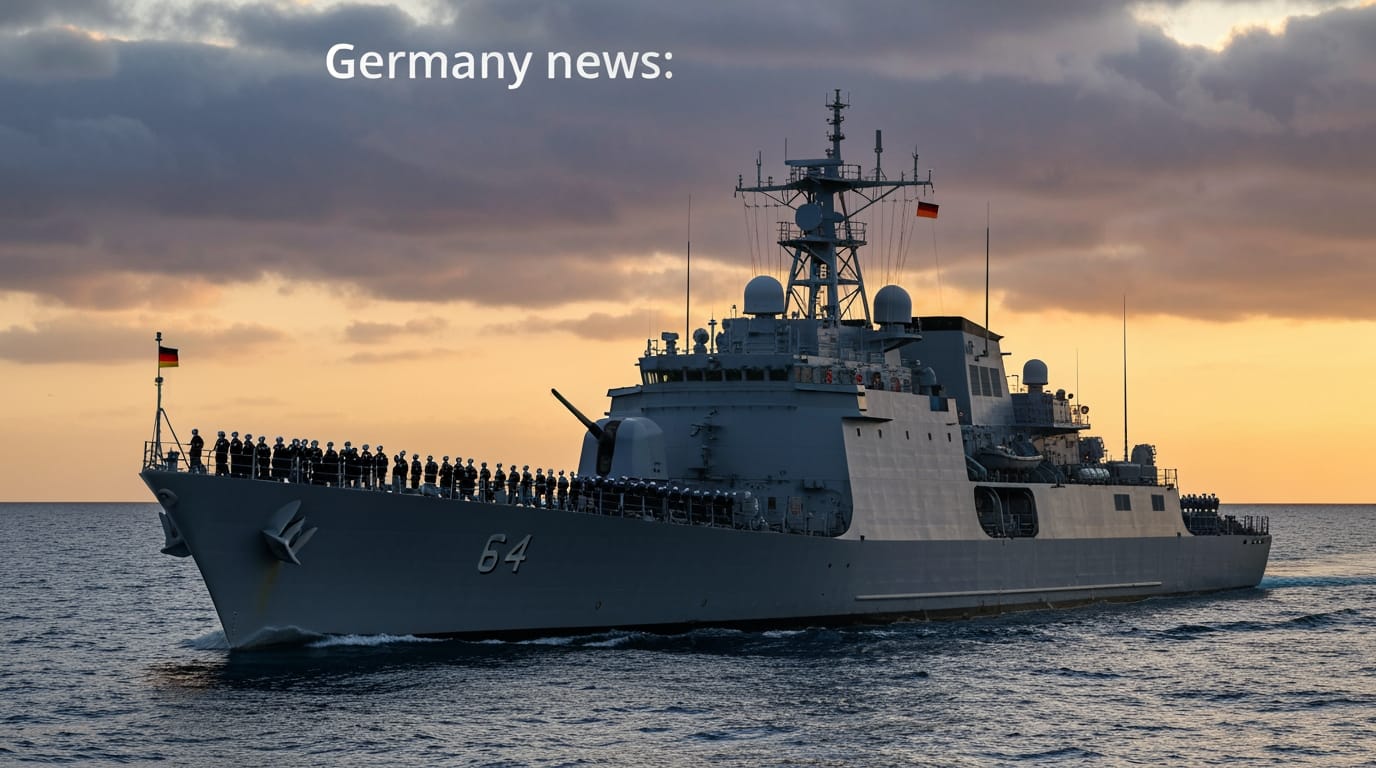
BERLIN, Germany – Germany has initiated preparatory naval deployments to the Mediterranean Sea, signaling a readiness for potential involvement in securing the Strait of Hormuz, a critical global shipping artery currently impacted by ongoing conflict in the Middle East. Defense Minister Boris Pistorius announced that a minesweeper and a command-and-supply ship are being moved as a pre-positioning measure, allowing for rapid deployment towards the Strait if political and legal conditions are met. This strategic move underscores Germany's evolving defense posture and its commitment to international maritime security, particularly as the region grapples with heightened instability and disruptions to vital trade routes.
The announcement comes amidst a complex geopolitical landscape, where the Strait of Hormuz has been effectively sealed due to hostilities in the Iran war, severely impacting global energy and trade flows. While emphasizing that any direct intervention in the Strait would require a stable ceasefire, a robust legal framework under international law, and approval from the Bundestag, Germany's parliament, Minister Pistorius stressed the importance of protecting freedom of navigation. The German defense chief highlighted the country's expertise in naval mine clearance operations, a role in which Berlin traditionally plays a leading part within NATO.
The Imperiled Lifeline: Strait of Hormuz Under Duress
The Strait of Hormuz, a narrow passage between Oman and Iran, serves as the sole maritime gateway from the Persian Gulf to the open ocean, making it one of the world's most strategically important chokepoints. Annually, it facilitates the transit of a substantial portion of the world's liquefied natural gas (LNG) and seaborne oil trade, alongside crucial fertilizers and raw materials. In 2022, an average of 21 million barrels of oil per day, approximately 21% of global petroleum liquids consumption, flowed through the Strait. Its effective closure since the beginning of the Iran war has caused significant disruptions, leading to soaring energy prices and frantic efforts to prevent fuel shortages globally. Hundreds of vessels and billions of dollars in goods have been stranded, with daily transits remaining well below pre-conflict levels. The situation has been described by Minister Pistorius as "unpredictable," with over 20 attacks on commercial ships reported.
This critical waterway is not just vital for oil and gas; it also serves as the only maritime route for several Gulf countries, including the UAE, Qatar, Bahrain, Kuwait, and Iraq, making its disruption a severe threat to global supply chains and economic stability. The current crisis has reinvigorated interest in alternative trade routes, though experts note there are "no simple solutions."
Germany's Evolving Defense Doctrine: A "Zeitenwende" in Action
The decision to prepare for a potential Hormuz deployment reflects a significant transformation in Germany's defense and foreign policy, often referred to as "Zeitenwende" (turning point). Prompted by the Russian invasion of Ukraine in 2022 and rising global security threats, Germany has pledged a €100 billion special fund for its armed forces, the Bundeswehr, and committed to increasing its defense budget to meet NATO's 2% GDP target. By 2024, Germany's military expenditures reached $88.5 billion, making it the world's fourth-largest military spender and the highest in Central and Western Europe for the first time since reunification. Projections indicate a further increase to €152 billion by 2029, aiming to transform the Bundeswehr into Europe's strongest conventional army by 2039.
This shift marks a departure from decades of post-Cold War strategic optimism and a previous reluctance for extensive out-of-area military operations. While Germany has ruled out direct involvement in the ongoing conflict, Minister Pistorius previously stated in March 2026 that sending naval forces to the Strait of Hormuz to join hostilities would risk dragging Germany into a conflict it did not start. However, the current preparatory deployment for mine clearance and reconnaissance, contingent on a ceasefire, signals a nuanced but firm commitment to safeguarding international trade and stability once direct combat operations have ceased.
Conditions, Capabilities, and Collaborative Efforts
For a German naval mission in the Strait of Hormuz to proceed, several essential conditions must be met: a stable ceasefire in the region, a clear legal framework consistent with international law, and parliamentary approval from the Bundestag. Defense Minister Pistorius has explicitly stated that any involvement would not be merely symbolic but would directly aim at protecting the freedom of navigation. He also underscored that a mission of such complexity could not be effective without the involvement of the United States, given Washington's deep understanding of the regional situation.
Germany's specific capabilities in mine clearance make it a valuable partner in any multinational effort to reopen the Strait, which has been crucial since the start of the conflict. However, such a deployment would necessitate a redistribution of military resources, acknowledging the German Navy's existing commitments and potential technical limitations.
The broader European Union is also actively discussing enhanced maritime security. The EU's Operation Aspides, launched in 2024 to protect commercial shipping in the Red Sea and Gulf of Aden from Houthi attacks, is being considered for an expanded scope to include regions like the Strait of Hormuz. While Germany is involved in Operation Aspides, it currently does not have a ship deployed in that mission. EU Commission President Ursula von der Leyen has proposed strengthening naval missions to ensure the Strait of Hormuz remains open, advocating for "sophisticated joint maritime coordination."
Conclusion: Germany's Step Towards Greater Global Responsibility
Germany's decision to pre-position naval assets in the Mediterranean reflects a pragmatic and strategic response to a volatile global security environment and an imperative to protect vital economic arteries. It illustrates Berlin's growing willingness to translate its enhanced defense capabilities into concrete contributions to international security, albeit under strict conditions and with a focus on non-combat roles like mine clearance and reconnaissance. This move aligns with Germany's broader "Zeitenwende" and its aim to assume greater responsibility in a world grappling with multiple crises. As diplomatic efforts continue to seek a resolution to the conflict impacting the Strait of Hormuz, Germany's readiness stands as a testament to the complex interplay of national interests, international cooperation, and the enduring importance of freedom of navigation for global prosperity. The coming months will determine if the necessary preconditions for a full deployment are met, solidifying Germany's expanded role on the international stage.


