Germany Faces Looming Fiscal Hole as Electric Vehicle Sales Erode Fuel Tax Revenues
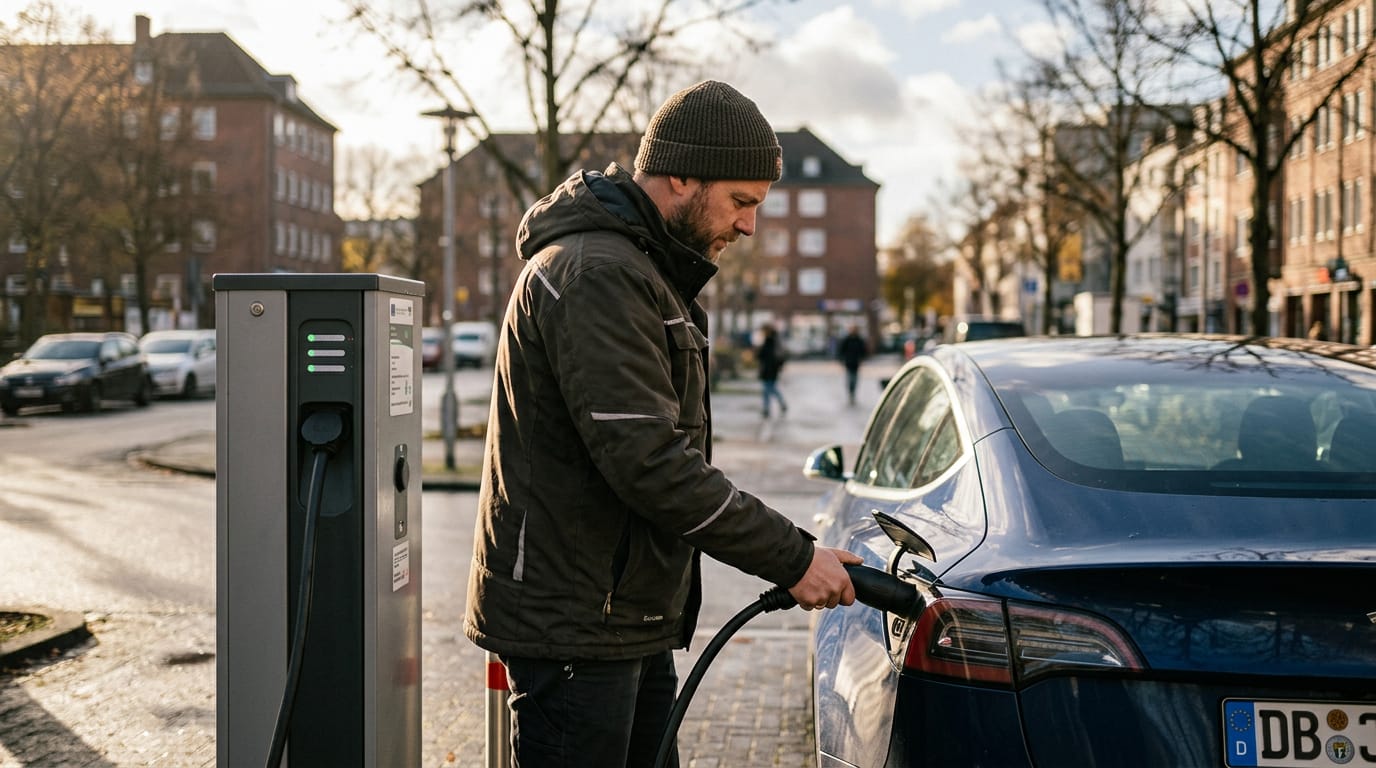
BERLIN — Germany’s rapid push toward zero-emission transportation is confronting the federal government with a quiet fiscal crisis, as millions of drivers plugging in their cars instead of visiting fuel pumps threaten a multi-billion-euro foundation of national infrastructure spending.
For generations, the tax collected at filling stations has served as one of the state treasury’s most reliable windfalls. But with battery-powered vehicles steadily increasing their presence on German roads, revenue from levies on diesel and petrol is steadily evaporating. The resulting budget shortfall is intensifying pressure on policymakers in Berlin to engineer an overhaul of road financing before public coffers suffer permanent damage.
The Disappearing Pump Levy
Official federal statistics highlight the scale of the decline. Annual energy tax revenue from diesel and gasoline fell from roughly 37 billion euros in 2016 to approximately 33 billion euros last year. Economic forecasting groups, including the Kiel Institute for the World Economy, warn that the downward slide is only accelerating as traditional internal combustion engines exit the market.
Under Germany’s current tax framework, conventional road transport yields immense revenue. Standard taxes add 65.45 euro cents to every liter of gasoline and 47.04 euro cents to a liter of diesel. When combined with national carbon levies and a 19 percent value-added tax, state revenue accounts for more than half of the retail price at the pump. By calculation of the German automobile club ADAC, an ordinary consumer paying 2.10 euros per liter of gasoline contributes around 1.14 euros directly to state revenue.
Electric car charging generates only a fraction of that return. Battery-electric vehicles are exempt from the standard energy tax applied to liquid fossil fuels, contributing only minor electricity tax receipts during recharging. As a result, every electric car that replaces a petrol vehicle widens the public deficit, depriving authorities of revenue that historically funded national highways, bridges, and regional road systems.
Mounting Pressure on Infrastructure Budgets
The long-term trajectory appears even more acute. Projections produced by the scientific advisory council at Germany’s Federal Ministry of Transport warn that total annual energy tax revenues could plunge to just 5 billion euros by 2050 without legislative intervention.
A joint economic study from the University of Münster and the Karlsruhe Institute of Technology similarly estimated that overall public receipts from motorized individual transport—which currently total about 51.2 billion euros annually across all road and energy levies—could drop by half over the coming three decades.
This revenue decline arrives at an uncomfortable moment for Europe's largest economy. Germany’s road network requires heavy capital maintenance, with thousands of highway bridges needing urgent rehabilitation or replacement after decades of heavy freight traffic. Local municipalities, which rely heavily on federal transfers to resurface urban streets and update public transit corridors, face dwindling capital allocations as total national tax receipts contract.
The shortfall is compounded by earlier incentive programs designed to stimulate the electric transition in the first place. While direct purchase subsidies ended in late 2023, electric passenger cars remain completely exempt from Germany's annual motor vehicle ownership tax until at least 2035. Corporate fleets also continue to enjoy special depreciation perks, limiting tax intake from the business sector even as commercial electric registrations rise.
Diverging Proposals for Future Road Funding
Faced with an eroding revenue base, transportation analysts and economists are offering several paths to balance the books.
One leading proposal involves transitioning away from fuel consumption levies toward distance-based road pricing. Researchers at the University of Münster have modeled a dynamic system where drivers pay fees per kilometer driven, adjusted for factors such as vehicle weight and urban traffic congestion. Such a model would ensure that heavy electric utility vehicles contribute proportionally to the physical road wear they cause.
Another option circulating among transport planners is the resurrection of a universal highway user fee, or vignette system, similar to models deployed in neighboring Switzerland and Austria. By charging an annual or monthly administrative pass to access the Autobahn network, the state could recover revenue from all road users regardless of motor type.
Yet each proposal carries significant political friction. Automobile advocacy organizations caution that adding new levies to electric vehicles risks slowing climate goals. Clean-energy champions argue that imposing mileage charges or targeted charging taxes too early could deter budget-conscious households from trading in older petrol models, particularly as average consumer vehicle prices remain elevated.
At the same time, traditional fuel drivers complain of unfair burdens, noting that lower-income commuters unable to afford the high initial sticker price of an electric vehicle are effectively subsidizing the roadway network for wealthier electric car owners.
Navigating the Clean Mobility Dilemma
The challenge facing Germany illustrates a fundamental policy paradox at the core of the global green transition. Successful decarbonization of the transport sector directly undermines the fiscal mechanisms constructed to support that very same mobility.
With European vehicle standards moving progressively toward zero-emission targets, reliance on petroleum taxes has become unsustainable. Finding a replacement mechanism will require lawmakers to strike a delicate balance between climate mandates, budgetary necessity, and social fairness. How Berlin chooses to resolve this emerging shortfall could establish a blueprint for other industrialized nations steering down the same electrified road.