Germany Grapples with Energy Price Surge Far Exceeding EU Average
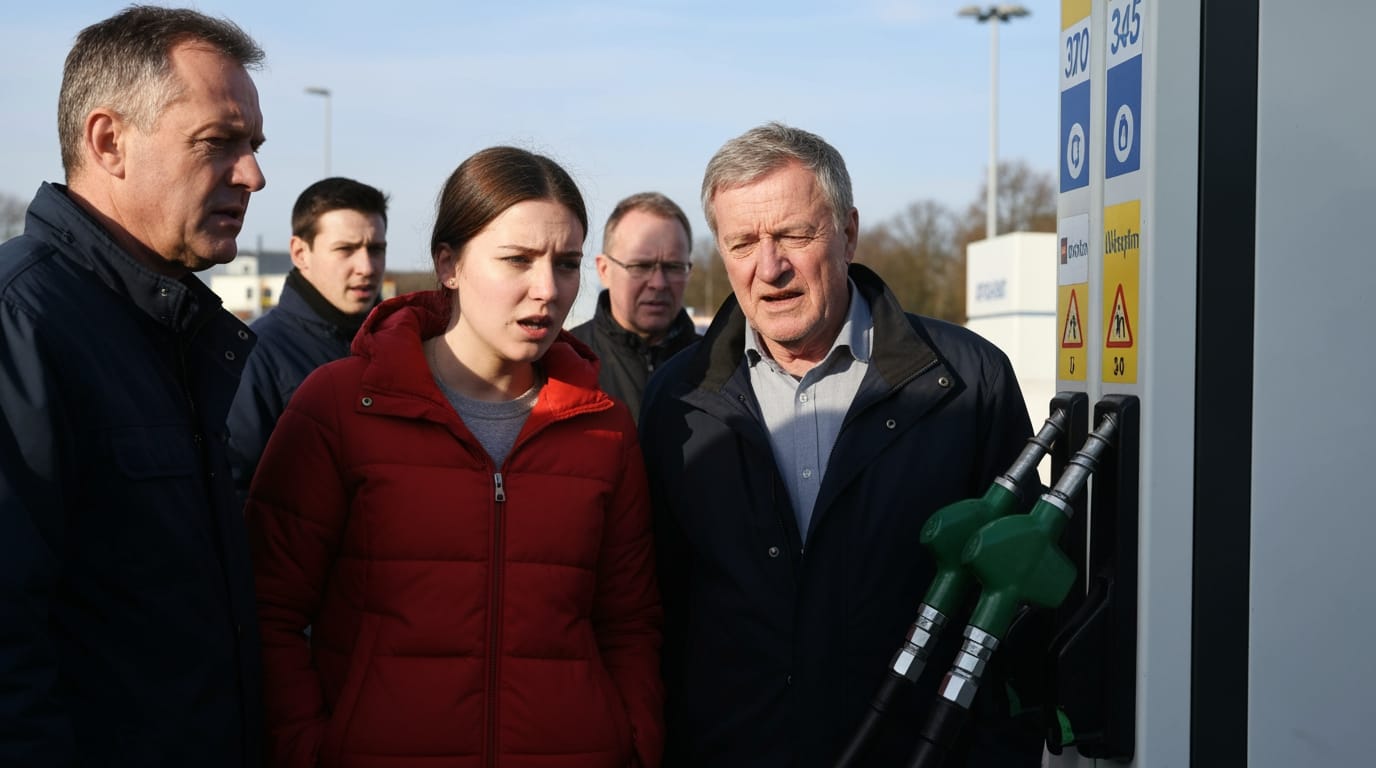
Berlin, Germany – German consumers and industries are facing a disproportionately severe energy price crisis, with gas and fuel costs surging at rates significantly higher than the European Union average. This escalating financial burden, driven by a confluence of geopolitical instability, heavy taxation, and market dynamics, is exerting immense pressure on households and threatens to impede the nation's economic recovery. As global energy markets remain volatile, Germany's unique vulnerabilities amplify the impact, prompting government intervention and raising questions about long-term energy security and affordability.
The Stark Reality of German Energy Costs
The data paints a stark picture of Germany's position within the European energy landscape. Household gas prices in Germany surged more than threefold between the first quarter of 2021 and the fourth quarter of 2022, reaching an average of 20.04 cents per kilowatt-hour (kWh) from 6.11 cents per kWh. Even as of September 2024, German household gas prices lingered approximately 74 percent higher than pre-Ukraine war levels. This sustained elevation contrasts sharply with the broader EU trends, where household gas prices in the first half of 2025 saw increases in 13 countries and decreases in 8, with Sweden and Hungary marking the highest and lowest prices respectively.
The situation for motor fuels is equally challenging. Germany consistently ranks among the most expensive countries for petrol in the EU, often second only to the Netherlands. As of March 2026, petrol in Germany cost €2.13 per liter, nearly 20 percent above the EU average of €1.78 per liter. Diesel prices similarly stand well above the EU average. This disparity has been exacerbated by recent global events; during a period from late February to early March 2026, German petrol prices rose by 3.5 percent and diesel by 4.6 percent, roughly double the EU average increases of 1.5 and 1.8 percent, respectively. Only Finland reported stronger price increases during that specific timeframe.
Unpacking the Drivers: Taxes, Dependencies, and Market Structures
Several interlocking factors contribute to Germany's elevated energy prices. Foremost among these are the country's substantial tax burden on fuels and its historical reliance on Russian natural gas. Taxes and duties constitute a significant portion of the pump price in Germany, accounting for around 58 percent of petrol costs and 48 percent of diesel costs as of March 2026. These levies include an energy tax, a carbon tax, and Value Added Tax (VAT), which is applied to the total price, creating a "tax-on-tax" effect. The national carbon levy, introduced in 2021, has seen a steady increase, rising from €25 per tonne at its inception to €55 in 2025, with an auction-based system for 2026 potentially adding up to 17 cents per liter for petrol. This policy, designed to encourage a shift away from fossil fuels, inadvertently amplifies price shocks when crude oil costs rise.
Germany's deep dependency on Russian natural gas, which accounted for 55 percent of its imports in 2021, made it particularly vulnerable to the energy crisis ignited by the war in Ukraine. The drastic reduction and eventual halt of Russian gas deliveries led to unprecedented price surges. While efforts have been made to secure alternative supplies, such as liquefied natural gas (LNG) infrastructure, the shift has come at a considerable cost.
Compounding these issues is the structure of Germany's fuel retail market. Critics point to the dominance of a few large companies (including BP/Aral, Shell, TotalEnergies, and ExxonMobil/Esso) as a factor limiting price competition. Economists have suggested that oil companies may be expanding their profit margins, as pump prices in Germany have reportedly risen more significantly than crude oil prices following global disruptions.
Furthermore, recent global conflicts, particularly in the Middle East, and disruptions to critical shipping routes like the Strait of Hormuz, have caused crude oil prices to surge. Germany's high fixed taxes mean that any increase in the raw product price is amplified by the percentage-based VAT, leading to a more acute impact on consumers compared to other nations.
Impact on the German Economy and Daily Life
The enduring high energy prices have had profound consequences across German society. For households, the gas price shock has been a major contributor to inflation. Lower-income households are disproportionately affected, dedicating a larger share of their income to essential expenditures like energy, food, and transportation. Even middle-class households find themselves burdened by costs that are too high relative to their income. Studies indicate that the energy-driven inflation has significant distributional consequences, exacerbating real income inequality. The additional energy expenditure for an average household could amount to hundreds or even thousands of euros annually, significantly impacting their disposable income.
German industries, particularly energy-intensive sectors, are also feeling the severe pinch. These industries, which contribute approximately 17 percent to industrial gross value added and employ nearly a million people, have faced enormous cost pressures. In some cases, companies were forced to reduce or halt production when high energy prices rendered operations uneconomical. Small and medium-sized enterprises (SMEs) are particularly vulnerable as they often lack the financial hedges against soaring energy costs that larger corporations might possess. The risk of production relocation and economic contraction looms large, especially with gas reserves being at their lowest in five years, potentially pushing costs higher for businesses and households in the upcoming winter.
Government Responses and Future Outlook
In response to the energy crisis, the German government has implemented a series of measures. A significant step was the "Doppel-Wumms" (double-whammy) in September 2022, a massive €200 billion financial program that included a gas price brake. This initiative established a two-tier pricing scheme, subsidizing a base quota of gas for consumers and industries while allowing market prices for consumption beyond that quota. The government also provided direct relief by paying the December 2022 gas and district heating bills for residential and commercial consumers. Furthermore, Germany aimed for an ambitious 20 percent reduction in natural gas consumption, exceeding the EU's voluntary target of 15 percent, to manage demand and reduce reliance on external supplies.
More recently, in light of renewed fuel price spikes in March 2026, the German government has introduced measures to regulate the retail fuel market. Gas stations are now permitted to raise prices only once a day, specifically at midday. The national antitrust authority has also been granted expanded powers to intervene against excessive fuel pricing. These actions aim to mitigate price volatility and protect consumers from arbitrary increases. However, some experts caution against government-mandated price cuts, arguing they can be costly, distort market signals of scarcity, and fail to target relief effectively.
The European energy landscape remains precarious. While Germany and other EU nations have diversified supply chains, the ongoing geopolitical tensions, particularly in the Middle East, continue to pose significant risks to crude oil and gas prices. Compared to some other EU countries like Poland, Austria, and Sweden, which have implemented temporary tax cuts on fuel, Germany's approach has been more cautious regarding direct tax reductions. The long-term challenge for Germany lies in balancing its ambitious climate targets, which involve increasing carbon levies, with the immediate need to ensure affordable energy for its citizens and competitive industries. The effectiveness of current policies and the resilience of the German economy will be continually tested by global energy market fluctuations and domestic policy choices.


