Russia Designates Nobel-Winning Human Rights Group Memorial as 'Extremist,' Criminalizing Decades of Work
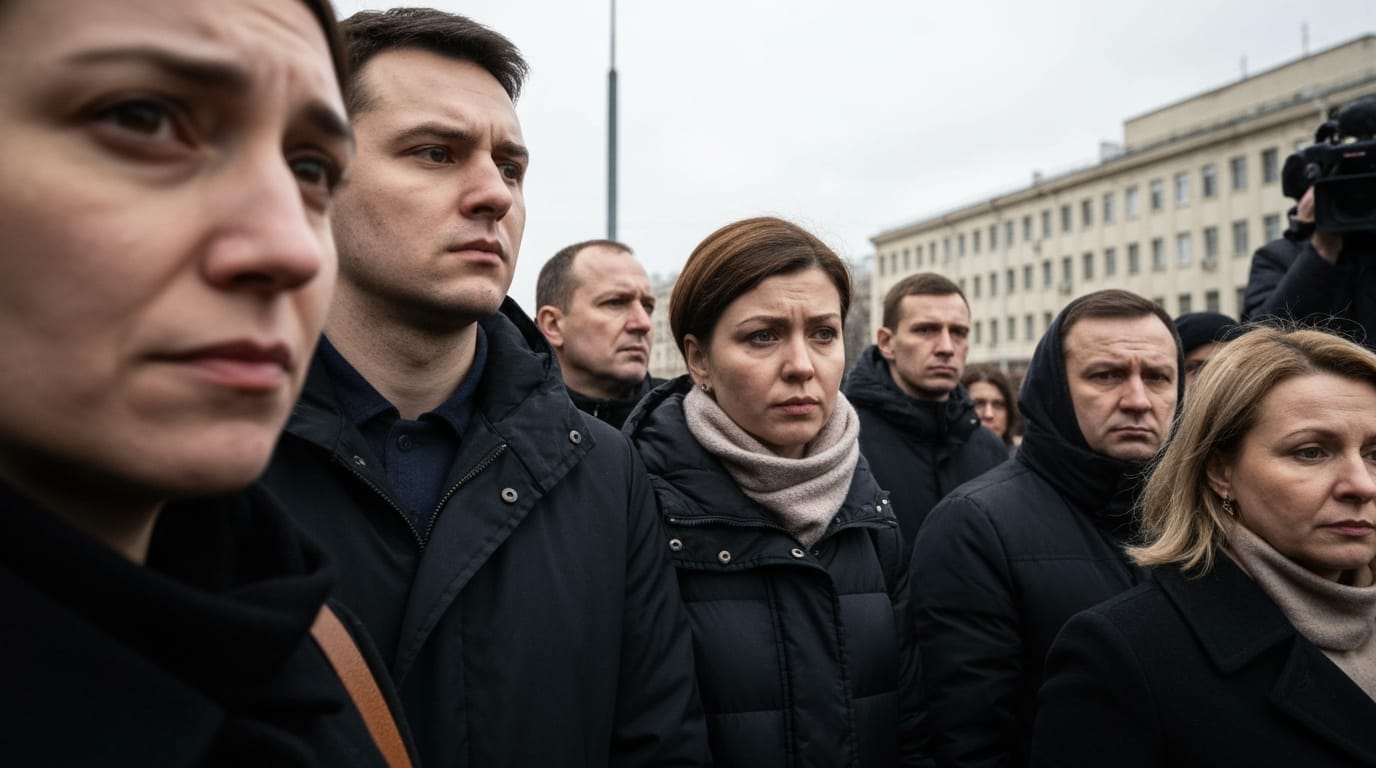
MOSCOW, Russia – Russia's Supreme Court on Thursday declared the internationally acclaimed human rights organization Memorial an "extremist" movement, a landmark ruling that effectively criminalizes its operations within the country and exposes its supporters to severe legal penalties. The decision marks a significant escalation in the Kremlin's years-long campaign against civil society and historical memory, targeting an organization founded to uncover the atrocities of the Soviet era and now recognized globally with the 2022 Nobel Peace Prize.
The Culmination of a Campaign: An 'Extremist' Label
The ruling, handed down following a closed hearing by Russia's Supreme Court on April 9, 2026, granted a request by the Ministry of Justice to classify the "International public movement Memorial" as extremist and ban its activities across the country. While Memorial itself clarified that the "International public movement Memorial" is a broad, non-existent legal entity, the court's vague wording allows authorities to target any affiliated organizations, projects, or individuals linked to its name. This new designation carries dire consequences, transforming support for Memorial into a criminal offense punishable by lengthy prison terms.
This "extremist" label is the latest and most severe step in a systematic crackdown that has relentlessly pressured Memorial and other independent groups. The organization's Human Rights Centre Memorial was first designated a "foreign agent" in May 2014, a pejorative label that imposes onerous reporting requirements and mandates disclaimers on all publications, including social media. Over the years, numerous other Memorial-related entities and approximately 20 of its staff members were similarly branded. In December 2021, Russian courts ordered the liquidation of International Memorial and its Human Rights Centre for alleged violations of the "foreign agent" law, effectively banning their domestic operations. Earlier this year, a newly formed international Memorial association based in Geneva, established by members in 2023, was declared "undesirable" by the Justice Ministry, exposing anyone involved with it to prosecution. The progression from "foreign agent" to "dissolved" to "undesirable" and now "extremist" illustrates an escalating pattern designed to isolate and eliminate independent civil society in Russia.
Memorial's Unyielding Commitment to Memory and Rights
Memorial was founded in 1987 during the final years of the Soviet Union, driven by the imperative to document and preserve the memory of victims of political repression, particularly those who perished in Stalin's Gulag system. Nobel Peace Prize laureate Andrei Sakharov was among its founders and first chairman, symbolizing its roots in the Soviet dissident movement. Over the decades, Memorial evolved into Russia's foremost organization for historical research and human rights advocacy, establishing the largest publicly available database of Gulag victims and uncovering details about the KGB and NKVD.
Beyond documenting historical abuses, Memorial actively campaigned for human rights in contemporary Russia. Its work extended to investigating and exposing violations in conflicts such as those in Chechnya and Syria, compiling lists of political prisoners, and advocating for the rights of those arbitrarily detained, including critics of the government and opponents of the war in Ukraine. As of 2026, the group documented over 1,000 political prisoners in Russian jails, a stark increase from 46 in 2015. This tireless dedication to justice, both historical and present, earned Memorial the Nobel Peace Prize in 2022, shared with Belarusian activist Ales Bialiatski and the Ukrainian Center for Civil Liberties.
Dire Consequences and a Chilling Effect on Dissent
The "extremist" designation carries profound and far-reaching implications. Any individual or organization that cooperates with Memorial's network, shares its content, or provides financial support now faces criminal prosecution. This extends beyond direct involvement; even referencing Memorial's materials without explicitly mentioning its "extremist" status can be prosecuted. The potential for long prison sentences casts a chilling shadow over any form of independent activity or historical inquiry in Russia.
In response to the ruling, Memorial's Human Rights Center announced the immediate suspension of all its direct operations within Russia. The organization stated this painful decision was necessary to protect its staff and volunteers from the state's "repressive apparatus." Despite the forced closure of its Russian legal entities, Memorial has affirmed its commitment to continuing its vital work from outside Russia. However, the designation complicates even this external activity, as it creates legal risks for anyone inside Russia who accesses Memorial's publications or attempts to support its work from abroad. This measure is widely seen as an attempt to erase Memorial's extensive archives of human rights violations from public discourse and to intimidate all forms of dissent into silence.
International Condemnation and a Broader Pattern of Repression
The decision to label Memorial as "extremist" has drawn sharp criticism and condemnation from the international community. Amnesty International called the move an arbitrary designation that "criminalizes human rights work itself." Denis Krivosheev, Amnesty International's Eastern Europe and Central Asia Deputy Regional Director, emphasized that Memorial's nearly 40 years of commitment have been crucial in ensuring that violations against millions, from Stalin's Gulag to contemporary conflicts, are not forgotten. The Norwegian Nobel Committee, which awarded Memorial the Nobel Peace Prize, condemned the actions as "an affront to the fundamental values of human dignity and freedom of expression" and urged Russia to cease its harassment of Memorial and its members.
Diplomats from several European nations, including France, Germany, Sweden, and the Czech Republic, attended the court hearing in a show of support for Memorial. The European Union's delegation to Russia characterized the Supreme Court's decision as a "politically motivated blow" that would ultimately fail to diminish the group's historical legacy. This move against Memorial is not an isolated incident but forms part of a broader, sustained effort by Russian authorities to suppress independent voices and organizations. The government has increasingly utilized "foreign agent" and "undesirable organization" laws, alongside "extremism" legislation, to target journalists, opposition figures, and human rights advocates, creating a climate where criticism of the state is increasingly perilous.
A Future for Memory and Rights from Exile
The designation of Memorial as an "extremist" organization represents a profound setback for human rights and historical truth in Russia. By targeting an organization dedicated to confronting the darkest chapters of its past, the Russian government appears intent on controlling historical narratives and stifling any independent scrutiny of state actions. Memorial's forced withdrawal from domestic operations means that critical work—documenting abuses, supporting victims, and educating the public—must now largely continue from exile.
Despite the monumental challenges, Memorial's leadership remains resolute. The organization has declared that it will persist in its mission to preserve memory and defend human rights, even if its work must be conducted remotely. This commitment underscores the enduring importance of its mission, even as the space for such work within Russia continues to shrink under escalating state pressure. The global community watches closely, acknowledging that the fight for historical truth and human dignity, once rooted firmly in Russia, now seeks new ground to continue its essential legacy.


