Hungarian Voters Seek EU Realignment Amidst Hardline Stance on Ukraine
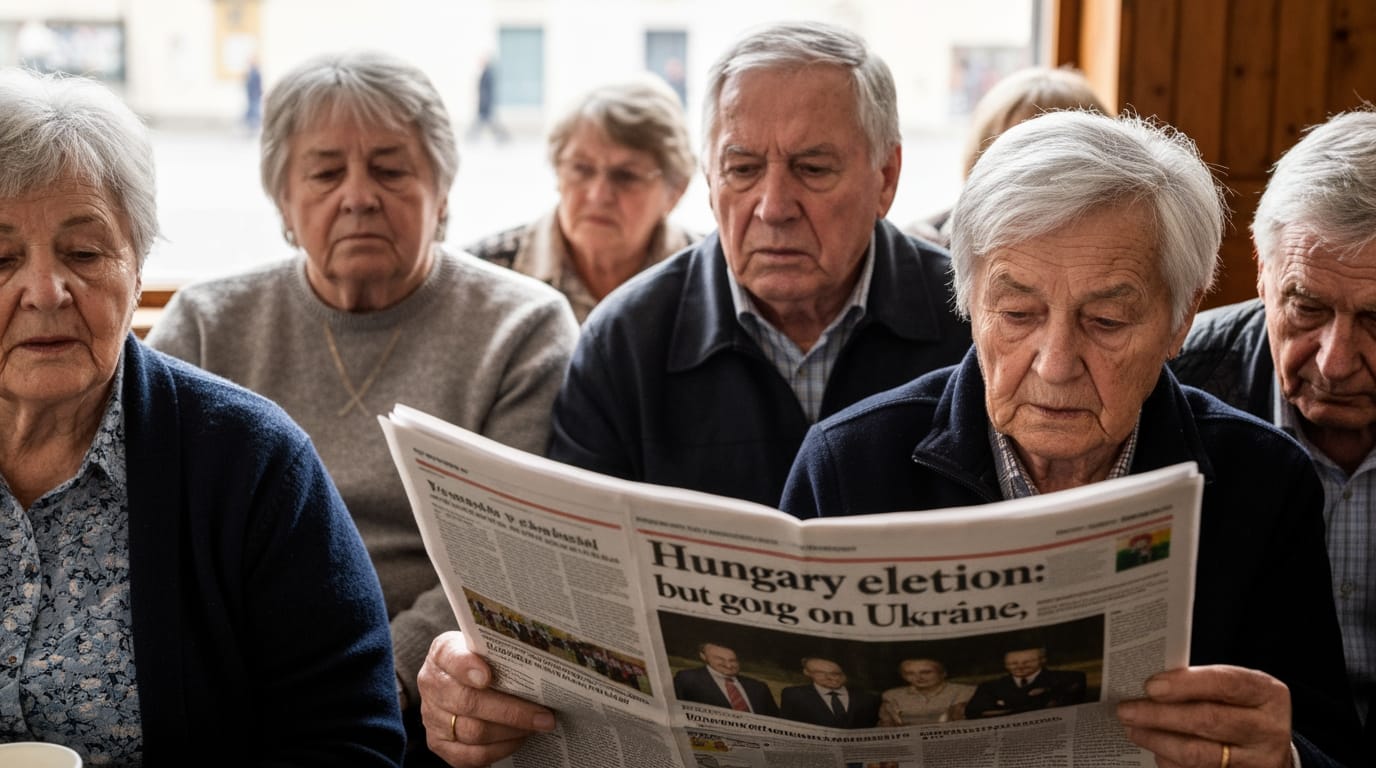
As Hungary approaches a pivotal election, recent polls reveal a nuanced and sometimes contradictory public sentiment: a strong desire for a revised approach to the European Union coupled with a firm, often skeptical, stance on Ukraine. This complex public opinion landscape is set to significantly shape the country's political trajectory and its intricate relationship with both Brussels and Kyiv.
Hungarian public discourse, heavily influenced by the ongoing conflict in Ukraine and continuous debates with the European Union, is currently characterized by a prevailing wish for change. While an overwhelming majority of Hungarians express continued support for the nation's membership in the EU, there is a discernible appetite for a different engagement strategy with the bloc. Simultaneously, voter sentiment indicates a hardened position against deeper involvement in the Ukrainian conflict, reflecting a desire to distance the country from the direct implications of the war.
Shifting Tides: Hungary's European Embrace with a Caveat
Despite years of rhetoric from the ruling Fidesz party that has often framed the European Union as an adversary, Hungarian citizens largely remain committed to the bloc. A survey by the European Council on Foreign Relations (ECFR) found that 77% of voters support EU membership, with three-quarters trusting the institution. Furthermore, a significant 68% desire at least some degree of change in Hungary's engagement with the EU. Another poll suggested that 43% of citizens believe the next government should adopt a "very different approach" to Hungary's position within the EU, with only 19% favoring the continuation of the current government's course. This indicates a public yearning for a more constructive, yet potentially redefined, relationship with Brussels. Even among Fidesz voters, opinions on Europe are split, with 45% open to minor or major changes in the country's EU approach.
The potential adoption of the euro currency also highlights this internal division. While 66% of Hungarians overall support joining the Eurozone, Fidesz voters are nearly evenly divided, with 46% opposing and 43% supporting the move. This demonstrates a pragmatic inclination among the populace that often transcends partisan lines when it comes to economic integration and stability.
The Unwavering Stance on Ukraine: A Nation Apart
The war in Ukraine has profoundly shaped Hungarian public opinion, fostering a pervasive desire for non-involvement and a critical view of military and financial aid to Kyiv. A substantial 86% of Hungarians disapprove of European or NATO military engagement in Ukraine, viewing the conflict primarily as a clash between major powers, namely the United States and Russia, unwilling to compromise. This sentiment remains largely unmoved by calls from European leaders for increased military support.
Regarding economic sanctions against Russia, a plurality of Hungarians (48%) believe these should be decreased, with only 8% advocating for an increase. A significant 75% prioritize maintaining access to Russian energy over taking a tough stance against Russia on Ukraine. This perspective is frequently echoed by the Hungarian government, which has consistently argued that EU sanctions harm European economies more than Russia's, leading to substantial job losses and a reduction in GDP across the continent. Hungarian Foreign Minister Péter Szijjártó has explicitly labeled the EU's sanctions policy a "big failure".
Public opinion on Ukraine's accession to the European Union further underscores Hungary's distinct position. Several polls indicate strong opposition to Ukraine joining the bloc, with Századvég reporting 71% against, and the Nézőpont Institute finding 67% opposition. The government's own "national consultations" controversially claimed 95% opposition. This strong resistance is partly attributed to an active government campaign against Ukraine's EU accession, which has seen opposition rise by six percentage points in some surveys. These figures contrast with a Republikon Institute poll showing a narrow majority (51% when undecided are excluded) supporting Ukraine's accession, though only 15% favor a fast-tracked process, with 32% preferring standard 7-10 year procedures. Politically, Fidesz voters largely oppose accession (82%, 83%), while voters of the opposition Tisza Party show more support (79% overall).
Political Implications and the Looming Election
The upcoming parliamentary elections, scheduled for April 12, are poised to be a critical juncture for Hungary. Prime Minister Viktor Orbán's Fidesz party faces a formidable challenge from Péter Magyar and his Tisza Party, with some polls even showing Tisza leading. This political contest is deeply intertwined with public sentiment regarding the EU and Ukraine.
Orbán's campaign strategy has heavily leveraged anti-Ukrainian rhetoric, portraying his country as being caught between "progressive forces" from the West and Ukraine from the East. Campaign billboards have featured images of Ukrainian President Volodymyr Zelenskyy alongside negative slogans, suggesting narratives of him "begging for money" or representing a "pro-war lobby" in Brussels. The government's consistent use of its veto power within the EU to delay aid packages for Ukraine and oppose sanctions on Russia has been a hallmark of its foreign policy. This approach resonates with a significant portion of the electorate, particularly Fidesz supporters, who are more likely to view Ukraine as a threat (45%) than Russia (11%).
However, the opposition Tisza Party's rise suggests that while the "tough on Ukraine" stance might be widely held, the desire for a better relationship with the EU is also a powerful factor. Tisza voters, for instance, are more likely to view Ukraine as a partner rather than an adversary, yet even they show skepticism about future financial aid for Kyiv and Ukraine's bid to join the EU.
A Deeper Look: Threat Perceptions and Regional Tensions
The sentiment among Hungarians extends to perceiving Ukraine as a notable threat. A Pew Research Center survey indicated that 33% of Hungarians view Russia as the most serious threat, but 27% consider Ukraine the second-greatest threat. This perception is arguably influenced by the government's consistent criticism of Kyiv and its opposition to Ukraine's EU accession. Unsurprisingly, this has led to deteriorating relations with Ukraine; a survey found that half of Ukrainians now consider Hungary a hostile nation, a 3% increase from March 2025.
This complex interplay of public opinion – favoring EU membership but critical of its foreign policy, especially regarding Ukraine – presents a challenging environment for any Hungarian government. The electoral outcome will not only determine Hungary's domestic political landscape but also its role within the European Union and its immediate neighborhood.
Conclusion: A Pivotal Moment for Hungarian Policy
The confluence of a desire for a new EU approach and a hardline stance on Ukraine positions Hungary at a critical crossroads. The upcoming election is more than a domestic political contest; it is a referendum on the country's future direction, both internally and externally. While Hungarian voters express a clear desire for stronger ties with the European Union and a departure from current antagonistic approaches, their skepticism towards Ukraine and Russian sanctions remains a potent force. The challenge for any incoming government will be to navigate these complex and often conflicting public sentiments, crafting policies that can address the public's desire for stability and economic well-being while redefining Hungary's role on the European and global stages. The results of the election will undoubtedly have profound implications not only for Hungary but for the delicate balance of power and alliances across Europe.


