Germany Grapples with Tightened Purse Strings as Geopolitical Turmoil Shadows 2027 Budget
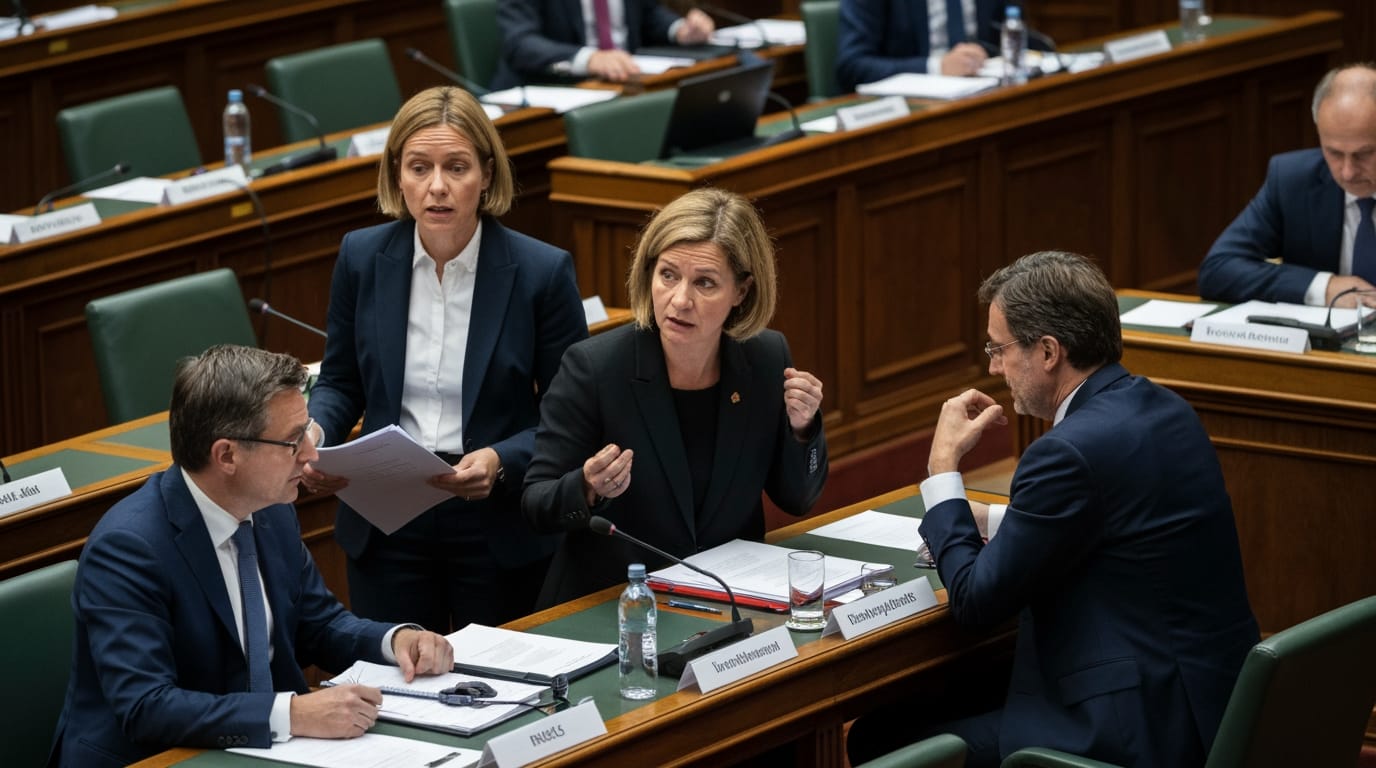
BERLIN – The German cabinet is locked in critical discussions this week over the nation's 2027 budget, a fiscal blueprint that reveals the profound economic fallout from escalating geopolitical tensions, particularly the ongoing conflict in the Middle East. With projections of significantly reduced growth, surging inflation, and an ambitious push for increased defense spending, Germany's financial planners face the daunting task of balancing domestic priorities against a backdrop of global instability. The delicate negotiations underscore a pivotal moment for Europe's largest economy as it navigates a complex interplay of international crises and pressing internal demands.
Economic Headwinds Intensify Amidst Middle East Conflict
Germany's economic landscape, already weakened by post-pandemic challenges, has been significantly strained by the "Iran war" and broader Middle East tensions. The conflict has triggered a sharp rise in global oil and gas prices, disrupted crucial supply chains, particularly through the Strait of Hormuz, and injected substantial uncertainty into international trade. The German economy ministry recently halved its growth forecast for 2026 to a modest 0.5% from an earlier projection of 1.0%, while the 2027 outlook was similarly cut to 0.9% from 1.3%. This revised outlook, echoed by leading economic institutes, reflects a sobering reality for a nation traditionally reliant on its export-driven model.
Economy Minister Katherina Reiche acknowledged that the escalation in the Middle East has "set us back economically" and that "the shock has hit the structurally weakened German economy hard once again." The inflationary pressures are particularly acute, with forecasts predicting inflation rates of 2.7% in 2026 and 2.8% in 2027, primarily driven by the elevated costs of energy and raw materials. A survey conducted by Munich's Institute for Economic Research highlighted the widespread concern among German manufacturers, with 90% bracing for negative impacts. The survey found 78% of businesses already experiencing rising energy prices, 36% contending with blocked shipping routes, and nearly a quarter anticipating shrinking export demand. Despite Germany's non-involvement in the direct conflict, Finance Minister Lars Klingbeil conceded that its economic ramifications are undeniably clear.
The 2027 Budget: A Balancing Act of Spending and Debt
The draft budget for 2027, part of a broader medium-term financial framework extending to 2029, outlines total planned spending of 543.3 billion euros, marking a 3.6% increase over the previous year. However, this spending spree is accompanied by a significant increase in borrowing. Total government borrowing is projected to reach 196.5 billion euros in 2027, a stark contrast to the 50.5 billion euros borrowed in 2024. New borrowing in the core budget alone is anticipated to be 110.8 billion euros.
This substantial increase in debt is facilitated, in part, by special funds that operate outside Germany's constitutionally mandated "debt brake" – a rule limiting new borrowing to 0.35% of the Gross Domestic Product. These special funds, notably a 500 billion euro infrastructure fund and a separate allocation for defense spending, allow the government to finance large-scale investments without directly violating the fiscal rule. Despite these mechanisms, the 2027 budget faces an estimated deficit exceeding 20 billion euros, with projections indicating potential shortfalls rising to over 60 billion euros in subsequent fiscal years. This situation has ignited intense debate within the ruling coalition, with some advocating for stringent fiscal consolidation, while others push for additional borrowing to stimulate growth and address critical needs.
Resurgent Defense Spending Takes Center Stage
A defining feature of the 2027 budget is Germany's dramatic acceleration in defense spending, marking an unprecedented rearmament drive since the Cold War era. Total defense expenditure, including a special fund and aid to Ukraine, is planned to reach 144.9 billion euros in 2027. This represents a significant jump from 82.7 billion euros in the core defense budget for 2026. Germany is now aiming to exceed NATO's target of spending 2% of GDP on defense, with projections reaching 3.1% of GDP in 2027 and potentially 3.7% by 2030.
This shift is driven by a confluence of factors, including the ongoing war in Ukraine, concerns about an increasingly assertive Russia, and anxieties regarding the reliability of the United States as a security partner, particularly following the return of Donald Trump to the White House. Chancellor Friedrich Merz has publicly committed to transforming the Bundeswehr into "Europe's largest conventional army," reflecting a profound change in Germany's post-war security posture. In addition to bolstering its own military capabilities, Germany plans to provide 11.6 billion euros in aid to Ukraine in 2027.
Navigating Domestic Priorities and Future Investments
Beyond defense, the 2027 budget also earmarks substantial investment in critical domestic infrastructure. The 500 billion euro infrastructure fund will target improvements in transport networks, digitalization initiatives, and hospital infrastructure, addressing years of underinvestment in these crucial areas. However, the constrained fiscal environment is intensifying competition for resources across various sectors. UNICEF patroness Elke Büdenbender has publicly appealed for the continued prioritization of development funding, emphasizing Germany's role in a global network and warning against potential cuts.
To mitigate the growing budget deficit, the government is also exploring new revenue streams, including a proposed sugar tax. This measure, expected to be introduced as part of the 2027 budget, aims to generate additional funds by taxing sweetened beverages. Simultaneously, there are calls for ambitious fiscal consolidation efforts, such as implementing staffing reductions across federal institutions, to achieve transparent savings and manage rising deficits.
Conclusion: A Nation at a Crossroads
The German cabinet's deliberations over the 2027 budget are more than just a routine financial exercise; they represent a critical juncture for the nation. Confronted by an uncertain global economy, fueled by the far-reaching consequences of the Middle East conflict, and committed to a historic reorientation of its defense policy, Germany faces difficult trade-offs. The balancing act between strengthening national security, revitalizing a struggling economy, and maintaining essential social and infrastructure investments will define the government's fiscal strategy for the years to come. The decisions made in these budget discussions will have profound implications not only for Germany's domestic stability and prosperity but also for its role and influence on the international stage.


