Hungary's New Leader Seeks Fresh Start with EU Amidst Critical Fund Talks
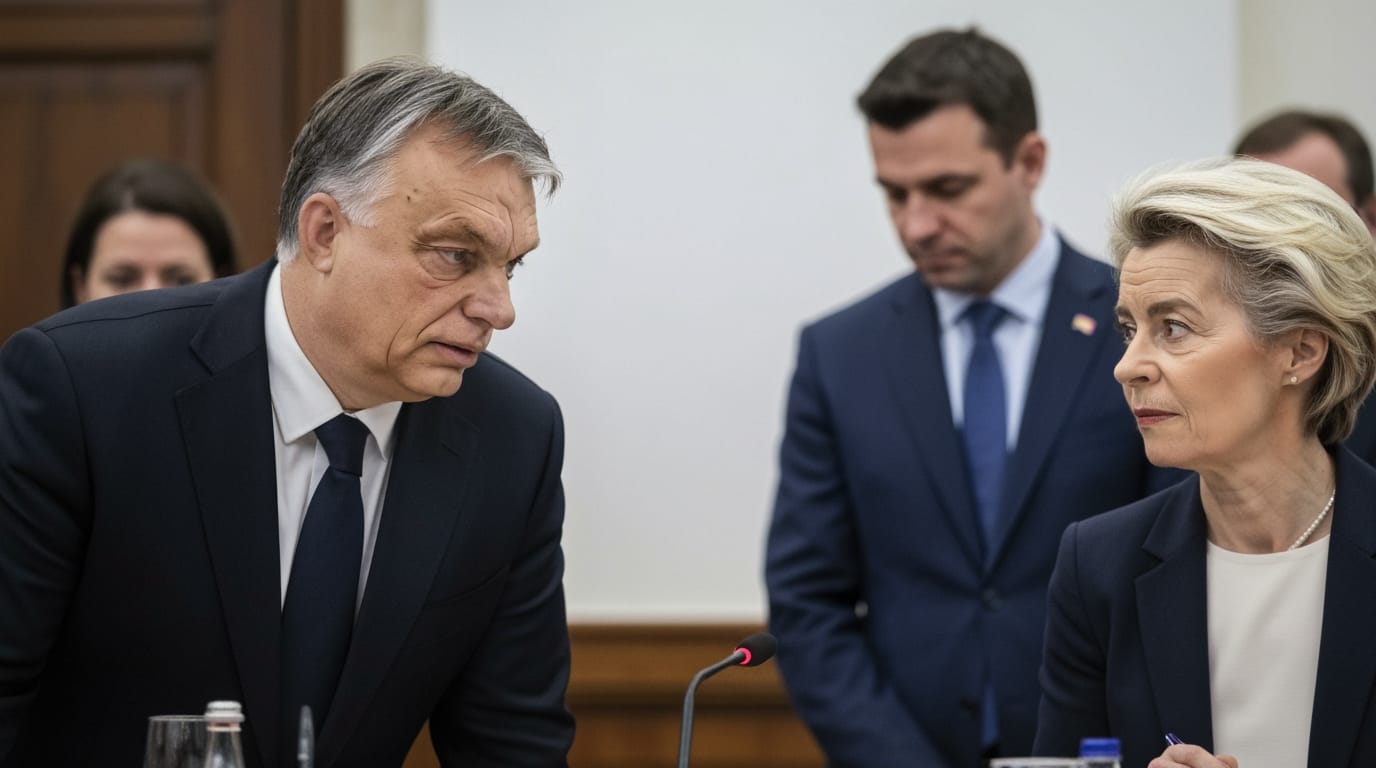
Brussels, Belgium – In a pivotal moment for Hungary's relationship with the European Union, Péter Magyar, the nation's incoming prime minister, arrived in Brussels today for high-stakes informal discussions with European Commission President Ursula von der Leyen. The meeting, heralded as a potential turning point, centers on unlocking billions of euros in EU funds that have been frozen due to long-standing disputes over rule of law concerns under the previous Hungarian administration. Magyar's visit signals a decisive shift in Budapest's approach to its European partners following his recent landslide electoral victory.
A New Dawn for Hungary-EU Relations
Péter Magyar, leader of the center-right Tisza Party, secured a supermajority in the April 12 election, bringing an end to Viktor Orbán's 16-year tenure as prime minister. This victory has been widely interpreted as a mandate for change, particularly regarding Hungary's often-contentious relationship with Brussels. Magyar's immediate outreach to the EU leadership underscores his commitment to mending these ties and restoring trust. He has publicly stated that "there is no time to waste" in addressing the issue of frozen funds, highlighting the urgency of the situation for Hungary's economy.
Ursula von der Leyen, serving as President of the European Commission since 2019 and recently re-elected for a second mandate, heads the EU's executive branch. Her role involves setting the Commission's policy agenda, representing the EU internationally, and ensuring the application of EU treaties. Her engagement with Magyar indicates the EU's readiness to explore a new chapter with Hungary, provided the incoming government demonstrates a clear commitment to European values and principles. Von der Leyen reportedly congratulated Magyar on election night and noted that Hungary had "returned to the heart of Europe."
The Sticking Point: Frozen Billions and Rule of Law
At the core of the discussions are approximately 18 billion euros in EU funds withheld from Hungary since 2022. These funds include 10.4 billion euros from the Recovery and Resilience Facility, which faces an August-end deadline for access, and 7.4 billion euros in cohesion funds. The European Commission froze these amounts over concerns regarding judicial independence, anti-corruption safeguards, and the state of media and academic freedoms in Hungary under the Orbán government.
The previous administration frequently clashed with the EU over issues such as judicial independence, migration policies, and LGBTQ+ rights, leading to legal actions by the Commission. These disputes resulted in significant financial repercussions for Hungary, with reports indicating the country has already forfeited over 2 billion euros due to missed deadlines. Magyar's administration faces immense pressure to resolve these issues and secure the remaining funds, which are deemed crucial for stabilizing Hungary's economy, which has experienced stagnation for the past three years.
Magyar's Mandate and Proposed Reforms
Péter Magyar, a former Fidesz insider and diplomat, emerged as a prominent opposition figure in early 2024 following a government scandal. His platform, centered on transparency, rooting out corruption, and strengthening Hungary's pro-EU orientation, resonated with voters disillusioned by the previous government's policies. His Tisza Party's supermajority provides him with the legislative power to enact significant reforms to judicial, public tendering, and media control laws—areas that were central to the disputes with Brussels.
Magyar has outlined key areas for swift action, including battling corruption and restoring media and academic freedoms, to avoid the loss of the EU's pandemic recovery funding. His victory has already spurred a rally in financial markets and a surge in the Hungarian forint, reflecting optimism that the new leadership will successfully unblock the frozen funds. Beyond the immediate financial concerns, Magyar has also pledged to rebuild Hungary's standing within NATO and the EU, although his stance on certain foreign policy issues, such as arms shipments to Ukraine, shares some commonalities with his predecessor, albeit without the same hostile rhetoric.
Implications for the European Union
The meeting between Magyar and von der Leyen carries significant implications not only for Hungary but also for the broader European Union. The resolution of the rule of law disputes with Hungary could set a precedent for how the EU handles similar challenges with other member states. The previous Hungarian government, under Orbán, often acted as a dissenting voice within the EU, at times blocking or softening collective European responses on sensitive issues, including those related to China and Russia.
Magyar's stated commitment to a more cooperative, pro-European approach offers the prospect of a more unified EU, particularly as the bloc navigates complex geopolitical challenges. The EU's conditionality mechanism, designed to safeguard its core values, will be under scrutiny as it seeks to balance punitive measures with constructive engagement to bring member states back into alignment. The outcome of these discussions could determine the extent of Hungary's reintegration into mainstream European politics and its ability to fully leverage the benefits of EU membership.
Conclusion
Péter Magyar's high-profile visit to Brussels and his meeting with Ursula von der Leyen represent a critical juncture for Hungary and the European Union. With billions of euros in frozen funds at stake and a clear mandate for reform, Magyar is poised to steer Hungary onto a new trajectory, one that prioritizes cooperation and adherence to European principles. The success of these informal talks and the subsequent implementation of reforms will be vital in re-establishing trust, unlocking much-needed financial resources, and potentially reshaping the dynamics within the EU for years to come. The coming months will reveal whether this new chapter marks a genuine and lasting rapprochement between Budapest and Brussels.


