Germany Grapples with Unprecedented Surge in Suspicious Drone Activity
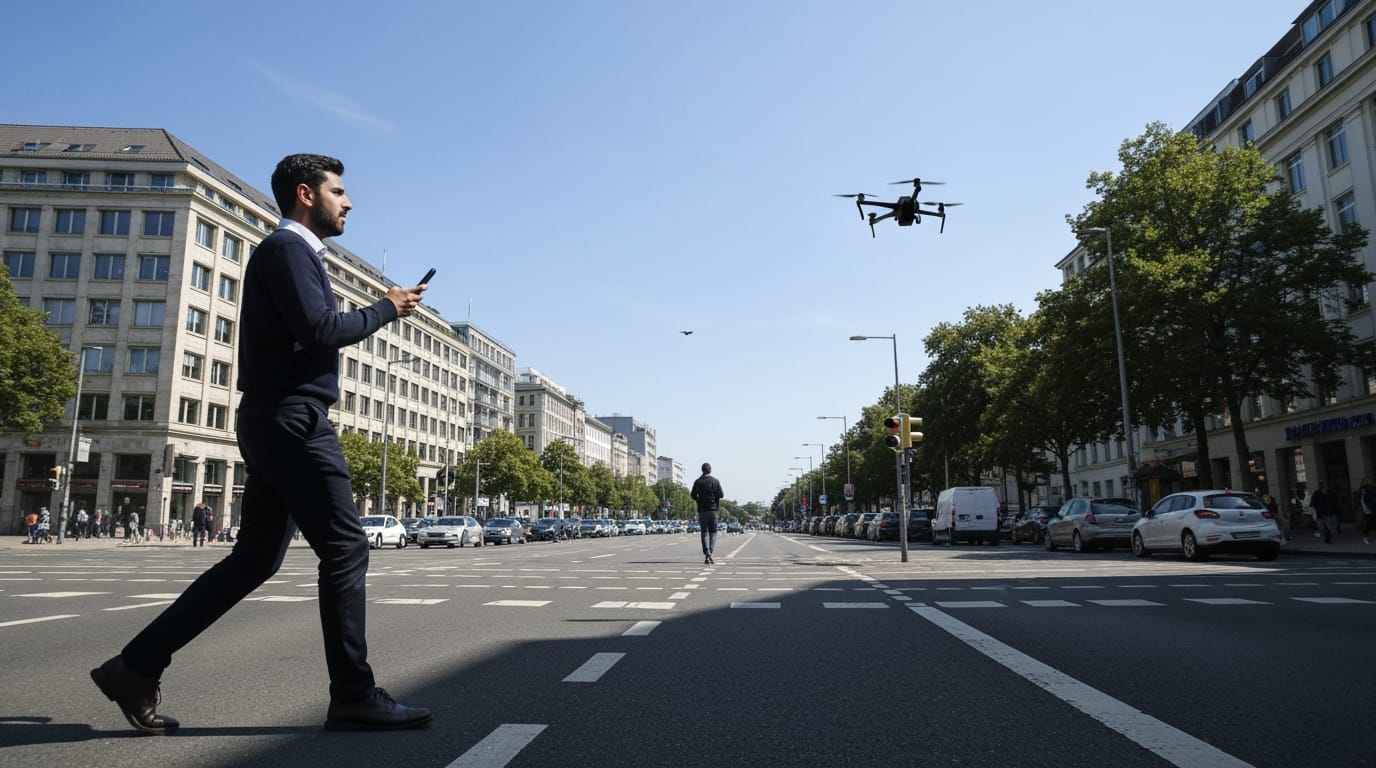
BERLIN – Germany has been confronted with a significant and escalating national security challenge in 2025, recording more than 1,000 incidents of suspicious drone flights across the country. This unprecedented surge in unauthorized aerial activity, averaging approximately three incidents daily, has raised alarms among security agencies and government officials, prompting a robust and multi-faceted response to protect critical infrastructure, military installations, and civilian airspace. The proliferation of unidentified unmanned aerial vehicles (UAVs) has led to widespread disruptions, particularly at major airports, and ignited concerns about potential espionage and hybrid warfare tactics on German soil.
Escalating Aerial Intrusion: The Scope of Germany's Drone Challenge
The sheer volume of suspicious drone sightings marks a dramatic increase, with classified Federal Criminal Police Office (BKA) reports indicating 1,072 incidents involving 1,955 drones as of mid-November 2025 alone. These aerial incursions have not been confined to isolated areas but have rather targeted a broad spectrum of sensitive locations. Military bases and training areas, including the Schwesing air base where Ukrainian forces receive training, have been frequent points of interest for these drones. Beyond military sites, the unauthorized flights have extended to critical civilian infrastructure such as airports, power facilities, hospitals, canals, and armaments factories, highlighting a widespread vulnerability.
The impact on daily life and economic activity has been substantial. Munich Airport, one of Germany's busiest hubs, experienced significant disruptions in early October, including multiple overnight closures. These incidents led to the cancellation and diversion of dozens of flights, stranding an estimated 10,000 passengers and resulting in economic damages between 6 to 8 million euros. Similar incidents have also been reported at airports in Frankfurt and Berlin, further underscoring the severity of the threat to aviation safety. Despite intensified monitoring efforts, including biweekly reporting on drone sightings by the Interior Ministry, authorities have struggled to identify the perpetrators behind the majority of these incidents. Out of 498 investigated cases, only 29 drone pilots were identified, none of whom were state actors, and in 88% of cases, the type of drone used remained unknown.
The Shadow of Espionage and Hybrid Warfare
The nature and frequency of these suspicious flights have led German intelligence services and top government officials to theorize about more sinister motives. Chancellor Friedrich Merz and Interior Minister Alexander Dobrindt have openly suggested a possible link between the drone activity and hostile foreign powers, specifically Russia. Officials believe these incidents could be part of broader hybrid warfare tactics, encompassing espionage, reconnaissance, and deliberate efforts to disrupt critical infrastructure and unsettle the public. Some speculation has even connected the drone activity to ongoing international discussions regarding the use of frozen Russian assets in Belgium to finance loans to Ukraine, an assertion that Russia has consistently denied.
The drones observed have varied from small commercial models readily available to the public to more sophisticated, military-grade reconnaissance UAVs, particularly noted during the Munich Airport disruptions. The capability of these devices to operate undetected and the difficulty in identifying their operators underscore a significant intelligence challenge for German security services. The German military has acknowledged an increase in "alleged espionage attempts" but also cautions that some incidents might involve private individuals flying drones without considering the severe security implications. Nevertheless, the pattern of flights over sensitive sites suggests a coordinated and deliberate strategy in many cases.
Fortifying the Skies: Germany's Robust Response
In response to the escalating threat, the German government has enacted a series of urgent measures aimed at bolstering national security and improving counter-drone capabilities. A pivotal legislative step was taken in October 2025 when the German cabinet approved a draft law empowering police to shoot down drones posing an immediate threat. This legislative initiative, which awaits parliamentary approval, aligns Germany with other European nations such as France and the United Kingdom, which have already granted their security forces similar authorities. Interior Minister Alexander Dobrindt emphasized that this new legislation clarifies the responsibilities between police and military, with police authorized to handle smaller drones and the Bundeswehr (armed forces) tasked with addressing larger, more powerful machines.
Beyond legislative changes, Germany has invested significantly in new organizational structures and technological advancements. A dedicated federal counter-drone unit has been established within the federal police, slated to comprise over 130 officers. Furthermore, Germany inaugurated a Joint Drone Defence Centre (GDAZ) in Berlin in December 2025, with operations commencing in January. This center is designed to enhance coordination and information sharing among federal and state police forces, military, and intelligence agencies, creating a centralized data pool to develop predictive models and counter potential aggressor strategies. The government has allocated more than €100 million for current and upcoming years to equip these units with advanced counter-drone technology, including specialized sensors, radar systems, and jamming devices capable of detecting, tracking, and disrupting hostile drone signals.
The Path Forward: Technology, Legislation, and International Cooperation
The challenge of securing airspace against malicious drone activity is not unique to Germany, with similar incidents reported across Europe in 2025, disrupting airports in Denmark, Norway, and Sweden. Recognizing the transnational nature of this threat, Germany is actively engaging in international cooperation. The newly formed counter-drone unit is consulting with Ukraine and Israel, leveraging their extensive experience in both drone technology and counter-drone strategies.
Moreover, Germany is participating in initiatives like Project Flytrap 4.5, a U.S.-led program held in Germany in November 2025, focused on testing and evaluating cutting-edge counter-drone technologies for integration into Allied air defense systems. This collaborative approach underscores a commitment to developing scalable and efficient solutions for drone detection and neutralization. Efforts are also underway by German defense companies, such as Rheinmetall, to test advanced systems like Skyspotter, which utilizes 30mm revolver cannons and programmable ammunition to kinetically destroy drone swarms, demonstrating a focus on both soft kill (jamming) and hard kill (physical destruction) capabilities.
Existing drone regulations in Germany, which include mandatory operator registration, electronic identification, and liability insurance for most drones, aim to ensure responsible use. However, the recent incidents highlight the limitations of these regulations against determined malicious actors. The ongoing legislative and technological advancements reflect Germany's determination to maintain sovereignty over its airspace and protect its citizens and critical infrastructure from the evolving threat posed by unmanned aerial systems.
Conclusion
The year 2025 has brought to the forefront a critical security challenge for Germany, marked by an unprecedented number of suspicious drone flights. These intrusions have exposed vulnerabilities in national security, causing significant disruptions and raising serious concerns about foreign-backed espionage and hybrid attacks. Germany's response has been swift and comprehensive, involving new legislation, the establishment of specialized counter-drone units, substantial investments in advanced technology, and enhanced international cooperation. As the nature of aerial threats continues to evolve, Germany's concerted efforts represent a determined stance to fortify its skies and safeguard its strategic interests against this modern and complex security landscape.


