Germany Mourns Political Giant Wolfgang Schäuble with State Honors
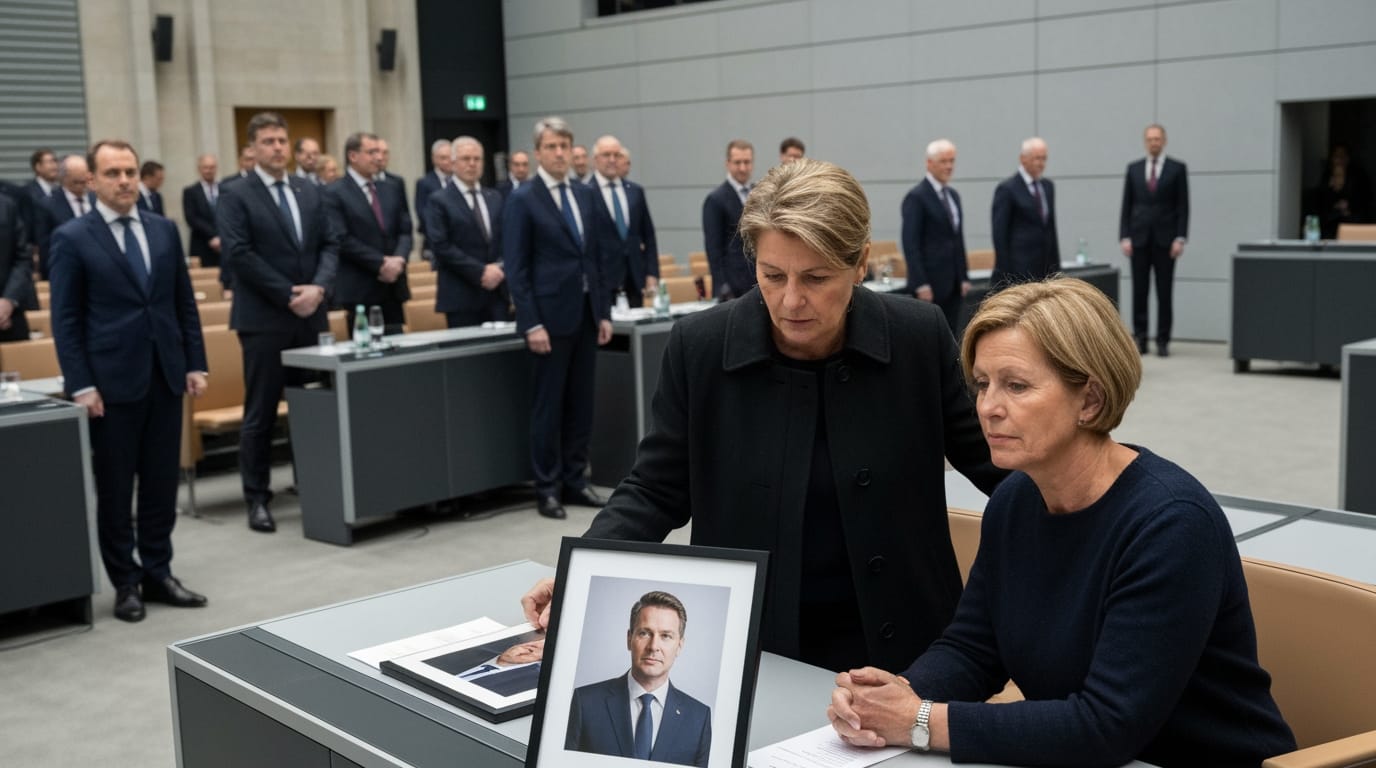
Berlin, Germany – The German Bundestag recently held a solemn state memorial ceremony to honor the enduring legacy of Dr. Wolfgang Schäuble, who passed away on December 26, 2023, at the age of 81. The former President of the Bundestag and one of Germany's most influential post-war politicians was remembered for a career spanning more than five decades, profoundly shaping the nation's political landscape and its role in Europe. The ceremony, held on January 22, 2024, underscored his monumental contributions to German unity and European integration.
The tribute, orchestrated by order of Federal President Frank-Walter Steinmeier, brought together Germany's political elite, international dignitaries, and Schäuble's family to reflect on a life dedicated to public service. The date of the memorial, January 22, was chosen to coincide with the anniversary of the 1963 Elysée Agreement, a poignant nod to Schäuble's unwavering commitment to German-French friendship and the broader European project.
A Fond Farewell from the Bundestag
The hallowed halls of the Reichstag building served as the backdrop for the state memorial, an honor reserved for individuals who have rendered outstanding services to the German people. Bundestag President Bärbel Bas opened the proceedings, her address setting a tone of profound respect and gratitude. She eulogized Schäuble as an "extraordinary parliamentarian" and a "great democrat and statesman," emphasizing his unique ability to foster constructive debate. Bas highlighted his vital role in overcoming German division and his steadfast defense of parliamentary dignity during times of increasing societal and political polarization.
Friedrich Merz, chairman of the CDU/CSU parliamentary group, delivered a personal and moving speech, acknowledging Schäuble as a mentor and a towering figure within the Christian Democratic Union. Merz spoke of Schäuble's relentless commitment to his convictions, even when it provoked disagreement, and his willingness to compromise in the interest of Europe. A notable highlight was the address by French President Emmanuel Macron, who delivered parts of his speech in German. Macron praised Schäuble as a "statesman," a "pillar" for Europe, and a "special friend" to France, underscoring the deep trust and friendship he fostered between the two nations. Macron observed that the very presence of a Frenchman speaking in the Bundestag was a testament to Schäuble's efforts towards reconciliation and European unity.
Five Decades of Uninterrupted Service
Wolfgang Schäuble's political journey began in 1961 when he joined the Junge Union, the youth wing of the CDU. By 1972, he had secured his first seat in the Bundestag, representing the constituency of Offenburg, a mandate he held continuously until his death. This unbroken tenure of 51 years made him the longest-serving member of any democratic German parliament, a record that surpasses even historical figures like August Bebel. His career spanned the terms of every German Chancellor since Konrad Adenauer, illustrating his unparalleled experience and influence.
Throughout his extensive career, Schäuble held numerous high-profile ministerial positions. He served as Minister for Special Affairs and Head of the Chancellery from 1984 to 1989 under Chancellor Helmut Kohl. His pivotal role came as Minister of the Interior from 1989 to 1991, during which he was instrumental in negotiating the Unification Treaty with East Germany, a landmark achievement that earned him the moniker "architect of German unity."
Architect of Unity and Guardian of Stability
Schäuble's contributions extended far beyond reunification. His tenure as Minister of the Interior also saw him champion the move of the German capital from Bonn to Berlin, a decision he passionately advocated for in a historic Bundestag debate in 1991. Later, he became a central figure in Angela Merkel's governments, serving as Minister of the Interior again from 2005 to 2009, and most notably, as Minister of Finance from 2009 to 2017.
During the tumultuous Eurozone crisis, Schäuble earned an international reputation as "Germany's second most powerful person" and "Mr. Austerity" for his firm stance on fiscal discipline and his insistence on austerity policies across Southern European nations. While often controversial, his policies were credited with steering Germany and Europe through the financial crisis and stabilizing the euro. Even in opposition, Schäuble remained a key voice, focusing on foreign and security policy.
A Legacy Forged Through Adversity
Schäuble's life was also marked by a profound personal challenge. In 1990, just after German reunification, he was the target of an assassination attempt that left him paralyzed and reliant on a wheelchair. Despite this devastating event, he displayed an "iron will" and returned to his ministerial duties within weeks, demonstrating remarkable resilience and dedication. This experience, far from hindering his career, cemented his image as a politician of immense strength and resolve, earning him widespread respect across the political spectrum.
From 2017 to 2021, Schäuble held the esteemed position of President of the Bundestag, where he was celebrated for his intellectual acuity and his commitment to parliamentary debate. He encouraged vigorous but respectful discourse, famously stating, "Dispute is the salt of democracy." His guidance was crucial during a period of increasing societal and parliamentary polarization, as he consistently defended the dignity of the house against attempts to play the public against its representatives.
An Enduring Influence
Wolfgang Schäuble's death marks the end of an era for German politics. He was a figure of immense stature, whose career spanned the Cold War, reunification, and the challenges of a unified Europe. His impact is seen in the very foundations of modern Germany and its standing on the international stage. His unwavering commitment to democratic principles, European integration, and fiscal responsibility leaves an indelible mark. The state memorial ceremony was not just a farewell, but a powerful affirmation of his lasting influence and his place as one of the Federal Republic's most significant architects and defenders. His vision, experience, and sharp intellect will be deeply missed in the ongoing dialogues about Germany's future.


