Germany on the Cusp of a Historic First: The Path to a Female Head of State
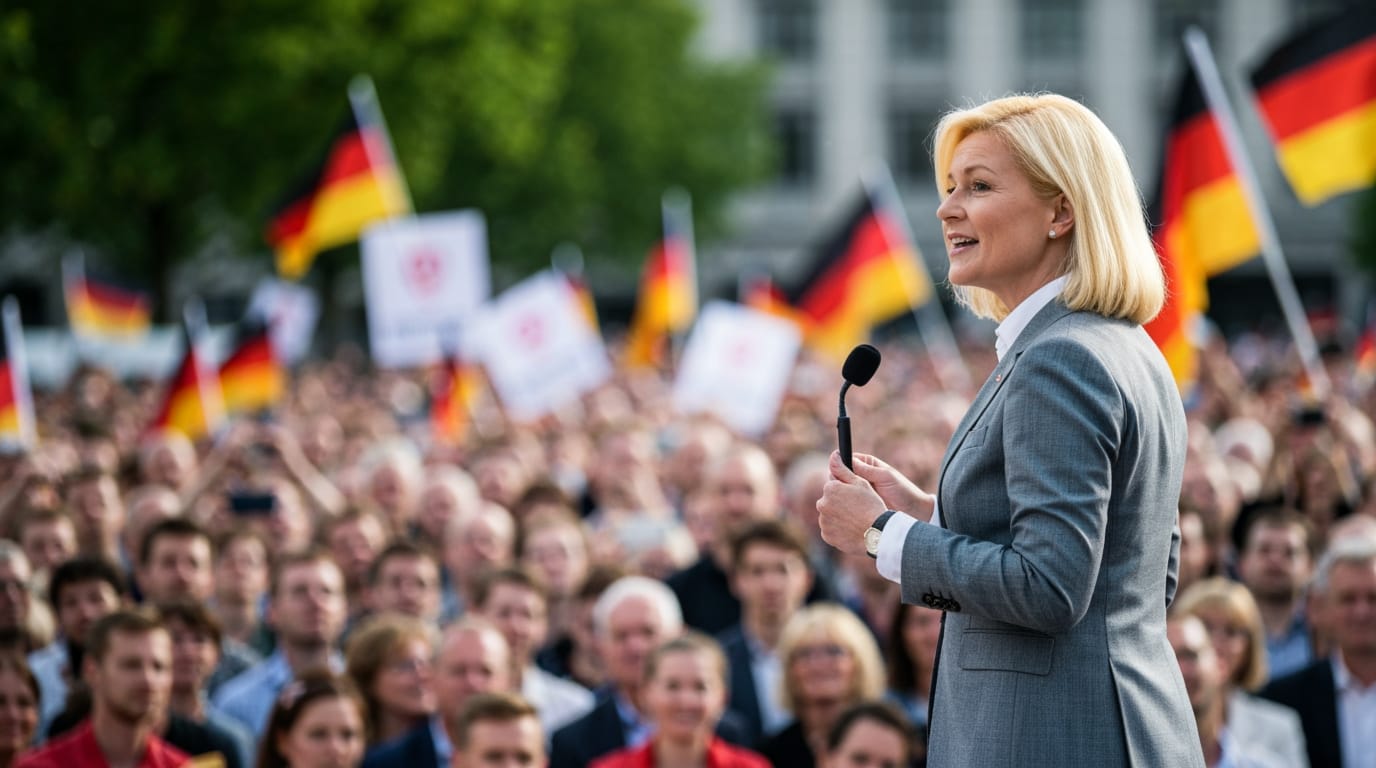
Germany stands at a potentially historic juncture as discussions intensify regarding the selection of its next Federal President in 2027. For the first time in its history, the nation could elect a woman to the largely ceremonial yet deeply symbolic role of head of state, marking a significant milestone in its political evolution. This prospect is gaining traction within political circles, fueled by prominent figures openly advocating for a female candidate and the consideration of highly experienced women for the position.
The Distinction of Power: Chancellor vs. President
To understand the full weight of this potential shift, it is crucial to distinguish between Germany's two highest offices: the Federal Chancellor and the Federal President. While the Chancellor serves as the head of government, wielding significant executive power and driving policy, the President acts as the head of state, primarily embodying the nation, upholding its constitution, and performing representative duties. Germany has already seen a woman, Angela Merkel, serve an unprecedented 16 years as Chancellor, a tenure that underscored the country's readiness for female leadership at the highest governmental levels. However, the presidency, a position occupied by a succession of men since the Federal Republic's founding, remains a barrier yet to be broken by a woman. The Federal President, elected for a five-year term, is tasked with uniting the populace and representing Germany on the global stage.
The Path to Bellevue Palace: How Germany Elects its President
Unlike the Chancellor, who is elected by the Bundestag, the Federal President is chosen by a unique electoral body known as the Federal Convention (Bundesversammlung). This assembly convenes specifically for the presidential election and comprises all members of the Bundestag alongside an equal number of delegates selected by Germany's 16 state parliaments. These state delegates are not necessarily politicians; they can include distinguished figures from civil society, academia, business, or culture, adding a layer of broad societal representation to the process. For a candidate to secure the presidency, an absolute majority of votes from the Federal Convention members is required in either the first or second ballot. Should these rounds fail to produce a winner, a third ballot allows for election by a simple relative majority. Any German citizen aged 40 or older who is eligible to vote in Bundestag elections is eligible to be elected Federal President. This indirect electoral system means that cross-party consensus and strategic nominations are paramount, often prioritizing a candidate's ability to unite disparate political factions and the broader public.
Prominent Figures and Political Momentum
As the 2027 presidential election draws nearer, political discussions are increasingly centering on the prospect of a female head of state. Ursula von der Leyen, currently serving as the President of the European Commission, is frequently cited as a leading contender. Her extensive political career includes serving as Germany's first female Defense Minister and her current influential role at the helm of the European Union's executive body. Some political observers suggest that the German presidency could be an attractive next step for von der Leyen, potentially making her the first woman in German history to hold this prestigious office. The discussion around her candidacy indicates a strong political will to see a woman in the role. Beyond von der Leyen, other notable female politicians such as Julia Klöckner, Karin Prien, and Ilse Aigner have also been mentioned in early considerations for the presidency. The sentiment for a female president is not confined to speculation; statements from influential political leaders reflect a deliberate push. Friedrich Merz, reportedly German Chancellor in August 2025 according to some outlets, has acknowledged the idea of a female president, stating, "That would be good". Similarly, SPD's Lars Klingbeil, in his capacity as Vice Chancellor and Finance Minister, has explicitly voiced a strong preference for a female candidate, asserting that it is "höchste Zeit" (high time) for a woman to hold Germany's highest state office.
Beyond Party Lines: The Evolving Criteria for Leadership
An emerging theme in the discussions surrounding the next presidential election is a potential shift away from selecting traditional career politicians. There is a growing inclination towards candidates "who are not strongly rooted in party politics" and who possess the ability to "bring people together" and "stand for what is common" to the country. This emphasis on unifying, non-partisan figures could open avenues for women from diverse backgrounds, including civil society, academia, or business, to be considered for the presidency. Such a selection would send a powerful signal about German democracy's capacity for renewal while maintaining institutional continuity, aligning with broader European trends towards diversifying top leadership positions. While the broader landscape of German politics has recently shown a slight decrease in women's representation in the Bundestag, partly due to shifts in political majorities and electoral reforms, the specific discussion surrounding the presidency appears to be carving out a different trajectory. The deliberate focus on finding a unifying figure, coupled with the explicit desire for a female president, suggests a strategic effort to overcome traditional hurdles and embrace modern leadership criteria for the head of state.
A Historical Juncture
The convergence of political will, the availability of highly qualified female candidates, and an evolving public discourse points towards 2027 as a genuinely historical moment for Germany. The election of a woman as Federal President would not merely be a symbolic gesture but a profound affirmation of gender equality at the pinnacle of national representation. It would build upon the legacy of female leadership established by Angela Merkel's chancellorship, extending it to the nation's symbolic head. As Germany looks ahead, the prospect of its first female head of state reflects a nation ready to embrace a new chapter in its democratic journey, reinforcing its commitment to diverse and unifying leadership in an increasingly complex world.


