Germany Rejects Trump's 'Board of Peace' Amid Escalating Transatlantic Tensions
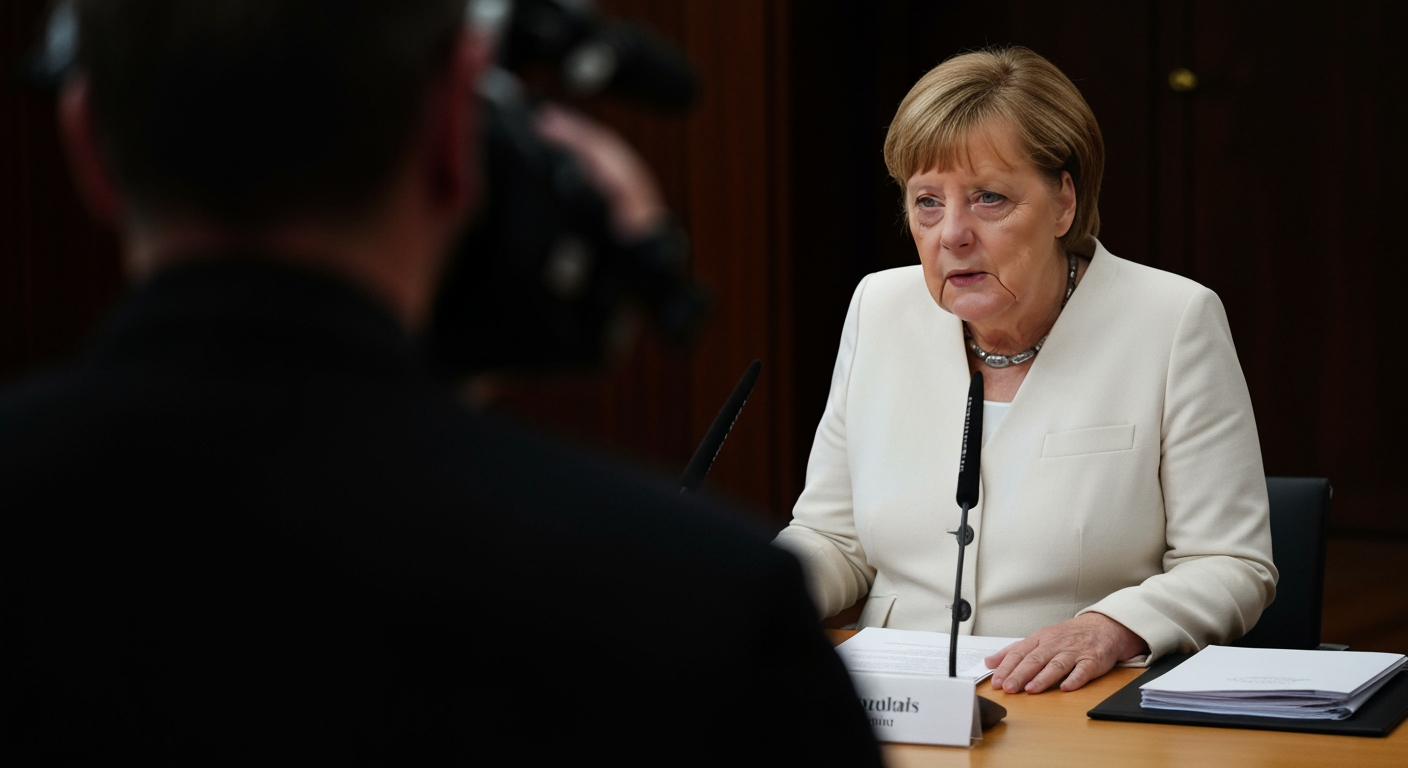
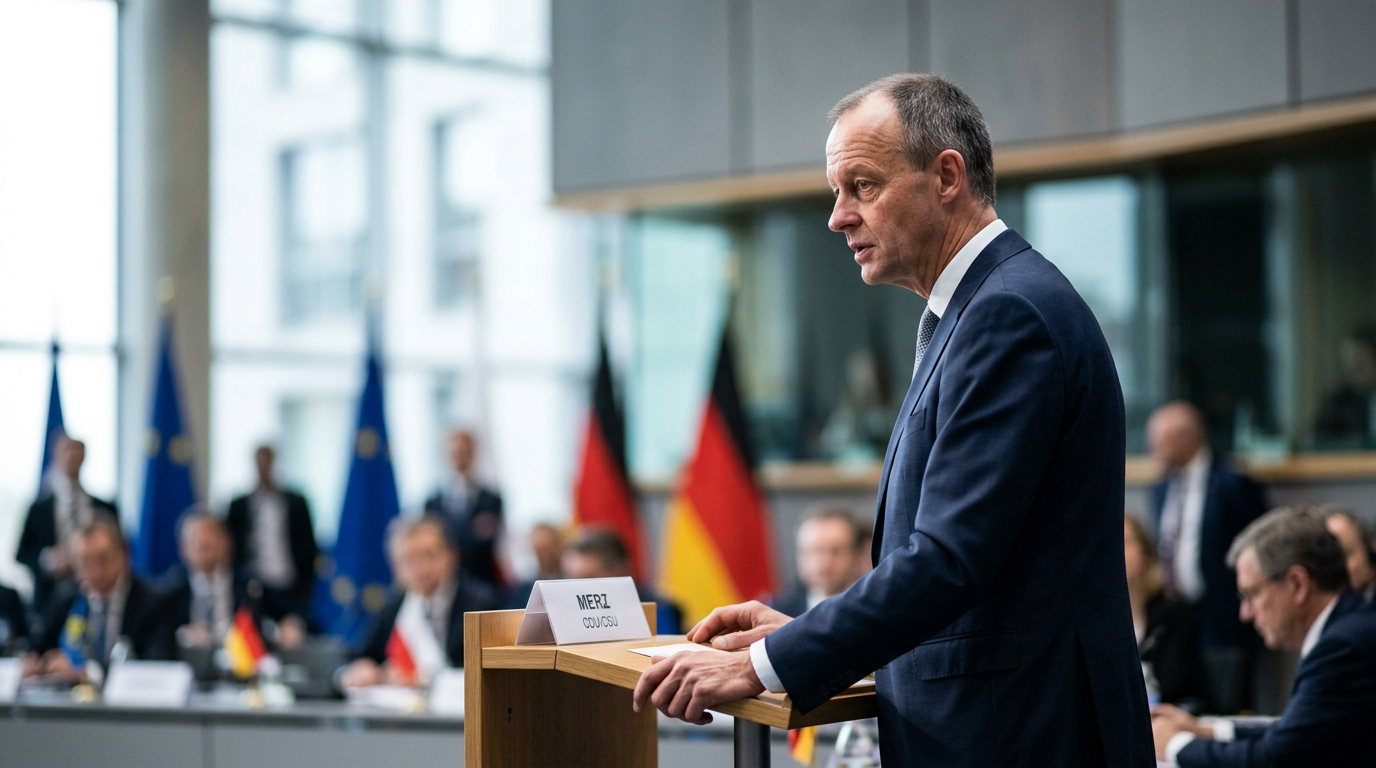
DAVOS, Switzerland — German Chancellor Friedrich Merz has definitively stated that Germany will not join U.S. President Donald Trump's proposed "Board of Peace" in its current form, a move that underscores growing European apprehension over shifting American foreign policy and commitment to multilateral institutions. The announcement, delivered during the World Economic Forum in Davos, highlights deep-seated disagreements between a key European ally and the United States on global governance and peace initiatives.
The German government's position, communicated through a spokesman, confirmed that Chancellor Merz would not attend the signing ceremony for the controversial initiative. His early departure from Davos is notably for an informal European Union summit in Brussels, where leaders are set to discuss burgeoning tensions with the United States, particularly concerning Greenland and threats of punitive tariffs. This dual development signals a strategic European alignment in response to a perceived unilateral turn in American diplomacy, emphasizing a renewed commitment to existing international frameworks over new, potentially disruptive, structures.
Germany Cites Constitutional Concerns and Undermining Multilateralism
Germany's refusal to endorse Trump's "Board of Peace" stems from fundamental objections to its proposed governance structure and its potential to undermine established international norms and institutions. A government spokesman indicated that the initiative, as currently designed, presents "constitutional reasons" preventing Germany's participation. Berlin views Trump's proposal as a "counter-draft" to the United Nations, signaling a direct challenge to the multilateral order that Germany, and much of Europe, staunchly upholds.
Sources within the German Federal Foreign Office reportedly characterized the proposal as far exceeding initial expectations, suggesting it would establish a new international organization with President Trump himself holding extensive decision-making powers as chairman. This concentration of authority, coupled with reports of a potential $1 billion fee for permanent membership, has raised red flags among traditional U.S. allies. The German stance reflects a broader European concern that such an initiative could erode the principles of shared responsibility and consensus-building that underpin global governance. Other European nations, including France, Denmark, Sweden, and Norway, have also reportedly declined to join the "Board of Peace" in its current iteration, further isolating the American-led endeavor among key democratic partners.
Deconstructing the 'Board of Peace'
The "Board of Peace," officially launched by President Trump in Davos, was initially conceived as a mechanism to stabilize the precarious ceasefire in Gaza following the Israeli-Palestinian conflict. However, its scope quickly expanded, with Trump foreseeing it as a broader "international transitional body" dedicated to global conflict resolution. The White House confirmed that the board, chaired by Trump, would include key figures such as U.S. Secretary of State Marco Rubio, special envoy Steve Witkoff, former British Prime Minister Tony Blair, and Jared Kushner.
Despite Trump's assertion that the board would operate "in conjunction with the United Nations," the initiative has been widely interpreted as an alternative, or at least a parallel, diplomatic framework designed to give the U.S. president significant personal leverage over international peace processes. While some regional Middle Eastern powers and emerging nations have reportedly joined, the cautious reception from traditional Western allies highlights a fundamental divergence in approaches to international diplomacy. The lack of detailed operational guidelines and the emphasis on presidential authority have fueled skepticism about its long-term viability and effectiveness outside the existing, albeit imperfect, United Nations structure.
Transatlantic Fault Lines Deepen Over Greenland Dispute
The backdrop to Germany's rejection of the "Board of Peace" is a period of heightened transatlantic friction, notably triggered by President Trump's persistent attempts to acquire Greenland. Citing national security imperatives and a need to counter rivals like China and Russia in the Arctic, Trump has pressed for the acquisition of the Danish territory, even threatening tariffs on European allies who oppose his plans. This aggressive diplomatic posture has been met with firm resistance from Denmark and Greenland, both of whom have unequivocally rejected any sale.
Chancellor Merz directly addressed these tensions in his address at the World Economic Forum, urging European nations to renew their trust in NATO and bolster their defense capabilities. He underscored the critical importance of the transatlantic alliance, emphasizing that Europe alone cannot ensure its defense. Simultaneously, Merz reaffirmed Germany's unwavering support for Denmark and Greenland's territorial sovereignty. His statements, echoed by German Defense Minister Boris Pistorius, who spoke of exploring increased NATO involvement in Arctic protection, signal a concerted European effort to assert collective security interests and uphold international law in the face of perceived American overreach. This episode highlights a growing chasm in the transatlantic relationship, where traditional allies find themselves increasingly at odds with Washington's unilateral policy tendencies.
Upholding the Rules-Based Order
Germany's decision is deeply rooted in its post-World War II foreign policy identity, which is firmly anchored in multilateralism, international law, and robust alliances. For decades, Germany has been a staunch advocate for the United Nations, NATO, and the European Union as the primary conduits for global peace and security. The "Board of Peace," with its opaque governance and reliance on a single leader's authority, directly challenges these foundational principles.
The German government's internal assessment, as reported, emphasizes a commitment to strengthening the international order with the UN Charter at its core. This reflects a belief that collective security and conflict resolution are best achieved through established, inclusive, and rules-based mechanisms, rather than through ad-hoc initiatives that concentrate power. Merz's call for Europe to adapt to changing global power dynamics, while simultaneously advocating for the preservation of NATO and the transatlantic partnership based on mutual respect, underlines Germany's strategic imperative: to navigate a complex geopolitical landscape by reinforcing existing alliances and upholding the principles of international cooperation.
The German refusal to join Trump's "Board of Peace" is more than a diplomatic snub; it represents a significant declaration of principles by a major European power. It underscores a growing determination among key U.S. allies to resist initiatives that they believe undermine the very international order they have helped build and sustain. As the world grapples with persistent conflicts and geopolitical shifts, the episode highlights the ongoing challenge of maintaining transatlantic unity in the face of divergent visions for global governance.
Related Articles

Ratko Mladić, "Butcher of Bosnia" and Convicted War Criminal, Dies at 84
THE HAGUE, Netherlands – Ratko Mladić, the former Bosnian Serb military commander known as the "Butcher of Bosnia" and convicted of genocide, war crimes, and crimes against humanity, has died at the age of 84. Serbian...

Long-Awaited 9/11 Mastermind Trial Set for 2028, Decades After Attacks
GUANTANAMO BAY, Cuba – Nearly a quarter-century after the devastating terror attacks of September 11, 2001, a military judge has finally set a trial date for Khalid Sheikh Mohammed, the alleged mastermind behind the...