Germany’s Car Crisis Puts Landmark 35-Hour Workweek on the Line
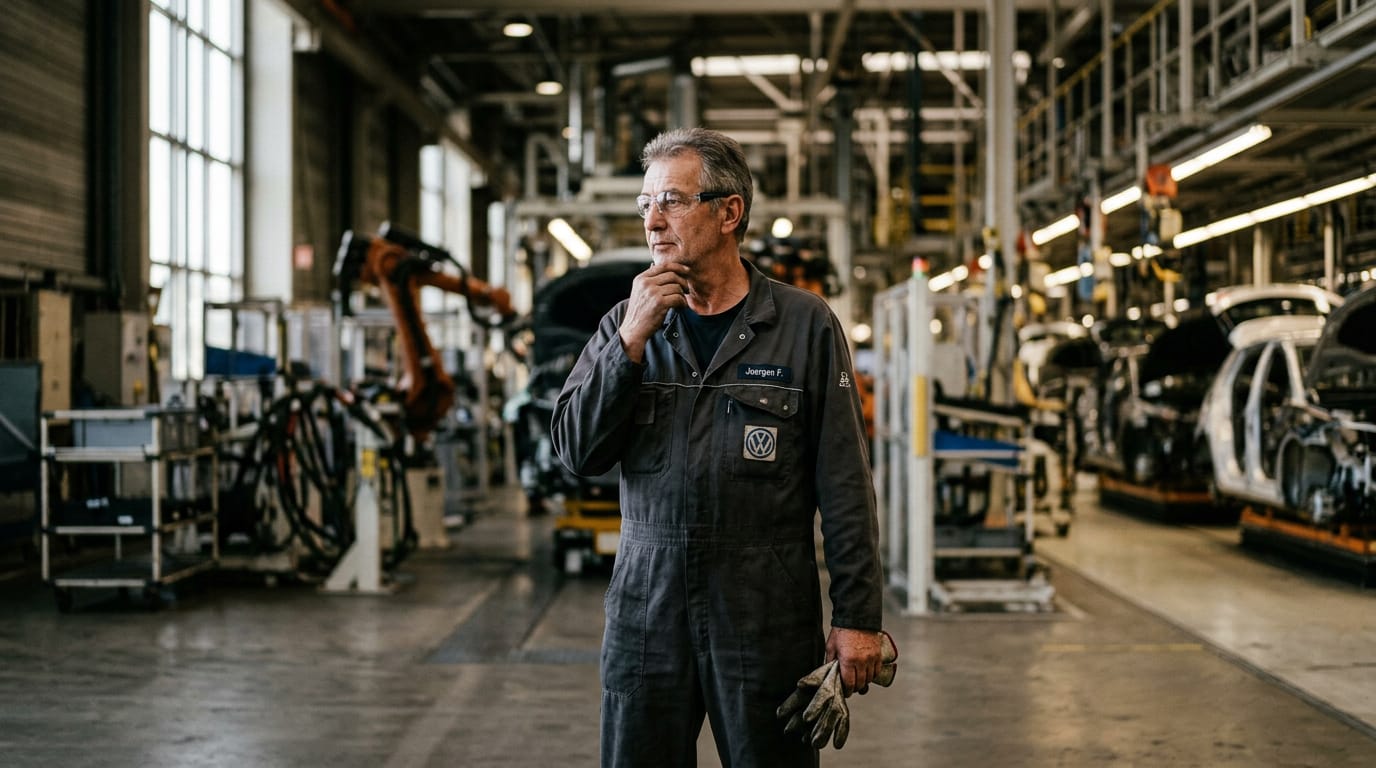
FRANKFURT — For four decades, the 35-hour workweek served as the gold standard of Germany’s post-war industrial miracle, offering assembly line workers both generous pay and unparalleled personal time. Today, that cornerstone of the nation’s social contract faces an existential test. Confronted with fierce Chinese competition, sluggish electric vehicle sales, and the highest domestic manufacturing costs in the industrialized world, German automakers are pushing to dismantle their signature labor agreement.
The clash between automotive executives and union leaders is reaching a boiling point across traditional manufacturing heartlands like Lower Saxony and Baden-Württemberg. Executives argue that asking employees to clock extra hours without additional compensation is the only way to safeguard domestic operations. In response, organized labor contends that longer working days will simply mask strategic management failures while punishing the workers who built Europe’s largest industrial economy.
The Disparity of Manufacturing Costs
At the core of the debate is a stark economic reality: building a car in Germany has become far more expensive than producing one anywhere else. Industry data from the consulting firm Oliver Wyman shows that labor expenses in German automotive manufacturing average roughly $3,307 (€2,882) per vehicle. In contrast, automakers in the United States incur an average labor cost of about $1,341 per car. In Japan, the cost drops to $769, while in China, it falls to just $597.
Corporate leadership at brands like Mercedes-Benz and the Volkswagen Group argue that shifting from a 35-hour week to a standard 40-hour schedule without an accompanying pay bump would reduce unit labor expenses by roughly 13%. Automakers view this shift as an immediate tool to bolster efficiency while factories operate under capacity.
The standard was originally established during the 1980s and 1990s following a historic, seven-week strike led by the powerful IG Metall union under the slogan "More time to live, love, and laugh". For generations, the policy sustained a contented middle class and symbolized the strength of the German manufacturing base. Industry executives now assert that globalization, volatile energy prices, and foreign subsidies have fundamentally ended the era in which Germany could cut hours while maintaining premium pay.
A Shrinking Industrial Footprint
The pressure on labor agreements coincides with the fastest contraction of auto sector employment in modern German history. Sector-wide employment has dropped from about 830,000 workers in 2018 to fewer than 700,000. Automotive analysts project that figure could drop to 500,000 by 2030 as the shift away from internal combustion engines requires fewer manual assembly operations.
Major brands and supplier networks are already scaling back. Volkswagen has outlined plans that could eliminate roughly 100,000 positions globally by the end of the decade, while BMW plans to cut up to 8,000 jobs by 2027. Tier-one parts suppliers, including Bosch, Continental, and ZF Friedrichshafen, have announced thousands of redundancies as overall vehicle production figures fail to rebound to pre-pandemic peaks.
The threat of domestic plant closures, once an unthinkable proposition in German industrial politics, now looms over sites such as Volkswagen's electric vehicle assembly hub in Zwickau. At Mercedes-Benz, management has cautioned that specific sites could face gradual downsizing or eventual closure if fixed costs in Germany remain uncompetitive compared to international alternatives.
The Human Toll and Union Resistance
For the men and women on the factory floor, the proposal feels like an assault on hard-won labor protections. In industrial centers such as Wolfsburg, Stuttgart, and Hanover, more than 175,000 workers recently mobilized at roughly 280 protest rallies to defend the 35-hour standard.
Union representatives point out that labor has repeatedly offered concessions during down cycles, including flexible hour accounts, partial retirement arrangements, and deferred bonus payments totaling billions of euros. They maintain that current factory woes stem from sluggish global demand, poor software execution, and executive delays in bringing affordable electric cars to the market, rather than a lack of working hours from plant personnel.
Labor leadership has pushed back against management's cost-saving proposals, demanding a 5% wage increase alongside job security guarantees. Rather than extending the workweek, some labor advocates suggest reducing full-time schedules down to 30 hours during severe demand drops as an alternative mechanism to keep payrolls intact and prevent permanent layoffs.
Structural Hurdles Beyond Labor
Independent automotive experts suggest that while working hours represent a visible bargaining point, longer shifts alone will not address the deeper systemic challenges facing German manufacturing.
The German car industry faces higher electricity costs than rival manufacturing hubs, persistent bureaucratic friction, and slower software innovation cycles compared to nimbler tech-focused competitors in Asia and the United States. Analysts warn that simply adding five hours to an employee's workweek will do little to offset advances made by rival firms that produce batteries at scale or update in-car digital systems at rapid speeds.
For Germany to maintain its position as an automotive exporter, broader reforms in energy policies, infrastructure investment, and corporate research and development must align with any potential labor adjustments.
A Defining Moment for the German Model
The dispute over the 35-hour workweek goes beyond a routine wage negotiation; it tests Germany's post-war model of consensus-driven corporate governance. For decades, the system of codetermination—where trade unions and corporate boards jointly shape strategy—ensured low strike rates, steady productivity, and broad social stability.
That equilibrium is now strained to its breaking point. With wage negotiations looming and the threat of industrial action approaching, both corporate boards and labor representatives face historic choices. If the 35-hour workweek falls, it will signal a fundamental realignment of the European labor landscape. If it survives unchanged, German carmakers will have to find other, potentially more painful ways to bridge a widening global cost gap.