Germany Secures 2026 World Cup Berth Amidst Renewed Hopes for Redemption
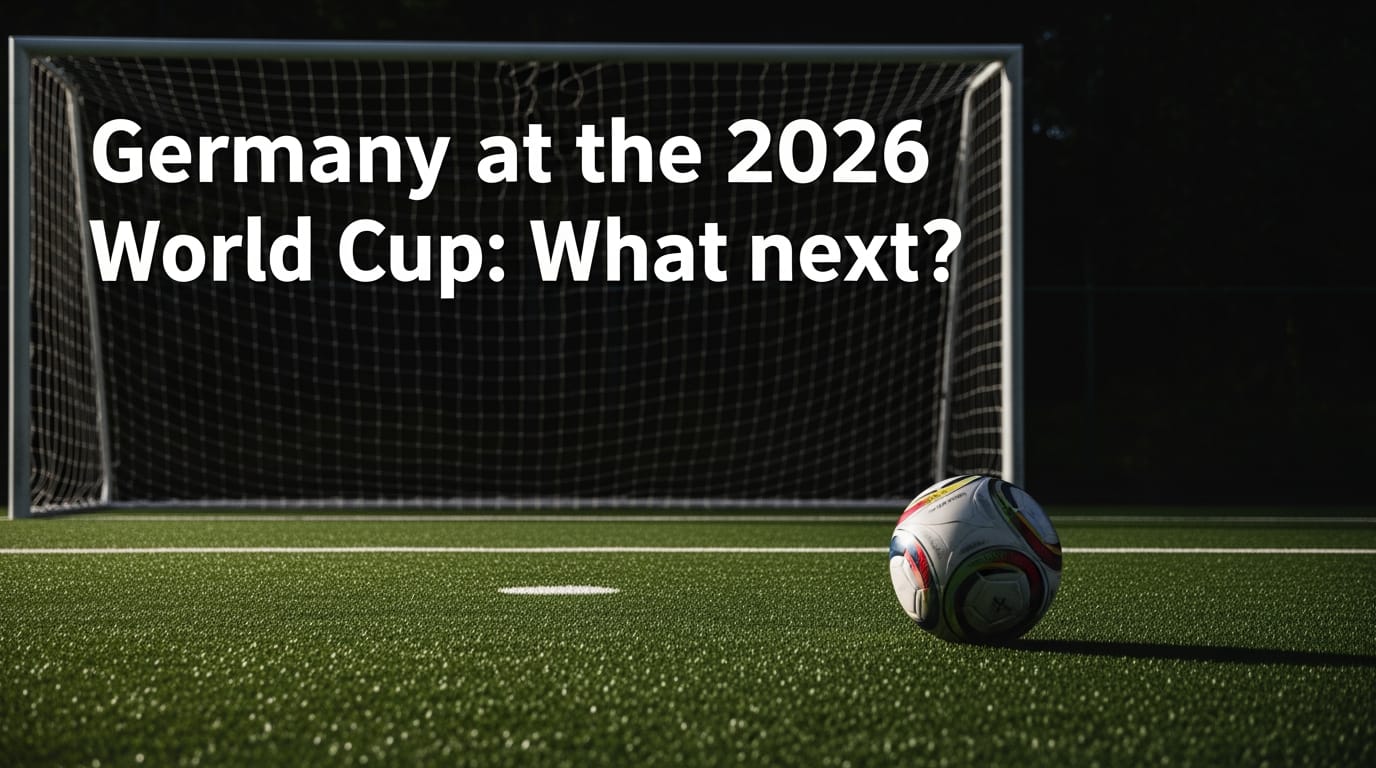
Berlin, Germany – Germany has officially punched its ticket to the 2026 FIFA World Cup, marking their 21st appearance in football's most prestigious tournament. After a dominant 6-0 victory over Slovakia in their final European qualifier on November 17, 2025, Julian Nagelsmann's side secured top spot in Group A, directly qualifying for the finals in Canada, Mexico, and the United States. This achievement follows a Euro 2024 campaign that saw the Mannschaft reach the quarter-finals on home soil, igniting cautious optimism that the four-time champions are on a path to reclaim their former glory after successive group stage exits in the last two World Cups.
The Road to North America: A Qualification Journey Defined by Resilience
Germany's journey through the 2026 World Cup qualifiers was not without its early anxieties, despite ultimately finishing as group winners with an impressive 5-1-0 record. Placed in UEFA Group A alongside Slovakia, Northern Ireland, and Luxembourg, the qualification campaign saw an initial stumble that put pressure on the squad. An unexpected loss in a seemingly favorable group served as an early wake-up call, highlighting the need for consistency. However, the team responded decisively, reeling off five consecutive victories to seal their qualification. The emphatic 6-0 win against Slovakia, featuring goals from Leroy Sane, Nick Woltemade, Serge Gnabry, Ridle Bote Baku, and Assan Ouedraogo, underscored their attacking prowess and determination to finish strong. This successful qualification ensures Germany will participate in their 21st World Cup, a testament to their enduring legacy in international football, second only to Brazil in total appearances.
Euro 2024: A Glimmer of Hope and Crucial Lessons Learned
The successful World Cup qualification comes on the heels of a significant Euro 2024 tournament hosted by Germany in June and July 2024. Under Julian Nagelsmann, who extended his contract through the 2026 World Cup earlier in April 2024, the team navigated the group stage with two wins and a draw, topping Group A ahead of Switzerland, Hungary, and Scotland. Opening with a commanding 5-1 victory over Scotland, Germany showcased an effective and balanced style of play that earned them widespread praise. They continued their strong run with a 2-0 win against Hungary and a 2-0 triumph over Denmark in the Round of 16, progressing to the quarter-finals.
While the tournament ultimately ended in the quarter-finals following a challenging encounter with Spain, the performance offered a crucial barometer for the team's progress. Nagelsmann's tactical approach, which skillfully blended experienced campaigners with burgeoning young talent, seemed to find a "solid backbone" for his ideas. Key figures like Jamal Musiala and Florian Wirtz delivered moments of brilliance, demonstrating their capacity to perform on the big stage. However, the subsequent Nations League finals in June 2025, where Germany finished last after defeats to Portugal and France, served as a stark reminder of the challenges ahead, prompting Nagelsmann to acknowledge a "gulf in class" against some of Europe's elite and highlighting concerns about squad depth.
Generational Shift and Nagelsmann's Evolving Vision
The German national team is currently undergoing a significant generational transition, with Julian Nagelsmann at the helm since September 2023. The departure of long-standing pillars like Manuel Neuer and Toni Kroos, who played his final international tournament at Euro 2024, has opened avenues for a new generation of leaders. Marc-Andre ter Stegen is poised to take over the mantle as the primary goalkeeper, though the competition for the No. 1 spot remains intense.
At the heart of Nagelsmann's evolving squad are star playmakers Jamal Musiala and Florian Wirtz. Musiala, despite recovering from injuries in mid-2025, is expected to be a pivotal creative force, while Wirtz, who recently secured a move to Liverpool, brings dynamism and vision to the midfield. Joshua Kimmich, Antonio Rudiger, and Kai Havertz continue to be integral components, providing experience and quality across different positions. Nagelsmann has consciously integrated a broader squad throughout qualifying, assessing new talent and fostering competition for places, particularly in positions that previously lacked clear frontrunners. His tactical style, known for its emphasis on gegenpressing and possession dominance, aims to maximize the potential of this talented, yet still developing, group of players.
Despite a clear strategic direction, the team faced a setback with the announced departure of assistant coach Sandro Wagner in summer 2025. Wagner, who had been an important figure under Nagelsmann since September 2023, opted to pursue a head coaching career, a move seen as a blow to the ongoing preparations for the 2026 World Cup.
The Weight of Expectation: Rebuilding a World Cup Legacy
With qualification secured and a successful, if not ultimately victorious, Euro 2024 campaign in the rearview mirror, Germany now faces the immense pressure of re-establishing its standing as a global football powerhouse. The memory of consecutive group stage exits in 2018 and 2022 lingers, making the 2026 World Cup a crucial opportunity for redemption.
Nagelsmann has acknowledged the need for patience and a realistic outlook, particularly regarding squad depth in certain areas like wing-backs. The integration of young talents, while promising, requires careful nurturing and time to fully adapt to the demands of international football. The blend of youth and experience is crucial, and the coaching staff is focused on building chemistry and confidence on the pitch through specific training and modern tactical strategies. Currently ranked ninth in the world by FIFA as of December 2025, Germany will enter the World Cup draw as a Pot 1 team, reflecting their standing but also the high expectations placed upon them.
The ultimate challenge for Nagelsmann and his squad will be to convert their potential into consistent performances against the world's best. The road ahead involves refining their tactical approach, fostering strong team cohesion, and managing the immense pressure that comes with representing a nation with such a rich footballing heritage.
Conclusion
Germany's qualification for the 2026 FIFA World Cup marks a significant milestone, providing a platform for the national team to overcome recent disappointments and forge a new chapter in its storied history. Under Julian Nagelsmann, a blend of exciting young talents and experienced leaders has begun to coalesce, showing glimpses of their potential at Euro 2024 and navigating a successful qualification campaign. While challenges remain, particularly in achieving consistent top-tier performances and refining squad depth, the spirit of renewal and the ambition for redemption are palpable. As the focus now firmly shifts to North America, the German national team stands at a pivotal juncture, poised to redefine its identity on the global stage and striving to bring home a fifth World Cup trophy.